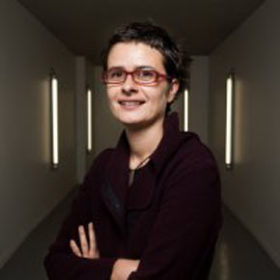
 Elsa Vivant will defend her Habilitation à diriger des recherches (HDR) on Wednesday, July 3, 2019, at 2:00 p.m. (room A202, Bienvenüe building, Cité Descartes) under the supervision of Marie-Hélène Bacqué.
The jury is composed of:
- Anne-Laure Amilhat Szary, University Professor – University of Grenoble-Alpes
- Marie-Hélène Bacqué, University Professor – Paris Nanterre University
- Eric Charmes, Director of Research – Ecole Nationale des Travaux Publics de l’Etat
- Laurent Devisme, University Professor – Nantes School of Architecture
- Boris Grésillon, University Professor – Aix Marseille University
- Christine Lelévrier, University Professor – University of Paris Est Créteil
- Pascale Philifert, University Professor – Paris Nanterre University
The dossier consists of four volumes. The first recounts her research and teaching activities; the fourth brings together a collection of significant publications. In the second volume, Elsa Vivant outlines the evolution of her research perspectives, from the creative city to research-creation in urban planning, through the exploration of four metaphorical places (the art gallery, the studio, the library, and the laboratory), conceived as invitations to move between the worlds of art and urban planning in order to enrich our understanding of urban transformations and urban planning and research practices. The art gallery is the metaphorical place for the instrumentalization of culture and its venues in urban policies and allows us to identify certain contradictions. The studio is a place of work, transformation, and new collaborations between creative professionals and urban planners. The library is a space where questions of representation (including writing) and the relationship between urban planning, project-based activity, and fiction are explored. Entering the laboratory is an invitation to new experiences, articulating the renewal of forms of research writing and contemporary practices in art research. It is the metaphorical place where the third volume of this habilitation, a research-creation essay, La Division du travail (The Division of Labor), was developed.
La Division du travail refers to the complexity of what is now called the urban fabric. The metaphor of assembly line work expresses the dilution of meaning and responsibilities in projects with complex structures and governance, as well as the weight of contradictions and ethical conflicts faced by middle managers whose position in the field and in the chain gives them little control over the decisions they implement. The text takes the form of a narrative that draws on the documentation from the investigation and embraces the subjectivity of the respondents and the investigator through the use of fiction. It is composed of a montage of fragments and forms whose diversity reflects the fragmentation of urban planning activity and the plurality of viewpoints. Their multiplication and composition open up possibilities for interpretation. A parallel narrative, the investigation diary, mirrors the situations observed in the world of urban planning with those of the world of research, where similar constraints weigh on the work and generate the same feeling of powerlessness in the face of institutional changes. It connects the fragments and produces meaning for the reader who follows the narrative of a research process, its doubts, its questions, and its discoveries. We meet a researcher, whose work is funded by a private foundation, investigating the challenges of creating a recreational facility in connection with the construction of a metro station in a neighborhood undergoing urban renewal. We follow her to meetings, site visits, observations, and demolitions. We read the archival materials she has collected. We meet the professionals involved at different levels, each representing a different issue and category of actor. We drift towards other issues relating to the complexity of urban renewal operations and questions that are not being asked. We observe certain professionals being overwhelmed by the contradictory demands they face. We share their feeling of powerlessness. We wonder how to get out of this situation. We find ways out in distancing ourselves, experimentation, artistic expression, and solidarity.