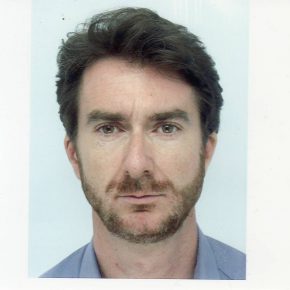
Alexandre Mathieu-Fritz
Teacher researcher Professor Université Gustave EiffelBio
Alexandre Mathieu-Fritz is a professor of sociology at Gustave Eiffel University and a researcher at LATTS. Specialising in the sociology of work and professional groups, he has been conducting research into the development and use of telemedicine and telehealth since 2009. His research focuses primarily on teleconsultations across various medical specialities (geriatrics, psychiatry, neurology, dermatology and surgery) and on the shared medical record (DMP).
https://www.researchgate.net/profile/Alexandre_Mathieu-Fritz
Alexandre Mathieu-Fritz devoted his doctoral thesis to analysing the evolution and dynamics of the profession of judicial officer in France since the 1970s. This research has resulted in several publications, notably on the social representations of the profession of judicial officer, the forms of competence and the socio-professional and geographical trajectories of its members, the conditions for the integration of women within the profession, and the ways in which professional activity varies according to the geographical location of the organisations involved, etc. A book summarising the main findings of his doctoral research was published in April 2005 by Presses Universitaires de France, in the ‘Sciences sociales et société’ series.
At the same time, he contributed to various collaborative projects in urban sociology: on housing, on caretakers and on the work of the sociologist Henri Raymond (Jean-Marc Stébé, Alexandre Mathieu-Fritz (eds.), Architecture, Urban Planning and Society. Ideologies and Representations in the Urban World. A Tribute to Henri Raymond, 2002).
Alexandre Mathieu-Fritz also conducted research on the profession of specialised technical educator, which led, in November 2004, to a book co-authored with Thierry Braganti (reissued in 2011). A few years later, as part of a collaborative research project conducted within the LATTS, he turned his attention to the activities of community magistrates. In 2008, he co-authored a book with Régine Bercot on the formation of complex and ambivalent social representations associated with various high-status professional groups: Le prestige des professions et ses failles, Paris, Hermann, Société et pensée series.
From the second half of the 2000s, Alexandre Mathieu-Fritz began to take an interest in the medical and care sectors. He has been involved in research on the surgical profession, as well as on writing practices and the organisation of work in intensive care units.
His current research projects aim to provide a sociological analysis of the implementation of contemporary medical technologies. The first project focuses on the forms, developments and uses of telemedicine in France and abroad, namely teleconsultation, tele-expertise, tele-monitoring and tele-assistance. It involves analysing, both during the experimental phase and within the context of ‘routine’ operation, the effects of the use of telemedicine systems on doctor-patient relationships and interactions between practitioners, on the organisation of care, as well as on professional logic, practices and knowledge. His most recent work focuses on teleconsultations in mental health (conducted by psychiatrists and psychologists) and on telehealth systems designed to facilitate the day-to-day management of chronic conditions (such as diabetes).
The second project is dedicated to analysing the use of electronic health records, based on the case of the Shared Medical Record (DMP), focusing initially on regional trials conducted in France. The aim is to assess the effects of using these digital records on the professional practices of healthcare practitioners, on patient care and follow-up, and on doctor-patient and inter-practitioner relationships, particularly in terms of coordination and cooperation.
These two projects are based on relatively similar issues drawn directly from the sociology of work and professional groups, as well as from the sociologies of innovation, health and ICT.