Climate-controlled urbanism: understanding rationales, modes and implications of microclimatic enclosure
The project at a glance
Start year : 2024
End year : 2025
Scientific Director : Jonathan Rutherford
Area of research : Politics, Markets, and Urban Worlds (PMMU)
finished
Overview
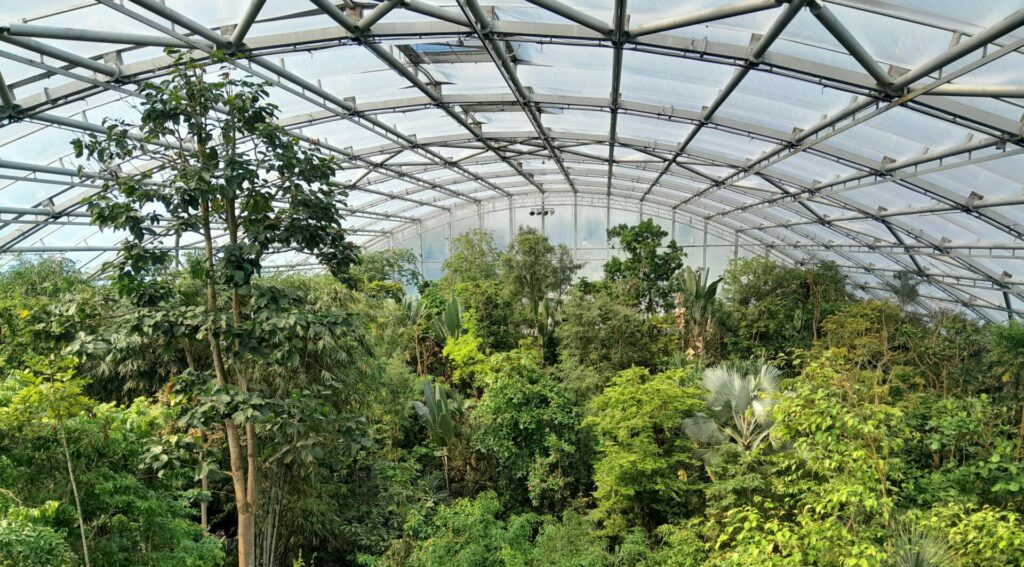
Project overview
The project builds on the fieldwork and empirical studies of an ongoing collaborative project with a British colleague, the aim of which is to publish a book with MIT Press. This research examines the emergence of controlled urban environments through a socio-technical approach that focuses on the spaces and territories where strategies for ecological transition and adaptation to global change are implemented. These volumetric enclosures are becoming increasingly strategic in several urban activities and sectors (domes and other structures designed for leisure, biodiversity conservation in botanical gardens and zoos, horticulture, vertical farms, etc.). They are based on socio-technical configurations centred on the management of air, temperature, humidity, light, etc., thereby producing ‘optimised’ indoor microclimates to circumvent an external climate or environment perceived as increasingly unstable and uncertain. This is therefore a highly significant topic that contributes to a better understanding of current and future urban responses to environmental and climate emergencies.
Funding and partnerships
Funding sources
- Gustave Eiffel University (AII – International Incentive Calls)
Valuation
- Rutherford, J. and Marvin, S. (2025) ‘Climate controlled-conservation: remaking ‘the botanical metropolis of the world’, Transactions of the Institute of British Geographers 50(2), e12701.
- Marvin, S., McFarlane, C. and Rutherford, J. (2026) ‘Infrastructural extensions: rethinking infrastructure in urban studies’, International Journal of Urban and Regional Research 50, 256-264.