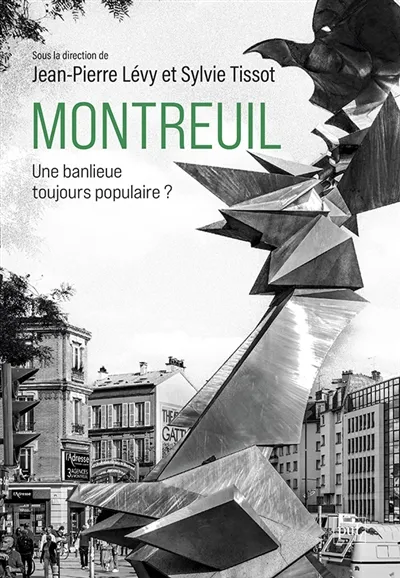
Jean-Pierre Lévy and Sylvie Tissot have just published the collective book Montreuil: Still a Working-Class Suburb? with Presses universitaires de France.
“On the outskirts of Paris, Montreuil epitomises the contrasting transformations taking place in the inner suburbs. For several decades now, young middle-class households have been leaving the capital to settle there, fuelling a visible process of gentrification. Does this mean that these former strongholds of the ‘red suburbs’, long governed by the Communist Party, have lost all their working-class character and are dissolving into a homogenised ‘Greater Paris’?
Nothing could be further from the truth. Drawing on thirty years of research into the city, this book argues for the idea of a unique trajectory. With its political roots on the left, a long-standing immigrant population, a significant proportion of social housing, and the rise of alternative forms of housing, Montreuil combines social transformation with strong elements of continuity.
Far from the clichés about the ‘suburbs’ or the ‘bobos’ who have come to take them over, this book shows how a working-class heritage, new residential aspirations and local activism coexist. It offers a nuanced interpretation of metropolitan dynamics and examines the capacity of these areas to remain spaces characterised by social diversity, conflict and political innovation.
Find out more
Jean-Pierre Lévy is a geographer and a research director at the CNRS. His work focuses on issues relating to housing and settlement at national and local levels, urban mobility and the use of domestic spaces. He is notably the author of From the Sustainable City to Nature in the City (Septentrion, 2015).
Sylvie Tissot is a sociologist and lecturer at the University of Paris 8. She has researched the emergence of urban policy and the phenomenon of gentrification in the United States and France. She is notably the author of Gayfriendly. Acceptance and Tolerance in Paris and New York (Raisons d’agir, 2018).
To mark the publication of the book La ville verte au pied du mur, Félix Adisson and Ludovic Halbert are taking part in the Urban Forum’s round-table discussion entitled ‘Is the ecological transition of cities compatible with budgetary austerity?’.
The round-table discussion will take place on Thursday 8 October 2026, from 6.00 pm to 8.00 pm at the University of Bordeaux, Victoire Campus (Denucé Room).
Please register on the Urban Forum website
We are pleased to announce the publication of issue 258 (2026/4) of the journal Réseaux “Varia”, edited by the editorial team.

Overview of the file
The ‘Varia’ issues emerge at the intersection between the authors’ research agendas and the journal’s publication schedule. They provide a platform for showcasing a diverse range of work that, either due to timing or subject matter, does not fit within the thematic issues of *Réseaux*. Complementing the special issues, they offer a unique insight into the richness of current research questions and investigative practices. This volume thus brings together work devoted to high-profile topics (the professional uses of AI, the dynamics of debates on social media, children’s screen time) as well as more niche topics (digital practices in care work, the role of AI in the writing of African history). These studies employ a broad methodological range, from a large corpus of tweets analysed using computational methods to long-term ethnographic observation of software use and photography, including the tracking of AI hacktivists and the analysis of longitudinal questionnaires based on large, representative samples. They shed light on the changing nature of work, public debate and everyday life in relation to digital infrastructure.
The first two articles explore the ‘black boxes’ of artificial intelligence. Martin Raymond Willy Mbog Ibock develops an original approach to tracking African AI hacktivists as they expose and correct the postcolonial biases of AI…
Contents
Generative AI and the rewriting of historical narratives in post-colonial Africa. A tool for subversion or a vehicle for digital neo-colonialism?
AI and law: a happy marriage? A cross-analysis of the design and uses of a ‘jurimetrics’ system
Politicising energy choices on Twitter: Between sectoral arenas and the public sphere, 2021–2023
Champions, refugees and activists. Forms of political expression among Afghan female athletes on Instagram
- By Julien Puech, Lucie Forté and Hélène Joncheray
Differences in screen use patterns in early childhood based on ELFE data. When usage patterns diverge from institutional recommendations
- By Kevin Diter and Sylvie Octobre
Documenting the ‘happy moments’ of people with dementia. On the use of photography by staff in care homes
Reading notes
Elena BOVO, *The Mechanics of Crowds: Movements Out of Control?*, Paris, Armand Colin, 2024, 175 pp.
- By Serge Proulx
Marion FLÉCHER, The World of Start-ups, Les Presses de Sciences Po, 2025, ‘Académique’ series, 281 pp.
- By Sophie Louey
Jathan SADOWSKI, *The Mechanic and the Luddite: A Ruthless Criticism of Technology and Capitalism*, Oakland (California), University of California Press, 2025, 282 pp.
Bérangère STASSIN, Mélanie LALLET, Lucie DELIAS (eds.), The Realms of Cyberbullying and Online Hate, University of Lorraine Press, 2025, 173 pp.
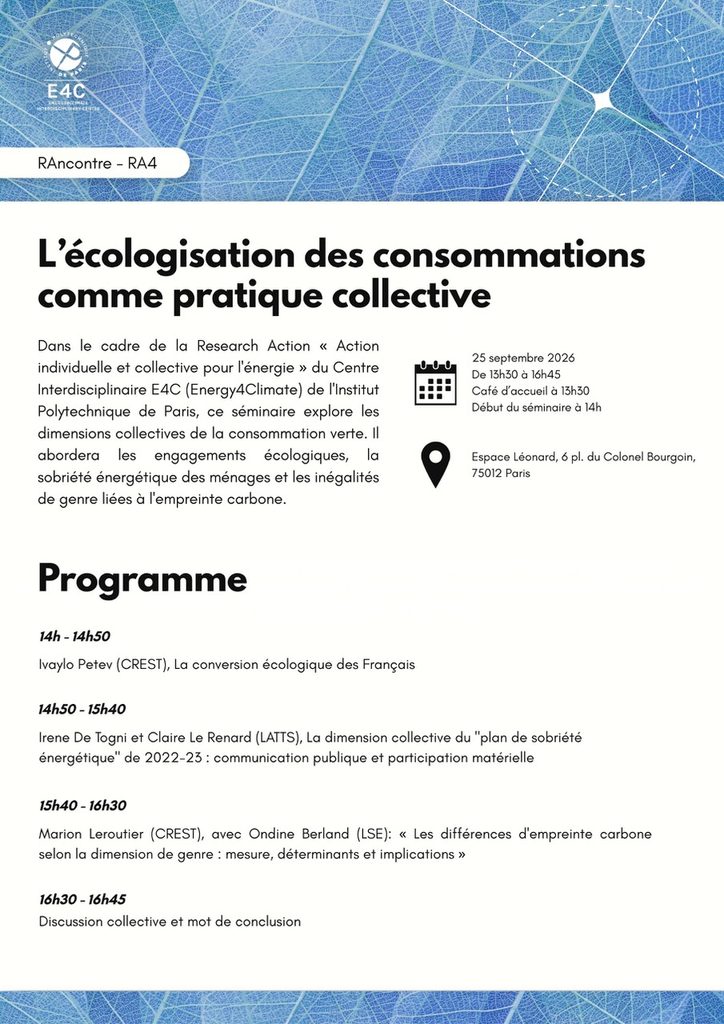
Claire Le Renard and Irene De Togni are taking part in the seminar ‘The greening of consumption as a collective practice’, organised by the interdisciplinary centre Energy4Climate (E4C). It will take place on 25 September 2026 (from 2.00 pm to 4.45 pm) at the Espace Léonard, 6 place du Colonel Bourgoin, Paris.
What’s on
- Ivaylo D. Petev (CREST – Centre for Research in Economics and Statistics), The French People’s Ecological Conversion: Contradictions and Divisions (see book published by PUF in 2023)
- Irene De Togni and Claire Le Renard (LATTS – Laboratory for Techniques, Territories and Societies), The collective dimension of the 2022–23 ‘energy conservation plan’: public communication and practical participation
- Marion Leroutier (CREST) with Ondine Berland (The London School of Economics and Political Science (LSE)): ‘Gender differences in carbon footprints: measurement, determinants and implications’
Register for the seminar via this link
The offer at a glance
Job title: Research Engineer (M/F) specialising in data production, processing, analysis and surveys
Post: Laboratory of Techniques, Territories and Societies, Champs-sur-Marne
Start date: 1 December 2026
Job description
Tasks
The research engineer recruited will contribute to the development of the laboratory’s work relating to public policy on the energy transition. In particular, the role will involve updating, consolidating and expanding upon the initial findings from the aforementioned study, using qualitative research methods (including semi-structured interviews and analysis of grey literature). The role will also involve helping to disseminate this research, on the one hand, through publications and presentations to the scientific community, and, on the other hand, by finalising a special issue of a journal (Revue française d’administration publique) dedicated to ecological planning, in support of the coordinating team comprising researchers from LATTS. Furthermore, the role will involve carrying out scientific outreach activities, working with teams from the regional division of Enedis – the main operator of the electricity distribution network, which has a direct interest in the governance of electric mobility and its charging infrastructure, and is already involved in existing work – through ad hoc training sessions. Finally, the role will involve participating in the development and organisation of the laboratory’s collective activities relating to the energy transition, by helping to strengthen cross-cutting (inter-research-area) initiatives and ensuring their integration into the laboratory’s scientific and institutional networks.
The Activity
Data production and updating (study on electric mobility)
- To devise a methodological approach and a suitable protocol for collecting up-to-date data
- To carry out data collection and processing operations, and to ensure that the data is processed and analysed with a view to producing research findings
- Draft one or more documents setting out the results
Science communication and outreach
- Disseminate the results produced to the scientific community (e.g. through publications and participation in conferences/symposia)
- To take part in science communication activities by delivering training sessions for Enedis’s regional network
- Monitor the progress of the work undertaken by contributors to the special issue of the journal mentioned above, ensure that it meets the editorial board’s requirements (both academic and formal) and, where necessary, support them as their work progresses
- To support the coordinating team for the special issue of the journal, liaise with the editorial board
Contributing to the development of the laboratory’s collaborative activities
- To organise one or more seminar sessions relating to public policy on the energy transition
- To contribute to the establishment of a thematic network (GDR) on ‘Energy in the Social Sciences and Humanities’ at the CNRS and to represent the laboratory within it
Your Profile
Skills
Knowledge
- Subject-specific knowledge in political science and the sociology of public action
- Subject-specific knowledge of energy policy and transport and mobility, including electric vehicles
- Proficiency in qualitative research methods (semi-structured interviews; identification, collection and analysis of data from grey literature)
- Proficiency in tools for processing qualitative data and ensuring the long-term preservation of research data
- Writing skills and proficiency in oral presentation techniques
- Languages: French (C1) and English (at least B1 to B2) (Common European Framework of Reference for Languages)
Operational skills
- Knowing how to develop data-collection tools (questionnaires, interviews, case studies, field observations, monographs, etc.)
- Knowing how to organise a corpus of data, texts or documents with a view to utilising it
- Knowing how to deliver results
- Writing reports or scientific papers
- Knowing how to present the results of a study or research project to different audiences
- Working as a team
Behavioural skills
- Intellectual curiosity
- Critical thinking
- Ability to conceptualise
- Interpersonal skills
Your Working Environment
The LATTS (Laboratory for Techniques, Territories and Societies) is a joint research unit (UMR CNRS – École des Ponts ParisTech – Université Gustave Eiffel). At the intersection of several disciplines in the humanities and social sciences (urban and regional planning, geography, history, political science, sociology, etc.), the research carried out at the laboratory focuses on understanding how infrastructure and technical systems are shaped by social worlds and, conversely, how they contribute to transforming them.
Within the laboratory, the GOT research area (Governing, Organising, Working) has set itself the common objective of exploring the technical mechanisms through which institutions, organisations and work are governed. Several studies carried out in recent years (see in particular the work of Olivier Coutard, Sylvie Jaglin and François-Mathieu Poupeau) have specifically sought to document the capacity of public authorities (the State, local authorities) to organise, oversee and regulate the energy transition. This research has generated knowledge on this subject, focusing in particular on the actors and instruments involved, from a multi-level governance perspective. Given that transport and mobility constitute a key component of energy transition policies in France, an initial study focusing on electric vehicle use and the roll-out of publicly accessible charging points across mainland France was carried out in collaboration with GRETS (EDF R&D) and Enedis. It focused specifically on the role of stakeholders – both national and regional, public and private – in the development of this new area of public policy.
Constraints and risks
Special conditions of practice
- Obligation to maintain the confidentiality of interviews conducted and to protect research data
- Obligation to comply with open science objectives
- Travel within France or abroad
Remuneration and benefits
Salary: From €2,571 gross per month
Annual leave and RTT: 44 days
Training and compensation for train travel: Training and compensation for train
travel Transport: 75% of the cost covered and a sustainable mobility allowance of up to €300
Michel Marié, who brought his unconventional research career at the LATTS to a close, passed away in August 2026 in Paris at the age of 95. He was practically of the same generation as Alain Touraine, Edgard Morin and Pierre Bourdieu, with whom he had, in fact, crossed paths at various points in his life, and was one of the first sociologists at the CNRS. But his career as a sociologist – or anthropologist, as he sometimes liked to describe himself – was highly distinctive: he primarily grappled with the major techno-political questions and issues of the ‘Trente Glorieuses’, ranging from the clearance of the slums in Nanterre to the legal frameworks for spatial planning, via the implementation of major technical development projects. On these issues, Michel rejected ready-made, one-dimensional solutions and suggested that engineers should devote themselves more to the ‘ménagement’ of territories and societies – a neologism he had coined – rather than to their ‘aménagement’.
As a young sociologist who had worked in various planning consultancies – notably on the regeneration of the St Leu neighbourhood in Amiens – Michel Marié, as he recounts in the opening pages of *Les terres et les mots*, was suddenly confronted with an unprecedented situation. The year 1958 marked both his entry into the BERU – the Bureau d’Etudes et de Réalisations Urbaines – and the ‘Constantine speech’ delivered by General de Gaulle on 3 September. In this speech and its accompanying documents, the French President announced to the Algerians a vast economic and social development plan, with ambitious yet short-term objectives: universal education for all children, the construction of numerous homes, roads and other infrastructure, the industrialisation of the region, in short, the accelerated ‘modernisation’ of Algeria, in the hope of counterbalancing the growing influence of the FLN. The ‘Constantine Plan’ quickly mobilised a steady stream of engineers, architects and other design consultancies such as BERU. When approached, Michel accepted several assignments within this framework, in Oran, Constantine and Algiers, but he was far from always feeling at ease there. On the one hand, the extent of the ‘otherness’ he encountered in the territories and amongst the indigenous peoples was beyond anything he had previously experienced, leading to significant difficulties in communication and understanding in his day-to-day work; on the other hand, and in stark contrast, the ‘confrontational’ nature of his ‘mission’ colleagues’ approach – to use his own words – raised countless questions for him. From this formative experience, Michel drew two lessons. Firstly, a meticulous and unwavering attention to the richness of the local context, to its own intelligence and to its capacity for response or innovation; secondly, an instinctive wariness of confrontational, unquestionable, impersonal and standardising public action. Twenty years later, he would also be able to demonstrate that this type of approach – with its indicators, its organisational arrangements, its technocratic tools and its methods of calculation – had subsequently been largely adopted in mainland France from the 1960s onwards. In a sense, the ‘mission’-based administration rapidly deployed in Algeria between 1958 and 1961 had, unwittingly, foreshadowed and served as a test bed for other ‘missions’ (for spatial planning, the creation of new towns, …), this time in mainland France, from the early 1960s onwards (DATAR was established in 1963).

In his last post before joining LATTS, Michel had once again taken on the role of ‘bridge-builder’ between the world of social sciences and that of the planning officials at the Ministry of Infrastructure. Within the Research and Innovation Delegation – a somewhat unconventional precursor to the creation of a Research Directorate within the Ministry of Infrastructure – Michel had assembled a small team of ‘de-cloaked’ engineers, with whom he organised a series of seminars for practitioners and researchers entitled ‘Territories, Techniques and Societies’, which focused on various key themes within the Ministry of Infrastructure. These seminars led to the publication of 35 special issues between 1987 and 1998. On a more personal note, Michel leaves behind a number of academic articles and works as diverse as *Situations migratoires (ou la fonction-miroir)* , 1976, co-authored with Thomas Regazzola, published by Galilèe, and *La campagne inventée*, 1977, co-authored with Jean Viard, published by Actes-Sud. But his most significant work is undoubtedly *Les terres et les mots; a journey through the social sciences, 1989, in which he ventures to write his ‘ego-history’, recounting his adventures, missteps and lessons learnt, from his native Picardy to the LATTS, via the Israeli kibbutzim, 1960s Algeria, and Venezuela, or pre-Pinochet Chile.
Michel Marié’s thinking anticipated many of the issues that would lie at the heart of the LATTS. A re-reading of his article ‘Towards an anthropology of major infrastructure projects. The Provence Canal’, written in 1984 shortly before the creation of LATTS, in the Annales de la Recherche Urbaine, provides a good illustration of this.
Firstly, it demonstrates how to understand, from a long-term perspective, the convergence of diverse projects that have been pieced together in a somewhat haphazard manner: this ‘major project’ thus bears a resemblance to the ‘large technical systems’ and infrastructure that were the subject of a collective work by the laboratory. Next, the core of the article focuses on the transition from gravity-fed irrigation via earthen channels and a social system of water-sharing amongst users of the ‘water towers’ to the installation of piped systems and the sale of pressurised water in the Gardanne area. Objects are central to this transformation: pipes, meters, and the mechanisms that drive sprinklers via pressure. Public-private sharing arrangements and the relationships between different territories (those where water is extracted and those where it is used) are also analysed in detail. All these topics were subsequently explored in depth in the journal *Flux*. An original insight, in a digression on the development of the Languedoc region—which further consolidated the engineers’ hold on power—is that it shows that the majority of management and operational posts within the development company were held by engineers returning from Morocco, where they had been able to develop large-scale hydraulic projects without constraints. Highlighting this ‘return from the colony ’ (which ties in with what he had observed regarding the so-called Constantine economic development plan in Algeria and which would also serve as a model for the ‘grands ensembles’) could usefully be revisited in the context of Latts’ work on exchanges with the Global South. Finally, and this is the article’s central argument, these forms of modernisation do not completely eliminate the use of gravity-fed water systems; this balance between old and new forms of use is reflected in the economics of maintaining these networks, another emerging area of research within the laboratory.
Jean Pierre Galland, Gilles Jeannot
A memorial service for Michel Marié will be held on 19 September at 5.30 pm in the Mansart Chapel at Saint Séverin Church in Paris.
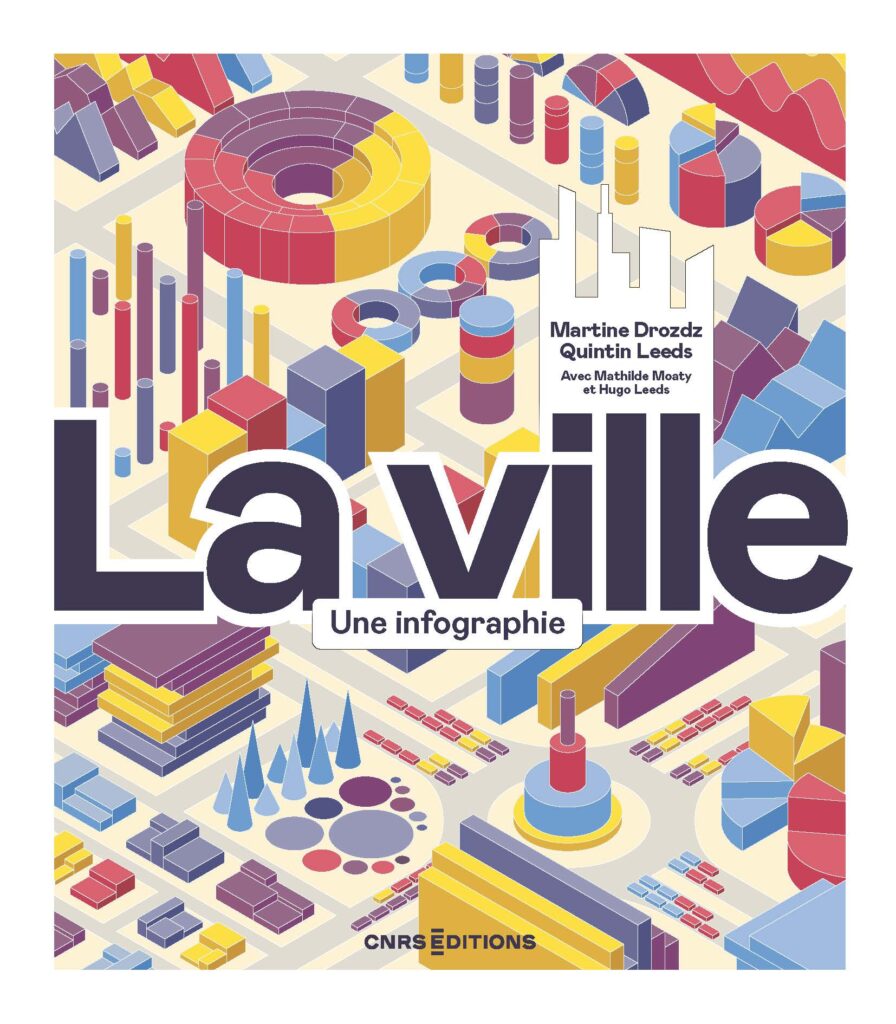
Martine Drozdz, Quintin Leeds, Mathilde Moaty and Hugo Leeds have just published their book *La Ville. Une infographie.* with CNRS Editions.
“Did you know that, since 2020, the roads, infrastructure and buildings constructed by humankind weigh more than the planet’s entire living biomass? That nearly 1 billion cameras monitor our cities, often installed by the residents themselves? Or that during heatwaves, the temperature difference between certain neighbourhoods and the surrounding natural areas can exceed 10 °C?
The city is one of humanity’s greatest inventions. This book chronicles the world’s great urban transformation through original infographics, based on the latest research.
From data centres to sanctuary cities, from business districts to oases of cool, from holiday homes to Olympic villages, this book explores the many ways in which we live in, build, monitor, protect and transform cities.
At a time when cities are both the focus of the greatest environmental challenges and a key source of solutions, this new volume in the Homo Graphicus series offers a different way of understanding the urban world, its history and the diversity of its possible futures.”
Book: ‘The City: An Infographic’
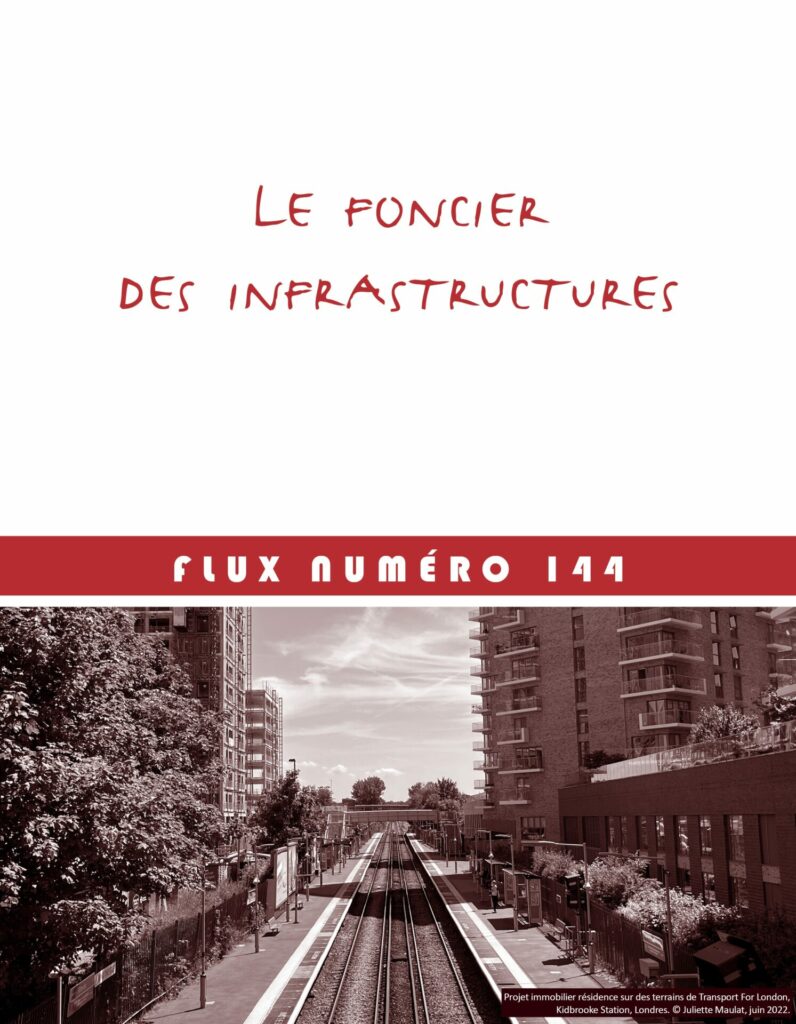
We are delighted to announce the publication of issue 144 (2026/02) of the journal Flux, ‘Le foncier des infrastructures’ edited by Juliette Maulat, Jean-Baptiste Frétigny and Natacha Aveline.
Contents
Land for infrastructure. From shifts in network operators’ land and property strategies to territorial and environmental controversies
The Maine-Montparnasse project (1953–1973): the SNCF’s early embrace of property development in a Parisian station neighbourhood
- By Adrien Duval
From infrastructure coverage to residual land: the continuum of railway land development in the Netherlands
- By Inès Delépine and Mathilde Pedro
Land in 3D! Excavation and backfilling: a zero-sum game? The volumetric impacts of infrastructure projects in Toulouse on the Ariège plain
- By Hélène Blaszkiewicz, Jérémie Cavé, Léa Sébastien, Hélène Guétat-Bernard, Sylvain Kuppel, Astrid Avellan and Laure Laffont
From the greening of industries to increased land use: the paradox of the photovoltaic and excavated soil management sectors
- By Maxime Algis
The significance of the event
River and port land: a tool for urban decarbonisation?
- By Jean Debrie
Interview
Interview with Rémi Feredj, former Chief Executive of Poste Immo
- With Matthieu Gimat and Juliette Maulat
Reading notes
Coudroy de Lille, L., Brun, J., Burgel G., Montigny G., Ozouf-Marignier M.-V. (eds.), 2023, Marcel Roncayolo: In the Footsteps of a Unique Geographer, Marseille, Parenthèses, 320 pp.
- By Hélène Nessi
Rouillard, D., and Artuphel, M. (eds.), 2024, *Magic: The Irrationality of Infrastructure*, Geneva: MétisPresses, 213 pp.
Bertho R., Keravel S., Pousin F., Roseau N. (eds.), 2024, Photographing Greater Paris: A Visual History of Metropolitan Change, Paris, Hermann, 335 pp.
Herr-Laporte, C., 2025, *Être à l’heure. Coordonner les mobilités en France au XVIIIe siècle*, Paris, Presses des Mines, ‘Histoire, sciences, techniques et sociétés’ series, 279 pp.
- By Marie Hue
David Sayagh, *The Sociology of Cycling*, 2025, Paris, La Découverte, ‘Repères. Sociologie’ series, 128 pp.
Nathalie Roseau is taking part in the 17th conference of the European Association for Urban History, ‘City Networks in Europe and Beyond’, which is being held in Barcelona from 2 to 5 September 2026.
Together with Christoph Bernhardt (Humboldt University), she is organising a session entitled ‘Rethinking Modern Urban Infrastructures in the Light of the Anthropocene, 19th–20th century’.
Session Abstract
The contribution, over the last three centuries, of urbanisation processes (technical, social, economic, political and cultural) to the ‘Anthropocene’ —that is to say, the alteration of the biosphere by human activities, which is having dramatic consequences for the planet’s environmental boundaries—calls for a rethinking of approaches and subfields of urban history through the lens of the Anthropocene. Although the term ‘Anthropocene’ is contested in public and scientific debates, the transdisciplinary controversies surrounding this issue over the past two decades can help to reformulate research questions in urban history and to innovate established concepts in urban political, cultural and environmental history. With this in mind, the session focuses on urban infrastructures and invites participants to re-examine the emergence and ecological footprint of urban networks (water, transport, energy, waste, data, etc.) in terms of their spatial and material scales, their socio-political configurations, and their human and non-human agents. Contributions, grounded in empirical research, are expected to foster the convergence of the fields of urban history and Anthropocene studies.
This session features presentations by Giulia Scotto, Jaume Valentines-Álvarez, Sabine Barles, Etienne Dufour, Nathalie Roseau, Timothy Moss, Matthijs Degraeve, Erika Hanna, Dimitra Kanellopoulou, Charles Ambrosino and Antoine Brochet, Monika Motylinska and John Lagae, followed by a concluding discussion led by Carl Nightinghale.
You can find the detailed programme for the session on the EAUH2026 conference website.
Nathalie Roseau will present a paper entitled ‘Consciousness and denial of/in the Anthropocene. How did New York envisage its metropolitan future in the early 1970s?’
Paper Abstract
The Anthropocene era (Chakrabarty, 2018) is a long-standing period of history characterised by competing rationales that are acknowledged when the time comes to move on. One of its aporias concerns the concepts of ‘consciousness’ and ‘denial’. The growth of knowledge has continually taught us about the risks of upheaval and multiplied warnings. Yet, despite the predicted disasters, trajectories have continued along their course and the “Great Acceleration” has persisted. This paper focuses on New York City in the early 1970s. This period, marked by the end of the Vietnam War, was also a time of growing awareness of the planet’s scale (captured by the Apollo missions, from ‘EarthRise’ in 1968 to ‘Blue Marble’ in 1972) and its finite nature (*The Limits to Growth* was published in 1972, followed by the 1973 oil crisis), whilst 1970 saw the creation of the Environmental Protection Agency. In New York, three major exhibitions presented the state and future of the metropolis, reflecting the socio-environmental catastrophe. In May 1970, the exhibition “The Rise of American Architecture, 1815–1915” opened at the Metropolitan Museum of Art, looking back at the architectural heritage of the 19th century. In October 1972, the exhibition “Olmsted’s New York” at the Whitney Museum of American Art celebrated the 150th anniversary of the birth of Frederick Law Olmsted, the landscape architect and designer—along with Calvert Vaux—of Prospect Park and Central Park. The exhibition toured the United States under the title “The New York that might have been”. The installation of scenographic elements immersing visitors in the scale of the creations and destructions that shaped metropolitan urbanism echoed CITYRAMA, inaugurated at the same time by the Museum of the City of New York, a multimedia installation in which visitors were introduced to the city’s centuries-old history in 17 minutes. By focusing on the exhibitions through which New York represents and renews itself in this moment of lucidity, this article seeks to understand the mirror that opens onto the metropolis: that of an awareness of the environmental crisis. By scrutinising this infrastructure of visuality through which the city envisions its future, we shall seek to understand the enigma of clarity and blindness in which urban societies find themselves caught.
Ludovic Halbert, Lucia Shimbo and Ivana Socoloff have just published their book *Handbook on Financialisation and Space*, which was published by Edward Elgar on 21 July 2026.
“Combining scholars from around the world, this Handbook presents theories, methods and case studies that illuminate the far-reaching role of financial markets in the production of space. Focusing on the role of finance, it critically examines the uneven and conflictual geographies of contemporary capitalism.
Expert contributors critically investigate how land, housing, infrastructure and even nature are recast as assets for global investors. Drawing on case studies spanning agribusiness regions in Brazil, earthquake-stricken villages in Nepal and Canadian forests and mines, the authors trace the contours, actors and power relations of planetary financialisation. Adopting a multidisciplinary approach, they advance a spatial and socioecological lens exposing how the planet, in all its socio-ecological dimensions, has become the terrain of financial markets’ extractive practices, as well as the frictions, contradictions and limits that unsettle them.
This Handbook is a crucial resource for scholars, students and researchers of human and financial geography, urban and economic sociology, architecture and planning, as well as anthropology and political science. Its coverage of urban development and socio-environmental (de)regulation also makes this essential reading for activists and policymakers concerned with the socio-environmental consequences of financialisation.”
The book *Handbook on Financialisation and Space*, published by Edward Elgar
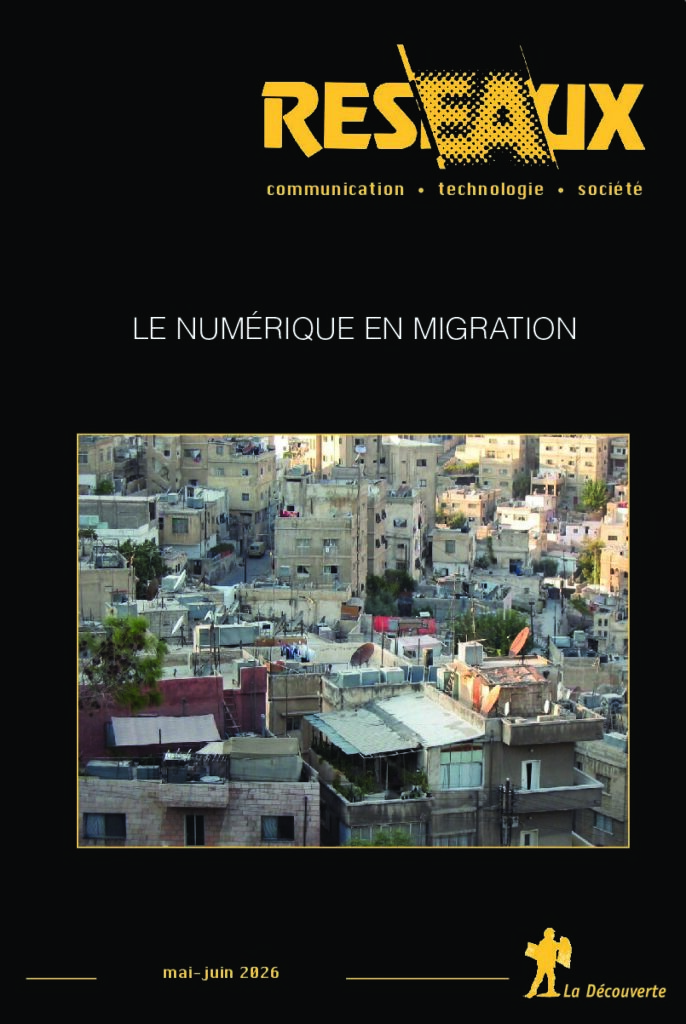
We are delighted to announce the publication of issue 257 (2026/3) of the journal Réseaux, entitled Digital Technology and Migration, edited by Laura Odasso and Sarra Chaïeb.
Overview
Matchmaking in Chechen and Ingush communities in Europe; the delayed reconnection of the Russian-speaking Jewish diaspora in France; transnational marital and parenting practices among retired people from West Africa; access to supplementary pension rights in France; the virtual construction of self-identity by young Iraqi Yazidis to gain access to migration programmes in the United States; and the work of undocumented meal delivery drivers in Paris – all offer, in this issue of Réseaux, original insights into digital practices before, during and after migration and settlement. Through research employing a variety of methods and interdisciplinary approaches that take into account the intrinsic nature of social relationships, this issue explores how digital tools weave and reconfigure emotional ties – whether familial, communal or national, and whether real or imagined – in the context of mobility. Three cross-cutting themes – age and generational relationships, access or lack of access to rights, and social, family and digital norms – contribute to the existing literature linking migration and digital technology. The contribution of this issue lies in its analysis of digital tools, which prove to be a relevant empirical approach and a useful heuristic tool, in that they enable us to measure the consequences of public policies – such as policies on belonging – which define the boundaries of inclusion and thus of belonging, within a rapidly changing technological and political environment.
Contents
Digital Technology and Migration
- By Laura Odasso and Sarra Chaïeb
Practices and norms of online matchmaking in Chechen and Ingush communities in Europe
- By Agathe Guy and Kristina Kovalskaya
Delayed digital reconnection. The last Soviet generation, Facebook and the belated re-establishment of transnational ties amongst Russian-speaking Jews in France
The Flows of Love: Digital Marital and Parental Relationships Among West African Retirees in France
E-migrants: the pressure on older immigrants to stay connected
- By Armèle Cloteau and Hannah Bramekamp
The project of exile disrupted by the virtual world. An investigation into the Facebook self-presentation strategies of men caught up in the conflicts in Iraq
Research note
‘Anyway, I’m stuck here.’ Delivery work as a means of retaining workers in terms of time, space and administrative status
Reading notes
Sébastien BROCA, Caught in the Web: From the Utopia of the Internet to Digital Capitalism, Paris, Seuil, 2025, ‘Liber’ series, 284 pp.
Seok-Kyeong HONG, On the Road with BTS, Paris, Decrescenzo Éditeurs, 2024, 286 pp.
- By Woojin Na
Françoise DAUCÉ, Benjamin LOVELUCK and Francesca MUSIANI, The Rise of Digital Authoritarianism: Repression and Resistance on the Internet in Russia, 2012–2022, Paris, Presses des Mines, 214 pp.
Catherine BOUKO, Images and Civic Expression: Communicating Emotions and Opinions on Social Media, De Boek Supérieur, 2024, 288 pp.
Robert GORWA, *The Politics of Platform Regulation: How Governments Shape Online Content Moderation*, New York, Oxford University Press, 2024, ‘Oxford Studies in Digital Politics’ series, 237 pp.
The journal Flux awards a prize to early-career researchers who have published in its pages. This prize is open to early-career researchers who are currently undertaking a PhD or who defended their thesis no more than five years prior to the year of the award. The prize is awarded in the year following publication.
For 2026, the journal has decided, as a one-off, to award both a first prize and a second prize. The selection committee is made up of members of the journal’s editorial board. Assessment is based on criteria of scientific originality, quality of writing, engagement with fieldwork (in the broadest sense: case studies, archives, quantitative data sets, corpora of literary works, etc.), and the contribution to the journal. Articles based on doctoral theses will be particularly welcome, with a focus on empirical material (fieldwork, archives, and other sources).
Prizes
The prize for these articles, published in 2025, is worth 1,500 euros.
The 2026 First Prize has been awarded to Alix CHAPLAIN, who holds a PhD in Urban Studies from the Paris Institute of Political Studies (Sciences Po) and is a contract lecturer and researcher at Sciences Po Saint-Germain-en-Laye, for her article entitled: ‘When infrastructure failures reshape political solidarity: Lebanese fragmentation through the lens of access to electricity’, published in issue 139–140 on Citizenship and Urban Infrastructure of the journal Flux.
This study explores how the crisis in Lebanon’s electricity grid – a symbol of the state’s failings – has turned access to electricity into a political and social issue. Faced with chronic power cuts, citizens are developing decentralised solutions, reshaping power relations and revealing the country’s sectarian, economic and territorial divisions. The article shows that the grid and its alternatives are becoming spaces for protest, domination or solidarity, offering a fresh analysis of the socio-material dynamics within a society in crisis.
The 2026 Second Prize has been awarded to Ali MOHSIN for an article published in English on the material anthropology of biometric citizenship infrastructures. He holds a PhD in anthropology and sociology from the Graduate Institute of International and Development Studies (GIDS) in Geneva and is currently a postdoctoral researcher at the Global Partnership Network (GPN) at the University of Kassel in Germany. The article is entitled: ‘Infrastructures of excess: Politics of biometric and data-based citizenship in Pakistan’s cash transfer programme’.
This article examines the political subjectivities generated by digital social protection schemes, through a study of cash transfer programmes in Pakistan (BISP/EKP). By analysing these schemes as an infrastructure of inclusion, it reveals how they shape the experiences of female beneficiaries, caught between the formal reinforcement of their citizenship and practical disillusionment. Based on ethnographic research conducted in Lahore (2019–2022), the study shows that digital technologies, which are supposed to facilitate access to rights, are instead becoming an infrastructure of excess: labourious, time-consuming processes and profound contradictions in the relationship with the state. A critical analysis of the promises and limitations of digitalised social policies.