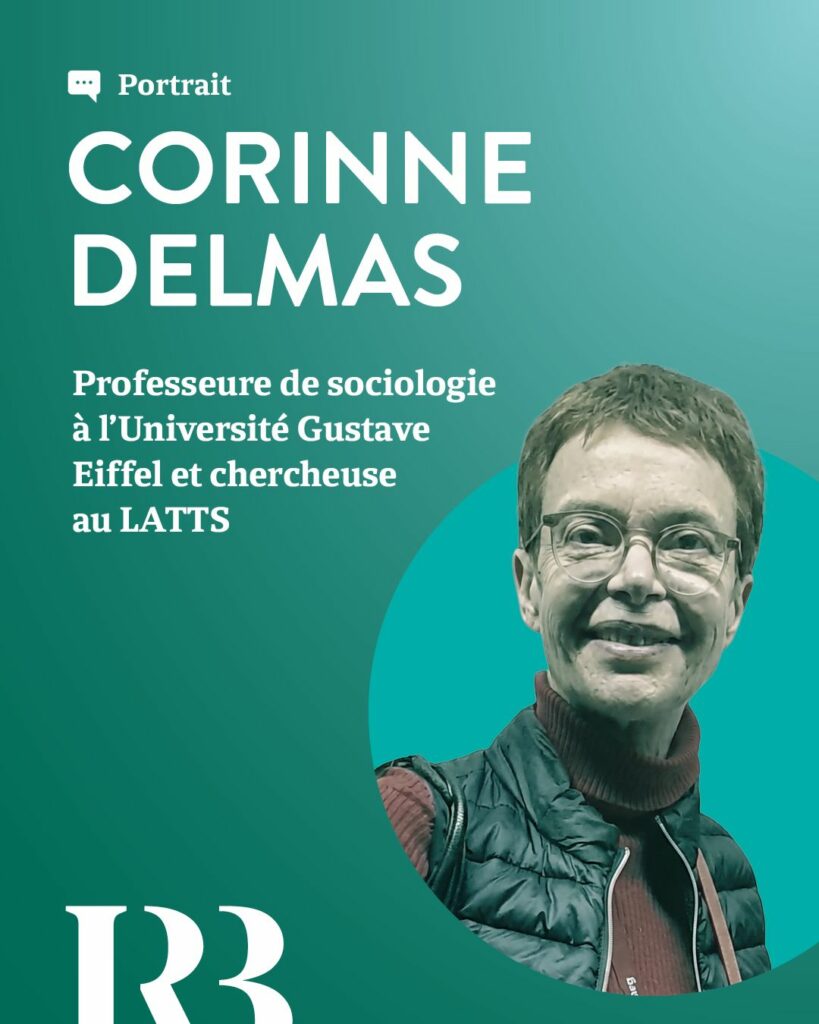
Corinne Delmas has been appointed to the Scientific Council of the Robert Badinter Institute. As a professor of sociology at Gustave Eiffel University, Corinne Delmas is currently researching the legal professions in France. Following her HDR research on notaries and the publication of a book on this profession, she is now focusing on contemporary changes – both socio-demographic (the feminisation of the profession and gender relations) and socio-technical (changes in legal jobs and work linked to AI) – within the legal professions.
“The Robert Badinter Institute aims to promote original and forward-looking thinking, to develop and support research, and to mobilise and disseminate knowledge on standards, legal regulation, the remit and functioning of the justice system, across all relevant academic disciplines.”
The offer at a glance
Job title: Science Communication Officer
Outreach Officer Post: Laboratory of Techniques, Territories and Societies, Champs-sur-Marne
Start date: December 1st 2026
Application: External competition for CNRS Research Engineer
F: Culture, communication, production and dissemination of knowledge
Job description
Mission
To contribute to raising the profile and disseminating the laboratory’s scientific activities and findings by proposing and implementing internal and external communication and outreach initiatives tailored to different audiences, with a view to sparking interest in scientific research among these diverse groups and supporting the implementation of the laboratory’s scientific programme.
Activities
- Develop and implement projects aimed at disseminating scientific knowledge and engaging the public, in consultation with the laboratory management
- Design, organise and deliver science outreach activities, events and initiatives.
- Support the organisation of scientific activities and events by proposing and implementing outreach and communication initiatives and materials
- Initiate and propose the implementation of new initiatives, such as a series of podcasts, short videos and any other media, in consultation with the relevant authorities
- Develop and design communication materials (web content, leaflets for temporary exhibitions, articles, etc.), and ensure they are kept up to date and distributed
- To raise awareness of scientific knowledge and research among various audiences through educational and outreach initiatives
- Draw up specifications for the implementation of communication and mediation schemes within the laboratory
- Manage, disseminate and archive information relating to the laboratory’s activities
- Exchanging best practices and information through networks for communication and science outreach
Skills
Knowledge: This refers to fundamental knowledge (theoretical knowledge relating to a discipline or sector) – prioritise each area of knowledge
- Communication techniques
- Environment and professional networks
- Theory and concepts of communication
- Communication and multimedia tools and technologies
- Sociology of Audiences
- Expertise in the field
- Scholarly publishing
- Information mediation
- Speaking skills
- English language proficiency: B2 (Common European Framework of Reference for Languages)
Skills: These refer to practical skills and the ability to use various tools and techniques, acquired through experience or vocational training. Prioritise each skill.
- Engage and lead
- Managing a project
- To act in an advisory capacity or to assist with decision-making
- Initiate and manage partnerships
- Communicate and demonstrate teaching skills
- Coordinate and lead educational activities
- Write messages and materials tailored to different audiences
- Working as a team
- Use industry-specific software
- Identify and prioritise needs
- Knowing how to plan and meet deadlines
- Dealing with emergencies
- Writing content tailored to specific audiences
- Monitor industry developments
Interpersonal skills: These refer to the behaviours and attitudes appropriate to the role in question and its environment. Prioritise each interpersonal skill
- Creativity / Innovative thinking
- Interpersonal skills
- Independence, responsiveness, rigour and reliability
- Proactive approach
- Organisational skills
- Intellectual curiosity
- Critical thinking
- Respect confidentiality
Background
The Techniques, Territories and Societies Laboratory (LATTS) is a Joint Research Unit under the supervision of the CNRS, the École Nationale des Ponts et Chaussées (ENPC) and the Université Gustave Eiffel (UGE). It is based at two sites within the Cité Descartes in Champs-sur-Marne and has a staff of around 80.
The Science Outreach Officer will work within the administrative team (6 people) and report to the Secretary General. He/she will be required to travel to the laboratory’s second site (Bois de l’Étang) and possibly to various other locations, mainly in the Île-de-France region, as part of their duties.
Application
You can apply for the open competition via the CNRS Careers website (from 9 June to 9 July 2026).
Emmanuelle Santoire is taking part in the seminar ‘The Legal Spatiality of Land, Water, and Infrastructure’, organised by the International and Interdisciplinary College of Territorial Sciences (GIS CIST). It will take place on Monday 8 June 2026 at the Condorcet Campus in Paris-Aubervilliers.
She will present ‘Why is it important to take a close look at legal mechanisms when studying territorial governance in geography? Some examples from the energy-territory nexus’.
Find all the information about this event on the CIST website
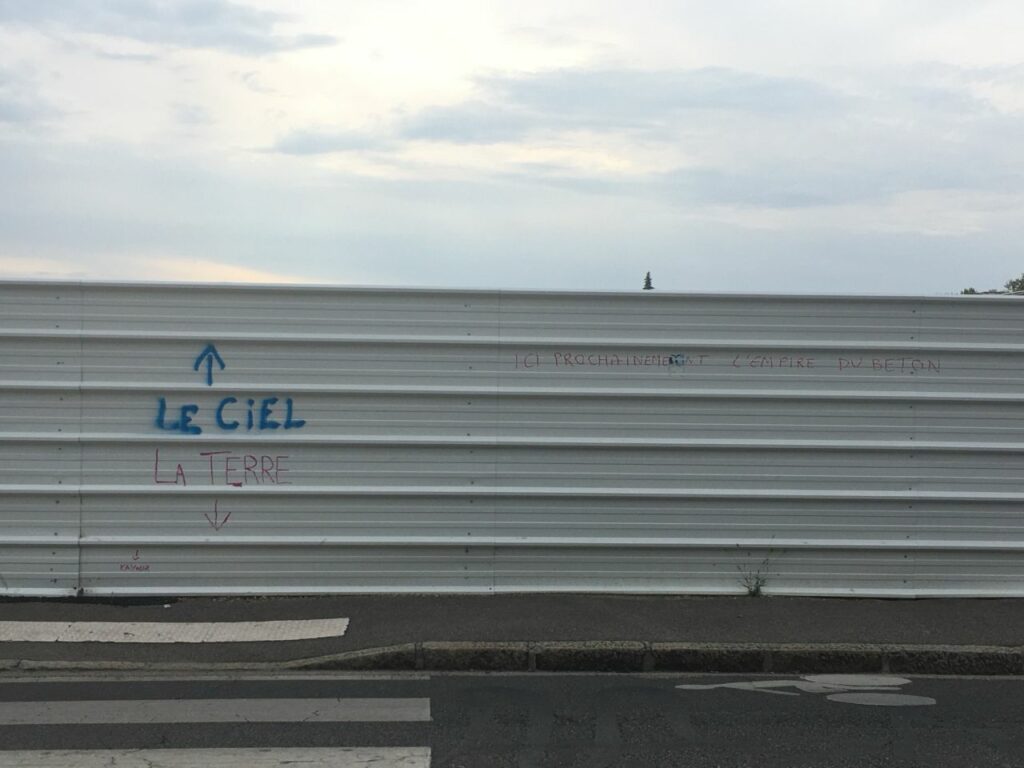
The “PERMIS DE CONSTRUIRE” project has been selected as a winner of the CNRS’s Sciences et/en Sociétés call for proposals. This research-creation project forms part of the Cultural Urbanism Movement. It combines theatre and urban planning to explore contemporary housing development. Yoan Miot is in charge of the research aspect and Arthur Fourcade is the director of this project.
The aim of *Permis de construire* is to create a grand theatrical epic lasting around ten hours, which will seek to explore all the practical and philosophical aspects of housing construction.
The results of the “PITT: Interdisciplinary Projects and Thesis Trios” call for proposals have just been published. The LATTS is among the successful applicants!
DC_RISK_CITY
Data centres, multifactorial risks and urban resilience
- Main research areas: Data centres, urban metabolism, financialisation, geopolitics
- Brief summary of the project: The aim of the project is to analyse the socio-ecological dynamics and multifactorial risks associated with the establishment of data centres, with a view to creating resilient and resource-efficient cities.
- Principal investigators: Félix Adisson (LATTS, Université Gustave Eiffel), Petros Chatzimpiros (LIED, Université Paris Cité), Ludovic Halbert (LATTS, CNRS), Clément Marquet (CSI, École des Mines Paris – PSL)
NESPAMEX
New Public Spaces: from design to management
- Main research areas: Soils / maintenance / metabolism
- Brief summary of the project: The transformation of public spaces in urban areas, shifting from a planning approach to an operational approach.
- Principal investigator: Daniel Florentin (LATTS, École Nationale des Ponts et Chaussées)
PERENNIAL
Sustainability of Buildings and Infrastructure in the Face of Climate-Related Stresses
- Main research areas: Buildings / maintenance
- Brief summary of the project: The project aims to shift the maintenance of urban technical infrastructure towards low-tech practices that can be incorporated into future renovations or construction projects.
- Principal investigator: Laetitia Mongeard (Lumière Lyon 2 University)
Daniel Florentin is involved in the PÉRENNIS project. We are looking for a PhD candidate to work on changes in maintenance practices among water operators in the context of increasing climate pressures. Please email your application to Daniel Florentin.
Félix Adisson and Ludovic Halbert will be speaking at the ACRIMET seminar (Critical Approaches to Metropolisation and its Theories), organised by Anne Clerval and Clément Barbier. The talk will take place on Wednesday 10 June from 2pm to 5pm at the National Institute for Demographic Studies (9 Cours des Humanités, Aubervilliers) in the Sauvy Room.
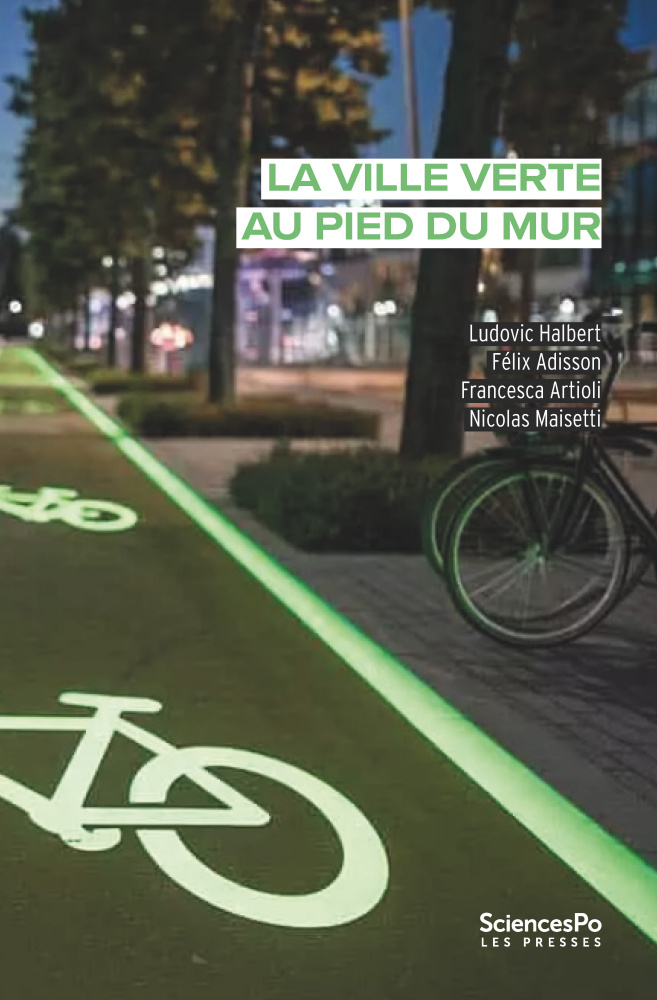
They will be presenting their book *The Green City to the Wall: When Austerity Dictates Environmental Policy*, co-authored with Francesca Artioli and Nicolas Maisetti and published by Presses de Sciences Po.
To register for the seminar (before 9 June 2026)
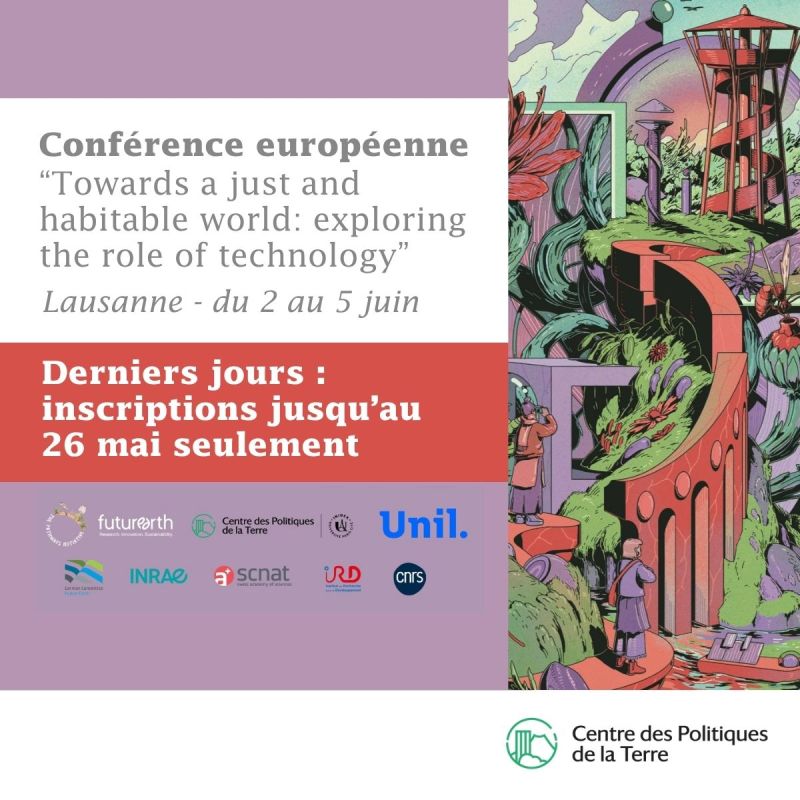
Operationalizing Energy Justice: Social Sciences and Quantitative Modeling
In a nutshell
Emmanuelle Santoire is taking part in the workshop entitled “Operationalising Energy Justice: Social Sciences and Quantitative Modelling”.
Description
This session proposes an interdisciplinary exploration of energy justice through the combined lenses of social sciences and quantitative modeling. It brings together expertise from energy system modeling and planning, energy geography, decision-support modeling, and the analysis of underground resource use, availability, and associated industrial developments. The session addresses a central challenge of contemporary energy transitions: translating the normative concept of energy justice into operational tools that inform energy planning and resource allocation. Designed as an interactive and participatory workshop, the session will engage participants in real-time modeling exercises, allowing them to explore how different justice-oriented constraints affect energy system outcomes and material requirements. By directly interacting with simplified planning models and resource-use frameworks, we will collectively examine trade-offs between technological choices, resource constraints, and equity considerations. A core objective of the session is to gather feedback from the audience in order to foster a collective reflection on how energy justice can be defined, interpreted, and operationalized through the lens of energy planning and resource use, thereby contributing to more transparent, inclusive, and just decision-making processes.
Undisciplined Life: When Technological Infrastructures Lose Control
In a nutshell
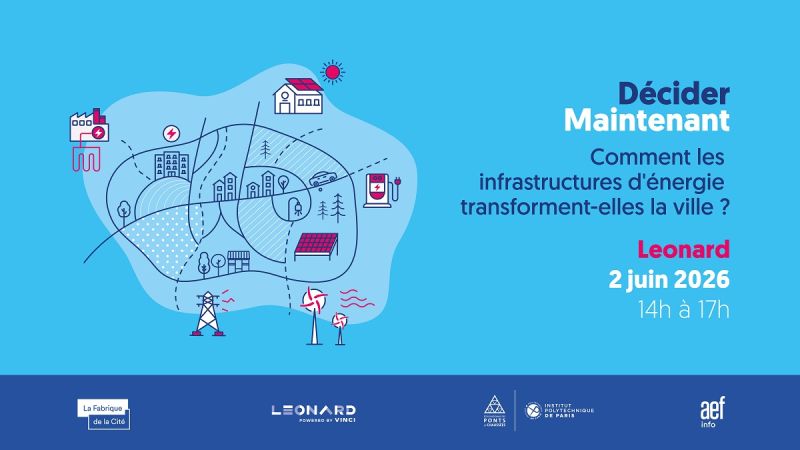
Olivier Coutard is taking part in the thematic session entitled “Undisciplined Life: When Technological Infrastructures Lose Control”.
Description
Over the last two centuries, and particularly since the mid-twentieth century, the development of large infrastructure systems has deeply affected ecosystems (and biogeochemical cycles) on a planetary scale, according to highly uneven geographies of opportunity and exposure. In the recent period, infrastructures have become increasingly associated with living organisms, ecosystems, and more broadly with ecology, as reflected in the development of “green infrastructure”, the infrastructuring of living systems in so-called nature-based solutions, the growing pervasiveness of infrastructure-based environments – not to mention the increasingly-present reality of infrastructure spaces (ducts, galleries, facilities…) as living environments. However, an unavoidable tension exists between infrastructure projects for living environments and ecological dynamics;the former rely on a reductionist approach that seek to standardize and control ecosystems, while the latter operate through nonlinear, adaptive, and often unpredictable dynamics. This tension almost necessarily results in various forms of disruption to the script assigned to living organisms within these infrastructure projects. It also entails social consequences, through infrastructure failures and environmental crises that tend to amplify existing inequalities.This session will question these unescapable tension(s) between infrastructural developments and the dynamics of ecosystems in different social context, as well as the inequalities resulting from these tensions.
This symposium will take place on Tuesday 2 June, from 2 pm to 5 pm, at Leonard’s premises at 6 Place du Colonel Bourgoin, Paris 12th arrondissement.
Two researchers from LATTS are taking part:
- Daniel Florentin for Session 1 – Developing existing networks: how, and to what extent?
- Eliot Boulard for Session 3 – What spatial planning tools can support the transition? He will present the work carried out as part of the I.JET.IDF research project, led by Emmanuelle Santoire.
The ‘Décider Maintenant’ symposia are organised by the think-tank La Fabrique de la Cité, Leonard (VINCI’s foresight and innovation platform), and the École nationale des ponts et chaussées, focusing on the themes of energy and mobility.
Register for the conference via this link.

Emmanuelle Santoire will speak at the CNRS thematic workshop entitled ‘Agrivoltaics: definition, challenges and implementation – A multidisciplinary and international approach’ on the energy and spatial challenges of agrivoltaics.
His talk will take place on Monday 1 June 2026 in Saint-Malo.
Introduction to the ‘Agricoltaics’ thematic school
If you would like to learn about agrivoltaics or discover new aspects of it, you are welcome to join the CNRS thematic school, which will take place in Saint-Malo from 1 to 5 June 2026. This international and interdisciplinary thematic school is open to PhD students, lecturers and researchers. Participation in this school is not restricted to any particular discipline, and international researchers are welcome to apply as the working language will be English.
As a means of reconciling several key issues—namely food production and energy generation—agrivoltaics is becoming increasingly popular. Whilst its development almost inevitably involves turning to the so-called ‘hard’ sciences to partly justify its growth and address the technical and technological challenges that its implementation entails, it must be acknowledged that the contributions of the humanities and social sciences are largely overlooked. However, the existence, development and design of agrivoltaic installations cannot be uniform, as they depend largely on the divergent needs expressed by a wide range of stakeholders.
The aim of this course is threefold. Firstly, it seeks to revisit the very concept of agrivoltaics in order to highlight not only the synergies that were originally intended, but also those that have emerged subsequently or have been overlooked. Secondly, it aims to emphasise the need to avoid one-size-fits-all agrivoltaic solutions. This is why, building on an open Franco-American international partnership, the sharing of experiences will not be centred on France. Finally, the school aims to highlight the importance of interdisciplinarity and, in particular, the role of the humanities and social sciences in determining these technological choices in response to complex challenges. This is why the work and methods of the humanities and social sciences will be fully presented and utilised through the collective development of scenarios within workshops.

We invite you to read the call for expressions of interest from the journal Flux:
Urban production and management: troubling knowledge
Edited by Elisabeth Lehec, Sabine Bognon, Agnès Bastin and Jean-Baptiste Bahers.
Lecture by Raphaële BERTHO, photography historian and senior lecturer at the University of Tours, at the Laboratory for Artistic and Cultural Interactions, Transfers and Ruptures (InTRu), and Nathalie ROSEAU, architect and urban planner, and professor at the École nationale des ponts et chaussées, at the Laboratory for Techniques, Territories and Societies (LATTS).
This presentation is part of the seminar ‘The Paris Region: Territories and Cultures’, organised by Emmanuel Bellanger (CHS, CNRS/University of Paris 1), Paul Bastier (National Archives), Béatrice Hérold, Dominique Juigné and Anne-Cécile Tizon-Germe (Paris Archives), Christine Langé and Caroline Andreani (Seine-Saint-Denis Departmental Archives), Rosine Lheureux (Val-de-Marne Departmental Archives) and Sylvie Zaidman (Paris Musées). The 2025–2026 seminar series is devoted to “Senses and Feelings in the Paris Region, 18th–21st Centuries”.
Raphaële Bertho and Nathalie Roseau have chosen to focus on the Paris Ring Road by undertaking a photo-historical study based on the premise that photography can help to reveal the vernacular uses that have shaped this political landscape over the last century. The presentation will focus in particular on the Porte de Bagnolet, a site that undoubtedly embodies the way in which the development of the belt’s territory has affected, or even caused the disappearance of, previous vernacular practices.
![Tour de Paris. Porte de Bagnolet [a cyclist passing a flock of sheep, 4 August 1907], Agence Rol, Source: Bibliothèque Nationale de France.](https://latts.fr/wp-content/uploads/2026/05/Tour_de_Paris_Porte_de_.Agence_Rol_btv1b6914251c_1-1024x769.jpeg)
We are pleased to announce that the LATTS 2024 Annual Report has just been published.