This session will focus on the special issue of the Journal of Urban Technology:
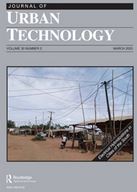
Eric Verdeil and Sylvy Jaglin (coordinators)
Electrical Hybridizations in Cities of the South:
Journal of Urban Technology, Vol. 30, No. 2, 2023
https://www.tandfonline.com/toc/cjut20/30/2
Discussant: Roberta Pistoni

Paul Gourdon is a research engineer (CNRS) specializing in data production, processing, and analysis. A geographer by training, his thesis focused on the circulation of urban models and territorial cooperation in Europe, questioning the spatiality of political knowledge concerning ways of governing cities. He has also worked on small and medium-sized cities in France (PAVIM project) and Europe (TRADEVE project), focusing in particular on the demographic trajectories and social characterization of these cities at the inter-urban level. From a methodological point of view, he is interested in the articulation of qualitative and quantitative approaches, network analysis, spatial analysis, and textual analysis.

Rocio Calzado joined LATTS to develop a thesis with Johnathan Rutherford and Martine Drozdz. Entitled "Beyond demolition: the socio-technical transformation of large housing estates," her thesis explores a paradigm shift in the governance of public housing towers and blocks, moving from demolition to transformation, and includes an analysis of the maintenance practices of these towers and blocks. She holds a bachelor's and master's degree in architecture from the Polytechnic University of Madrid, as well as a master's degree in public policy applied to ecology from Sciences Po Paris. Rocio has participated in research exchanges at various universities, including Roma Tre, New York City College, and Tokyo Tech, while also developing a career as an urban planning practitioner. She has worked as an urban planner at MVRDV, a Dutch architecture and urban planning firm, and as an urban project manager at ACLAA, a Paris-based urban planning firm. She is currently developing her thesis as part of a CIFRE contract with the urban planning agency AUC, using the transformation of the Tour des Poissonniers as a case study. As part of her doctoral project, she received a FAIRE grant from the Pavillon de l'Arsenale to make a documentary film about the results of her thesis. To do this, she teamed up with a filmmaker and colleague and created the DOCAR collective, which is responsible for developing this documentary film.
Please find below the call for papers for the special issue of Flux magazine:
New historical perspectives on 'off-grid' techniques (Vol. 2):
'Off-grid' techniques and the network/off-grid dichotomy (18th-20th centuries) in France and from an international perspective
New historical perspectives on 'off-grid' techniques (Vol. 2):
'Off-grid' techniques and network/off-grid dichotomy (18th-20th centuries) in France and in international perspective
Coord. Benjamin Bothereau, Olivier Coutard, Jean-Baptiste Fressoz, and Joel Tarr
– French version: https://revue-flux.cairn.info/wp-content/uploads/sites/8/2017/07/Flux-Appel-dossier-Techniques-hors-reseaux-Vol-2-VF-BAP-1.pdf
– English version: https://revue-flux.cairn.info/wp-content/uploads/sites/8/2017/07/Flux-Appel-dossier-Techniques-hors-reseaux-Vol-2-EV-BAP-1.pdf
Articles may be submitted in French or English, accompanied by a brief CV including full contact details and institutional affiliation, and should be sent to the following addresses: (bbothere@hotmail.fr – olivier.coutard@enpc.fr – jean-baptiste.fressoz@ehess.fr) by September 15, 2025.
The article must meet the journal's standards, i.e., a text of no more than 50,000 characters (including spaces), an abstract of 1,000 to 1,500 characters in French and English, and a biographical note of approximately 600 characters.
For more information about Flux and the author guidelines, visit: http://www.cairn.info/revue-flux.htm – https://www.cairn.info/revue-flux.htm.?contenu=apropos
The dossier is scheduled for publication in mid-December 2026.
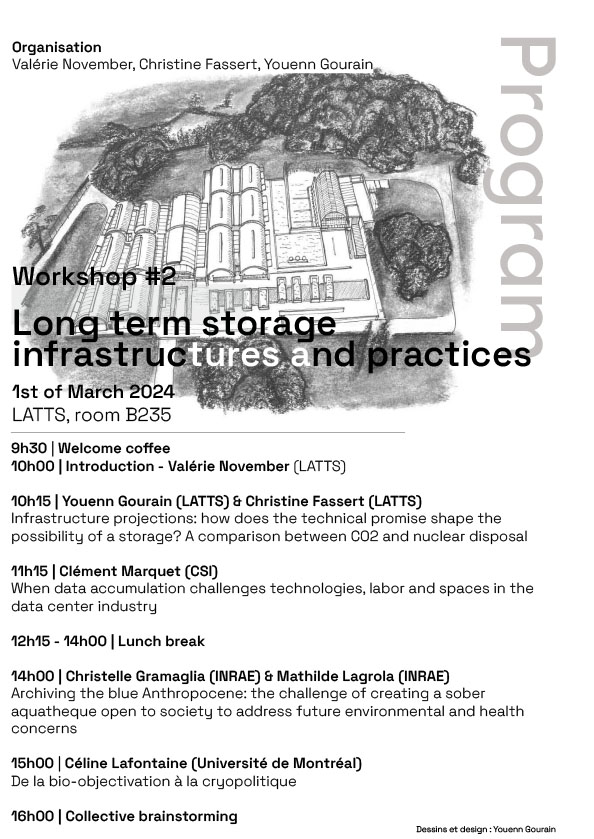
Valérie November, Christine Fasser, and Youenn Gourain are organizing this second seminar of the LESLIE research project on long-term storage infrastructure.
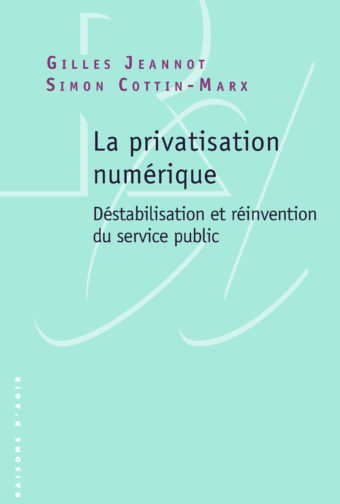
This session will focus on the book:
Gilles Jeannot and Simon Cottin-Marx,
La privatisation numérique (Digital Privatization), Raison d’agir, 2022
Discussant: Antoine Courmont
Digital privatization seems to take the gentle form of "apps" that improve everyday life and are like a new public service. However, its social effects are considerable: it allows interference between the offerings of global economic actors and localized public policies. Public authorities have been able to respond by mimicking this, particularly with the slogan of the platform state. Attempts to reclaim digital commons also open up alternatives, notably in the form of activism by civil servants. This book presents the different configurations of these interferences, their economic and social consequences, and the prospects for resistance and reinvention of public services.
The journal Flux is issuing a call for submissions for this issue:
"Technical Utopias," coordinated by Fanny Lopez, Anaël Marrec, and Olivier Coutard.
The text of the call for submissions is available on the journal's website: https://revue-flux.cairn.info/wp-content/uploads/sites/8/2017/07/Flux-Appel-Utopies_VF.pdf
This issue of Flux magazine consists of texts published in advance.
To follow all the articles in this issue: https://www.cairn.info/revue-flux-2024-1.htm
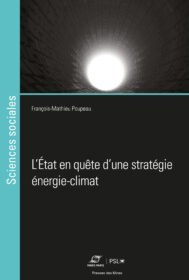 The State in Search of an Energy and Climate Strategy
François-Mathieu Poupeau
Presses des mines, 2023, 340p.
Energy and climate have become major concerns in France, challenging the government in its role as strategist. How is it approaching this new role? How is it shaping its vision for the future? How is it setting the broad guidelines intended to respond to the challenges of combating climate change and energy transition? These questions are at the heart of this book, which examines the drafting, from 2017 to 2020, of the National Low-Carbon Strategy (SNBC) and the Multi-Year Energy Program (PPE). Based on an in-depth survey of the actors who participated in their development, it offers a unique contribution to the sociology of public administration and decision-making in a field that has yet to be extensively studied. It also identifies a little-known facet of the state's inaction on climate change: the powerlessness of the administration in charge of this issue in France. Relegated to a peripheral position in the bureaucratic hierarchy, with limited staff and resources, no real leverage for action, and little support from politicians, it is struggling to generate the momentum needed to achieve the goal of carbon neutrality by 2050.
François-Mathieu Poupeau presented his book at the Ecole des Ponts ParisTech during the latest edition of the RDV Science&Société (February 14, 2024).
Link to view the presentation
Interview on the website of the Agence d'informations spécialisées (AEF) (news item no. 704639, January 9, 2024)

Tomy Goulding is an architect and urban planner. She is beginning her PhD at LATTS under the supervision of Sylvy Jaglin and Claire Simonneau. Her thesis topic focuses on the rise of self-produced photovoltaic (PV) solar systems in cities in sub-Saharan Africa, which is leading to the hybridization of urban electrical configurations. Her work focuses on whether and how forms of governance for this hybridization are emerging, and examines the socio-technical representations and imaginaries that inspire them. In addition, the thesis questions how the rise of solar PV is shaped by urban socio-environmental inequalities and, in turn, impacts them.
She has chosen the Dakar region as her field of investigation, where she has already traveled several times as part of her Master's degree specializing in Cities of the South at the Paris School of Urban Planning, as well as for her thesis during her first two-month field mission in October 2023.
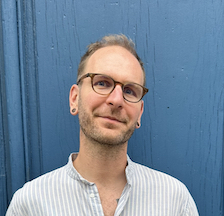
James Christopher Mizes is a postdoctoral researcher working on the ANR-Access ERC project entitled "Securitizing City-Building." His research focuses on the governance of cities and financial markets in the Global South, analyzed on the basis of ethnographic studies in West Africa (Senegal and Côte d'Ivoire). In his thesis, completed at the University of California Berkeley (2019), he focused on the emergence and exercise of municipal authority in Dakar, Senegal, particularly its fiscal and financial relations with the state, investors, and urban citizens. His current research analyzes African financial markets with a focus on financial risk knowledge. He studies how the introduction of this knowledge into these markets provokes—or circumvents—political disputes, and how it transforms the framing of certain public issues. As part of the ANR project, he aims to develop a comparative research project focused on the emergence of financial centers in cities in the Global South. He also co-organizes a collective project, "Flow/Overflow/Shortage: measuring and managing extreme urban conditions," which explores infrastructure problems such as flooding and power outages.
Brian O'Neill, visiting researcher at LATTS, will present his work on Monday, February 5 (10:00-11:30 a.m., room B235 at LATTS)
Climate Adaptation for Whom? Paradoxes, Practices, Politics Surrounding Desalination in the American West and Beyond
Brian F. O'Neill, Ocean Nexus Fellow at the University of Washington's Evans School of Public Policy & Governance (Seattle, USA)
Desalination (producing potable water from saline sources) is now a multi-billion dollar industry, gaining notoriety globally as climate change threatens water supplies, especially for arid, urban regions. Desalination facilities are also increasingly "high-profile," attracting tens of millions of dollars in public and private investment for any "large-scale" project, which has further brought water supply issues to the attention of national and international policymakers. After all, who doesn't want more water? While survey data shows wide-ranging public support for this climate change adaptation technology, local conflicts have arisen regarding not only its ecological impact, but social concerns around inequitable regulatory procedures, unequal representation in decision-making, cost, and the unequal distribution of the water produced. This presentation builds off recent research, providing a synthetic treatment of the problems and politics that have emerged around this “new,” “unconventional” water supply, asking: for whom is this climate adaptation? Mobilizing ethnographic, interview, historical, and news-media archive data collected since 2019 that extends into the early days of the Cold War, the presentation reveals the transnational character of desalting. Working through the claims and policy narratives from sites across the U.S.-Mexico border, Arizona, and California reveals how policy coalitions (private sector, public sector, NGOs, and everyday people) are responding to this growing global industry. While some residents in California have rejected the practice, they do so based, not on "green thinking," but a truly liberal environmentalism that mixes idealized notions of a market economy and environmental justice. In neighboring Arizona, policymakers attempt to revive decades-old plans to pipe water from Mexico to metropolitan centers, an idea rooted in institutional path dependencies that, so far, have not solved the water supply question, but transform it into one about economic growth serving peri-urbanization. Finally, both cases also reveal transnational dynamics such that comparisons with other global localities are brought into the desalination discourse as a means of legitimizing the industry that, as yet, fails to address inequalities in water use and access. The recent history of desalination suggests that even when it is "just another tool in the toolbox," we must begin to ask about the extent to which it is taking an outsized place in water planning discussions to the detriment of more equitable, progressive options.