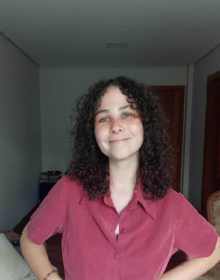
 Mariana Cyrino
is beginning her PhD at LATTS under the supervision of Taoufik Souami, with co-supervision at CSTB and LET (Paris-la-Villette School of Architecture). Her thesis is entitled "Energy renovation approaches and resident usage expertise
" and concerns collective housing rehabilitation projects in which Assistance à Maîtrise d'Usage (AMU) expertise is planned with the aim of achieving more collaborative projects that take into account residents' usage knowledge.
She received her initial training at ENSA Paris-la-Villette, where she obtained a State Diploma in Architecture (DEA). During her studies, she completed internships in various research environments (AMP-UMR LAVUE research laboratory, Energy Environment research division – CSTB), focusing primarily on the technical, urban, and political issues involved in the energy renovation of individual homes. Her final project involved the renovation of a former sanatorium in Burgundy, working with a group of residents, collectives, businesses, and local authorities who were involved in a project to take over the premises. Since then, she has also been involved in a research project led by the Hors-champ association, which focuses on the memory and future of former sanatoriums in France.
Recently appearing in literature on risks and crises, the concept of "compound risk" is appealing because of its ability to reframe the risks associated with the Anthropocene, "super-crises," and, above all, unexpected combinations of alea and vulnerabilities. Borrowing from Anna Lowenhaupt Tsing the concept of "non-scalability" (or, to put it another way, with Olivier Rey, noting that "changing size means changing nature"), we question risk and crisis management and the fruitfulness of the concept of "compound risks" based on our respective fields: the Covid-19 pandemic, flooding in medium-sized cities, and doctrines in the event of a nuclear accident.
Speakers:
• Valérie November, DR CNRS, Latts
• Cassandre Rey-Thibault, Associate Researcher, Latts
• Christine Fassert, Researcher, Latts
Camille Mesniel will defend her doctoral thesis in urban planning and development entitled:
Converting methanization into an "energy transition solution": The case of the revival of methanization in Île-de-France 1990-2020
This will take place on Wednesday, January 25, at 2:30 p.m. in room B021 (Bienvenüe building).
Abstract:
The thesis focuses on the deployment of methanization in Île-de-France to shed light on what is at stake in the measures being developed in the name of the "green city." Also known as "anaerobic digestion," this process of breaking down organic matter in the absence of air produces a gaseous mixture and digestate, a type of humus. Its multifunctional nature (waste management, energy production, compost production), its considerable plasticity (in terms of technical intensity, inputs, and uses), and above all the dual environmental promise (as a means of producing so-called renewable energy or as a tool for the circular economy) with which methanization can be associated make it a preferred technique for those interested in environmental issues in the broadest sense.
By analyzing diverse framing, enrollment, and incentive scenarios in the Île-de-France region, as well as the trajectory of different types of assemblies, the thesis demonstrates the primacy of visions and mechanisms that are most compatible with the energy regime, particularly those associated with large gas networks. It also shows that the articulation of waste management and energy production issues is not self-evident and is subject to tensions. Beyond these two issues, the thesis shows the plurality of the "spillover effects" of the development of methanization in environmental (water and soil quality, etc.) and socio-economic (associated agricultural model) terms.
As part of the LabEx Futurs urbains (Urban Futures Laboratory), the Transversal Group "Urban Production and Markets" is hosting its twentieth Young Researcher Lunch on the theme:
- Presentation: Loïc Vadelorge (Scientific Director of LabEx Futurs urbains)
- Introduction: Martine Drozdz, geographer at ENPC, research fellow at CNRS, affiliated with Latts, co-leader of the Transversal Group "Urban Production and Markets"
- Moderator: Corinne Delmas, professor of sociology, Gustave Eiffel University, Techniques, Territories, and Societies Laboratory (Latts)
LabEx Futurs urbains website, Young Researchers Lunches: https://www.futurs-urbains.fr/les-evenements-scientifiques/dejeuners-jeunes-chercheuses-jeunes-chercheurs
This seminar session will focus on the theme of urban protests and their repression. It will be presented by:
East-South (Saint Petersburg and São Paulo)
– Rosa Bonheur Collective (Clersé / Latts): Supervising, repressing, and resisting in working-class neighborhoods
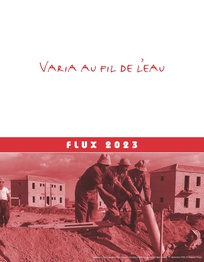 This issue of FLux magazine consists of texts published in advance.
To follow all the articles in this issue: https://www.cairn.info/revue-flux-2023-0.htm
Urban Mines: Flow of Materials and Recycling
, coordinated by Rémi de Bercegol (CNRS Research Fellow, USR 3330 Savoirs et Mondes Indiens) and Yann Philippe Tastevin (CNRS Research Fellow, IRL 3189 Environment, Health, Societies (UCAD-CNRS).
The session will be organized around the book L'ordre électrique (The Electrical Order) by Fanny Lopez, historian of architecture and technology, senior lecturer authorized to supervise research at ENSA Paris-Est at Gustave Eiffel University, and co-director of LIAT at ENSA Paris-Malaquais.
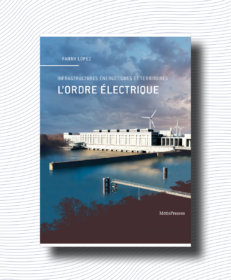 Industrial mastery of electricity and the electrical order that directly resulted from it have shaped our societies for over a century. They have enabled exponential growth and consumption, while leading to the appropriation of living environments.
Today, a profound reconfiguration of resource territories is underway, challenging our lifestyles and the nature and scale of the infrastructure and territories that enable us to survive, even though many of them are severely degraded.
The quest for land and self-sufficiency has continually disrupted the electrical order. This book offers a critical history of these infrastructures, from their advent in the late 19th century, followed by their rapid large-scale development—the monuments of electrical capitalism—to the recent crises and transformations that have led to the emergence of infrastructural diversity and more local governance.
Positive energy territories, micro-electricity grids in London, Berlin, and New York, and mini-power plants in urban, rural, and domestic settings are redrawing smaller-scale production trajectories, promoting dynamics of reappropriation and new interconnection systems. These achievements are disrupting the socio-technical hierarchies inherited from the past and redeploying our urban and territorial energy futures.
Fanny Lopez's latest book:
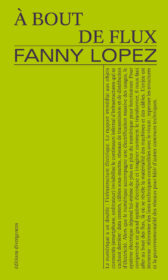
Digital technology has a double: electrical infrastructure. Our immediate relationship with connected objects (smartphones, computers) obscures the infernal continuum of infrastructure that lies behind them: data centers, submarine cables, electricity transmission and distribution networks. While digital technology is accompanying a massive electrification of uses, the electrical system itself is increasingly dependent on digital technology to function. To understand this vast electrical system and imagine how to transform it, we need to follow the flows to their end point, where the materiality of machines and cables is revealed. The challenge is immense: reinventing technical links that are compatible with living beings; rethinking the structures and governance of networks to build other technical commons.

Credits: Isadora Cruxën
LATTS is pleased to invite you to the next session of its 2022-2023 seminar, which will take place on Friday, December 9, 2022, from 2:00 p.m. to 4:00 p.m. Isadora Cruxên
, lecturer and researcher at Queen Mary University of London, will present a paper.
Claire Simmoneau is part of the organizing committee for this conference.
Co-organized by Daniela Festa, Un. La Sapienza, Rome as part of the Habiter research project with the support of MSH Paris Nord and by the COBRA research team The contribution of OFS-BRS to affordable housing: a comprehensive approach – Lab'Urba – LATTS – UPEC/USH
Tuesday, December 6, 2022, 9:15 a.m. – 6 p.m.
Hybrid format: In person at the Maison des Sciences de l'Homme Paris Nord, Salle Panoramique, and via videoconference
An overview of the experiences of Solidarity Land Organizations, the challenges and issues involved in their development will be provided in two round tables with presentations by: Anne Vauvray, Director of Development, OFS, Plaine Commune; Yannick Fieux, EPFL Basque Country – OFS Bizitegia; Christian Chevé, President, Coop Foncière Francilienne; Pascal Masson, former Director of Keredes, Hlm Cooperative, partner of Foncier solidaire malouin; Elorri Olasagasti, Research & Development Manager, COL, Hlm Cooperative – OFS Basque Country; Jean Baptiste Debrandt, Head of Housing Services, City of Lille; and Michel Bonord, President of OFS Métropole lilloise.
We will also discuss this topic with contributions from: Xavier Lièvre, Notary Partner; Vincent Le Rouzic, Director of Studies at La Fabrique de la Cité; Séverine Dusollier, Professor at the School of Law, Sciences Po; Thomas Perroud, Professor of Public Economic Law, Pantheon-Assas; Claire Carriou, Professor at the Paris School of Urban Planning; Benjamin Coriat, Professor, Sorbonne Paris Nord University, Head of the Globalization, Regulations, and Innovations Research Group, MSH Paris Nord
The Organisme de foncier solidaire/bail réel solidaire (Solidarity Land Organization/Solidarity Lease) is considered the French version of the community land trust, which has already been widely tested under common law in the United States and the United Kingdom.
This new form of "ownership," which is currently spreading in civil law systems, is based on the separation of land ownership from the right to use the building, which makes it possible to remove the cost of land from the price of housing, and on multi-stakeholder non-profit governance. These two principles combined offer households with limited financial means the opportunity to purchase their primary residence, and enable cities to maintain a stock of affordable housing in the long term despite growing speculative pressures.
OFSs were introduced in France in the Urban Planning Code with the ALUR law of 2014, and their operation has been refined through successive reforms (2015; 2017). Their widespread use is unexpected and has been growing steadily over the last five years. According to the Ministry of Housing, 101 OFSs were approved until April 2022, with 23 projects identified, 16 of which are currently under review. The outlook is for around 20,000 BRS homes by 2024.
This surprising development prompts us to examine, through the eyes of the players in this emerging sector, the implementation of this new form of real estate ownership and its impacts.

This session aims to bring together the stories of Greater Paris and Greater Tokyo around shared issues. We have chosen to focus on an original and strategic metropolitan feature, the urban park, which will enable us to address the landscape and environmental dimensions of metropolitan development, as well as the issue of urban growth and its limits. The exchange of perspectives between Paris and Tokyo will take place over several sessions. These will bring together researchers who will discuss the French/European and Japanese situations, based on common themes.
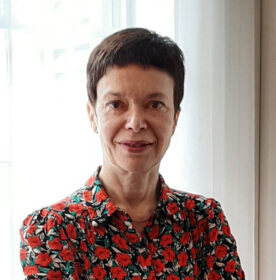 Corinne Delmas is a professor of sociology. As a sociologist and political scientist, she conducts research on the state, expertise, work, relationships, and professional groups, approaching these topics from the perspectives of knowledge and techniques, gender, mobility, health, and the environment. Her research has focused in particular on academies, think tanks, training centers, trade unions (trade union training, trade unionism among executives, mobilization around mental health in the workplace), activities, jobs, and professions. She is currently studying legal professions, particularly notaries, and changes in the workplace linked to digital technology.