
is organizing a series of discussion forums with CRÉSUS
and Emmaüs France
on key topics related to financial inclusion. Witnesses, social support and credit professionals, and institutional representatives will all come together to share their perspectives, engage with the public, and develop solutions.
The session on Tuesday, November 22 will address banking and debt issues faced by (former) prisoners.
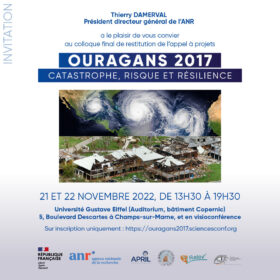 This symposium will take place on November 21-22, 2022 (Gustave Eiffel University, 1:30 p.m.).
Valérie November
is a member of the Scientific Committee. She will speak with Thiery Winter on the topic: Anticipation and decision-making in crisis situations: a spatial and temporal analysis (APRIL).
Following the extreme weather events of unprecedented intensity that occurred in August and September 2017 in the Lesser Antilles and the Gulf of Mexico (Hurricanes Irma, José, Maria, and Harvey), in December 2017, the ANR launched a call for pre-operational research projects focused on the impacts, reconstruction, restoration, and adaptation of social, economic, and ecological systems in the face of extreme weather events, with a view to sustainability and long-term resilience.
In the context of this call and in collaboration with the four funded projects, we will organize the final symposium to present the results of this work on November 21 and 22, 2022, proposing to approach them from the perspective of feedback, bringing together researchers and operational staff.
To ensure that this conference is shared and accessible to as many people and stakeholders as possible, it will be held in the afternoons from 1:30 p.m. to 7:30 p.m. and will be broadcast live and via videoconference via a link provided to registrants.
Conference website and program: https://ouragans2017.sciencesconf.org/
Le Monde published this article on research funded by POPSU, for which Alexandre Coulondre, former associate researcher at LATTS, led the quantitative component.
Link to access the article for Le Monde subscribers: https://www.lemonde.fr/campus/article/2022/11/18/les-cadres-en-teletravail-avec-enfants-quittent-rarement-l-ile-de-france-pour-s-installer-dans-un-petit-village_6150406_4401467.html#xtor=AL-32280270
Dear colleagues,
The Laboratoire Techniques, Territoires et Sociétés (LATTS, UMR 8134, CNRS, École des Ponts ParisTech, Université Gustave Eiffel) invites candidates for the CNRS competition (sections 36, 39, and 40, CID 52 and 53) who wish to obtain its support to contact Elsa Vivant (elsa.vivant@univ-eiffel.fr), director of LATTS, and Jonathan Rutherford (jonathan.rutherford@enpc.fr), deputy director of LATTS.
Please send us a document presenting your CNRS project (working version), along with a brief CV and a letter explaining your reasons for requesting support, by Friday, November 18 at the latest.
Applications will be reviewed by the laboratory council in early December in order to issue a letter confirming their suitability for the LATTS scientific project. Then, for those who are eligible and wish to be assigned to LATTS, support will be offered in preparation for the interview, as well as an opportunity to meet with members of the laboratory.
Good luck to everyone!
The LATTS management team
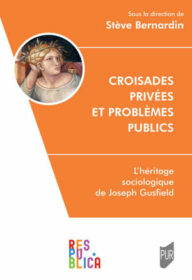
The session will be organized around the book edited by Stève Bernardin (Professor and researcher at Gustave Eiffel University):
Private Crusades and Public Problems.
The Sociological Legacy of Joseph Gusfield
Presses universitaires de Rennes, 2022, 278 p. (Coll. Res Publica)
Zoom link to join the seminar: https://univ-eiffel.zoom.us/j/87372526310
Meeting ID: 87372526310
Password: G7Sf1N1i
 Noémie Suissa is starting a doctoral contract under the supervision of Elsa Vivant to study how terrorist risk is taken into account in Paris, specifically analyzing the case of the Olympic Games.
She began her studies in Lyon before joining the Master 2 – Research Track at the École d'Urbanisme de Paris, directed by Elsa Vivant and Camille Gardesse.
She has worked on public policies on prostitution in Paris and Nantes. She obtained her agrégation in geography in 2022.
The first phase of the RATP – Ecole des Ponts ParisTech Chair dedicated to "Mobility as a Service" is coming to an end! Led by Virginie Boutueil (LVMT) and François Mathieu Poupeau (LATTS), it will conclude on Monday, November 14 with a final seminar at the Urbanopolis Hub at the Maison de la RATP from 4:00 p.m. to 6:00 p.m. This will be followed by a book on the subject to be published by Presses des Ponts…
Provisional program:
4:00 p.m. – 4:15 p.m.: Welcome reception, time for discussion between the ENPC research team and the RATP group teams
4:15 p.m. – 5:45 p.m.: Presentation of the findings from two years of research
1. Global MaaS Observatory: trends and developments;
2. How are public authorities using MaaS to regulate mobility?
Experience of the Aix-Marseille-Provence Metropolis (France);
Implementing MaaS in public and virtual spaces: hvv switch in Hamburg (Germany);
Cooperation between public authorities and platform operators: the example of Gaiyo in Utrecht (Netherlands)
3. What methodology should be used to assess the effects of MaaS?
5:45 p.m. – 6:00 p.m.: Q&A
 Pauline Gali is starting a PhD this year under the joint supervision of Yoan Miot and Valérie Sala Pala (University of Saint-Etienne, Triangle laboratory). She holds a master's degree in urban planning and development from Paris-1 University. Her thesis is a continuation of her Master's 2 dissertation, supervised by Sylvie Fol, and focuses on urban renewal, studied as a settlement policy, through the prism of the restructuring and diversification of housing supply. She is also participating in a research project on the sale of social housing in the Île-de-France region, as part of the research team coordinated by Matthieu Gimat.
 Hugo Cordier is studying offshore wind power planning in France, under the supervision of François-Mathieu Poupeau, as part of a CIFRE thesis at RTE and LATTS. He completed a work-study program at RTE's R&D department on chapter 13 of the "Energy Futures 2050" report (social sciences of energy: sobriety/flexibility/acceptability—particularly of offshore wind power). His interest in offshore wind power is not new and, in addition to chapter 13, he completed an internship at the National Commission for Public Debate on the subject (AO4). He also worked at Energie Partagée for an end-of-studies internship, which has given him a micro view (small community PV power plants on school roofs) and a macro view (1.5GW farms worth several billion euros). He studied at Sciences Po Toulouse (with one semester in Hong Kong and one semester at the Luxembourg Embassy in London), earning a master's degree in European affairs. He completed this program with a one-year work-study program in Arnaud Passalacqua's master's program in "Energy, Ecology, Societies" at Paris Diderot University.
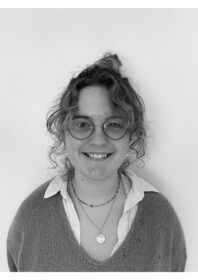 Jeanne Fillonneau's thesis topic is "Switching to flex-office. Actors, rationales, effects on project management between consulting firms and client companies," co-supervised by Pascal Ughetto (LATTS) and Sophie Bernard (IRISSO).
She began her higher education studies at CPGE ENS D1 in Toulouse before enrolling in a Bachelor's degree in Social Sciences at Paris Dauphine University.
Her ambition to work on flex-office stems from an internship she completed in 2020 at the Center for the Study of Social Movements at EHESS with Vincent-Arnaud Chappe. During this internship, she was able to conduct her first research on the transformation of workspaces.
She then joined the Master's program in Sociology, Business Policy, and Social Responsibility at Paris Dauphine-PSL University to conduct research on flex-office in line with her professional goals. During this master's program, she completed two research theses on the subject of the transformation of workspaces. In her first year of the program, she studied a team of professional development consultants responsible for implementing flex-office in companies under the supervision of Sarah Abdelnour. In her second year, she worked with employees of a company that had recently switched to flex-office, and her thesis was written under the supervision of Sophie Bernard. It was based on the results of these two studies and in order to explore numerous avenues of research that she was able to come up with her thesis topic.
With teleworking, employees no longer need to come to the office on a fixed and regular basis, some of the workstations remain unoccupied, and the future of commercial real estate can be rethought. This is what companies are doing through the implementation of flex-office. It consists of eliminating assigned workstations by offering fewer offices than employees to ensure a rotation in the occupation of space. It aims to fulfill a dual management objective: on the one hand, to modernize management through more flexible organizational methods, and on the other hand, to respond to the need to reduce real estate costs. Its deployment relies on significant decision-making and negotiation involving management, working in concert with a booming sector of activity, namely professional space planning consulting. This combination has a considerable impact on and transforms work within the company. The hypothesis guiding the thesis would therefore be that flex-office projects are driven by a variety of actors with multiple rationales, with negotiators and decision-makers in companies torn between financial and managerial interests on the one hand, and a variety of consulting services on the other. The question then becomes whether there are different ways of designing flex-office projects, questioning who the actors are and the power relationships behind the figures of management and consulting teams, and then studying whether or not these projects leave significant room for taking into account the realities of work and their complexity.