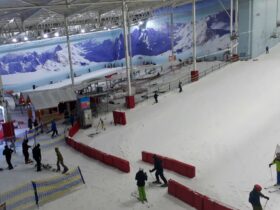
 Marvin, S, . Understanding the socio-technical hybridization of indoor–outdoor relations: Emergent, merged, and stretched. Area. 2021; 00: 1– 10. https://doi.org/10.1111/area.12715
 The Ponts Thesis Prize rewards young doctors who defended their thesis between January 1 and December 31 of the previous year for the quality and originality of their research.
Lise Desvallées won the 2020 Ponts Thesis Prize for the originality of her research in support of social and environmental public policies.
Alexis Aulagnier will speak on the topic:
"Can we do without pesticides? From controlled use to the ambition of reduction."
Currently a postdoctoral fellow at the Émile Durkheim Center and a researcher affiliated with the Center for the Sociology of Organizations, Alexis defended his thesis in September 2020 under the supervision of Sophie Dubuisson-Quellier and Jean-Noël Jouzel: "Reducing without constraining. The government's approach to agricultural practices in the face of pesticides
."
His presentation will shift our focus from urban issues to the countryside, where the visibility—or invisibility—of public risks and problems may be governed by different logic than that which we more traditionally study within the RUE research group.
Incidentally, Alexis will raise the issue of the social production of ignorance, which is currently the subject of significant debate in the sociology of science.
Thesis supervisors
: Elsa Vivant and Olivier Coutard
As part of the seminar series "Activity and Professionalism
" organized by Pascal Ughetto, LATTS will welcome Léonie Hénaut (CSO). Her presentation will focus on the theme "Polyoccupationalism: Work and Professional Identity in the Post-Industrial Era."
Summary of the presentation
By combining the results of a large-scale quantitative study of artistic and cultural professions in the United States with those of several qualitative surveys of museum and heritage professionals in France and the United States, we will reflect on the transformation of work in the post-industrial era and its effects on professional identities. We will defend the idea that workers increasingly tend to consider themselves as engaging in several professional activities simultaneously and that this phenomenon—polyoccupationalism—is linked to the fact that work is becoming increasingly diverse and ambiguous. On the one hand, it is increasingly common to combine different activities in several occupational fields, especially in a context of widespread short-term contracts and entrepreneurship. On the other hand, it is becoming increasingly difficult to describe the tasks performed within a single job using only one job title, particularly due to the greater flexibility of positions and the proliferation of project-based work. We will conclude the presentation by discussing the empirical scope of this analytical framework and the theoretical implications for the sociology of work and professions.
Léonie Hénaut
is a research fellow at the CNRS and a member of the Center for the Sociology of Organizations (CSO – UMR 7116) at Sciences Po. A sociologist specializing in work, organizations, and professional groups, she conducts research in various fields, including museums and cultural professions in France and the United States, and healthcare integration and coordination systems in France and the United Kingdom. After working for many years on the dynamics of professionalization and segmentation of professional groups, she is now interested in the transformation of work in the post-industrial era and its effects on professional hierarchies and identities.
The seventh session of the LATTS Seminar will take place on Monday, May 17, 2021.
It will focus on the book:
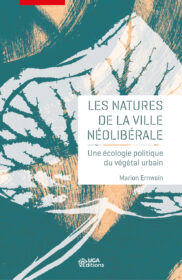 Les natures de la ville néolibérale : Une écologie politique du végétal urbain (The Natures of the Neoliberal City: A Political Ecology of Urban Plants)
Marion Ernwein
UGA Editions, 2019, 240 p.
Marion Ernwein
, lecturer
in environmental geography at the Open University and associate researcher at the University of Oxford, will present her book. Her work falls within the field of urban political ecology
and currently focuses on the intersection between austerity and the urban environment in the United Kingdom and France.
"Zero pesticides," integrated biological protection, differentiated management: urban green spaces, long designed in the "still life" mode of the horticultural tradition, are becoming increasingly alive. They are also becoming more participatory, as evidenced by the proliferation of community gardening and "green" volunteer programs. However, far from simply reflecting a consensual "ecological transition," these transformations are framed by the logic of urban production and urban services, and in particular by the discourse and instruments of neoliberalism.
Based on field surveys conducted in Geneva, Switzerland, the book illustrates how neoliberal urban policies that emphasize events, managerialism, and public-private partnerships are shaping the emergence of a more vibrant city and the role that humans and non-humans can play in it.
By detailing the treatment reserved for different forms of vegetation—horticultural, food crops, biodiversity—the book proposes conceptual tools for a political ecology of urban vegetation.
This session will focus on "Producing, mobilizing, and publishing data in the context of partnership theses" and more broadly concerns any field research approach.
The management of data produced during a partnership thesis is a major concern. In particular, it raises the issue of intellectual property, which is shared between the funding organization and the doctoral student. The use of this data is generally governed by the collaboration agreement, based on often standard clauses defined in advance. However, as with any contractual arrangement, these clauses do not cover all possible scenarios, and the use of the knowledge produced is subject to ongoing negotiations with the organization (managers, colleagues, respondents, etc.), raising multiple issues of creation, appropriation, and promotion in scientific and professional settings (management of certain sensitive or confidential information, freedom of publication and communication, etc.).
This session will focus on how the information collected during the thesis work is managed and used between the partner organization and the doctoral student. First, we will address issues relating to the regulatory framework and its requirements in terms of ethics, integrity, and personal data management (GDPR, etc.). Next, questions relating to methodology and research approach will be discussed: how does producing scientific data in the context of a partnership thesis differ? What is the distinction between the data produced by the doctoral student as part of their research and that produced by/for the company? How can the advantages of a partnership-based thesis be best exploited (use of immersion and participant observation, which are sometimes much easier with this type of arrangement)? How can we manage the special relationship that can develop between the doctoral student and the host organization (sometimes a feeling of "betraying" colleagues by using the data, "mental load," a sense of responsibility towards the company)? How can we "negotiate" a publication as part of a thesis?
Again, these questions are certainly not specific to so-called partnership theses. Indeed, at LATTS at least, it is rare for doctoral students, who most often work on contemporary subjects, not to also ask themselves the question of how to use the data produced in the context of their research. How do these doctoral students deal with this issue? Do they feel equipped to deal with it? What can they learn from the experience of their colleagues who are writing a thesis in partnership?
LATTS researcher involved: Pascal Ughetto (more…)
Marvin, S, . Understanding the socio-technical hybridization of indoor–outdoor relations: Emergent, merged, and stretched. Area. 2021; 00: 1– 10. https://doi.org/10.1111/area.12715Indoor and outdoor leisure environments are increasingly understood to be mutually constituted through merged relationships, but there has been less focus on the actual forms that hybridization can take. This paper provides an analysis of forms of hybridization through time by focusing on the socio-technical configurations through which three leisure environments are materially constituted. We analyze the key functional elements of these configurations: the technological systems and their genealogies over time that allow the making and unmaking of activities; the spatiality of facilities and systems in terms of their locations and connections across space; and the construction by providers of user pathways between indoor and outdoor activities. The paper uses this structure to compare purpose-built indoor recreational spaces located in the Greater Manchester city region that recreate outdoor activities focusing on skydiving, skiing, and ice wall climbing. We construct a framework of three modes of hybridization—emergent, merged, stretched—that contributes a deeper understanding of the diversity, intensity, and changing temporality of interrelations between indoor and outdoor environments.
As part of a collaboration between LabEx Futurs Urbains (Working Group: Urban Production and Markets – PoUM) and the Chair Aménager le Grand Paris, this seminar will take place on Thursday, May 6, 2021 (9:30 a.m. to 12:30 p.m.) in a hybrid session at the Ecole d'Urbanisme de Paris – EUP (room B235 of the Bienvenüe Building, Cité Descartes, Marne-la-Vallée) for speakers and via Zoom for other participants (a link will be sent to those who register).
Registration (required) can be completed at the following link:
Program
9:30 a.m. – Introduction to the seminar and participants by Sonia Guelton (Lab'Urba / EUP).
9:45 a.m. – Presentation 1: "How will land value be shared around the future Grand Paris Express stations?", by Morgan Mouton (Lab'Urba / UPEC)
10:25 a.m. – Short questions on the first presentation.
[5-minute break]
10:45 a.m. – Presentation 2: "Urban development: a new stage in asset diversification?" by Marie Llorente, Jose I. Vila Vázquez, and Martine Drozdz (LATTS/EUP – Chair of Greater Paris Development, Working Group: Economics of Development)
11:25 a.m. – Short questions on the second presentation.
[10-minute break]
11:50 a.m. – Cross-disciplinary discussion with speakers and audience, led by Sonia Guelton (Lab'Urba / EUP) and Natacha Aveline (Géographie-cités / CNRS):
12:30 p.m. – Conclusion of the event
For further information, please contact jose-ignacio.vila-vazquez@enpc.fr and guillaume.lacroix@univ-eiffel.fr.
The journal Flux is calling for contributions for a special issue entitled "How infrastructure holds up: Maintenance, upkeep, operation, asset management."
Article proposals of no more than 4,000 characters, accompanied by a brief CV including full contact details and institutional affiliation, should be sent to the following addresses: jerome.denis@mines-paristech.fr and daniel.florentin@mines-paristech.fr before July 1, 2021.
The full article is expected by December 1, 2021.
Based on the abstracts pre-approved by the editorial board of Flux, authors will have until December 1, 2021, to submit the full version of their article. This must comply with the journal's standards (see note to authors), i.e., a text of no more than 50,000 characters (including spaces), an abstract of 1,000 to 1,500 characters in French and English, and a biographical note of approximately 600 characters.
For more information about the journal Flux, visit http://www.cairn.info/revue-flux.htm and for the author guidelines, visit http://revue-flux.cairn.info/recommandations-aux-auteurs/.
This seminar will take place on Tuesday, May 4, 2021 (9:30 a.m. to 5:30 p.m.) via videoconference.
The question of the collective construction of urban futures is raised with force in light of the (interdependent) challenges facing increasingly urbanized contemporary societies: climatic, ecological, health, socio-political, economic, and geopolitical challenges, among others.
The epistemological, theoretical, methodological, and political issues involved in the scientific study of this question are considerable, in a context where the sources of scientific legitimacy inherited from modernity are being questioned, the place of researchers in society is evolving, and the knowledge and expertise accepted in public debate (or seeking to gain a foothold there) is becoming increasingly
pluralistic. Collective reflection on these subjects seems all the more relevant given that a growing number of researchers intend to contribute, as researchers, to the advent of futures that they consider desirable (or to the avoidance of undesirable futures).
The Futurs Urbains Labex therefore decided to organize a seminar devoted to the construction of urban futures and its implications for research, of which this day constitutes the second session.
During this second session, Antoine Picon, Adèle Esposito, Jochen Monstadt, Fabien Esculier, and Marine Legrand will discuss how they encounter and approach the question of the construction of urban futures in their research.
- How do the urban past, present, and future relate to each other?
- How do actors engage in the construction of urban futures? What resources, networks, and visions do they mobilize?
- In particular, can we identify "communities of anticipation" (C. Granjou), i.e., "situated assemblages of practices, sociotechnical infrastructures, and imaginaries" aimed at anticipating, modeling, and simulating futures?
- Are urban futures, and collective futures more generally, largely beyond the control of societies, and a fortiori beyond the control of the actors responsible for (or taking it upon themselves to) construct these futures? If this observation is true, what implications does it have for the construction of urban futures as a subject of research?
Program for the day
9:00 a.m. Opening of the videoconference, (virtual) welcome
9:30 a.m. Antoine Picon
History, imaginaries, and urban futures: From the smart city to the green city
10:50 a.m. Break
11:20 a.m. Adèle Esposito
Anticipatory urban planning & the imaginative construction of urban futures along the Belt and Road Initiative
12:40 p.m. Break
1:50 p.m. Fabien Esculier and Marine Legrand
Separation at source of wastewater: a retro-innovation informed by past and present practices
3:10 p.m. Break
3:40 p.m. Jochen Monstadt
Infrastructural temporalities: aligning urban pasts and futures
5:00 p.m. Collective summary
5:30 p.m. End of the day
Videoconference link
Subject: Building urban futures: session #2 Time:
May 4, 2021, 9:15 a.m. Paris
Join the Zoom meeting: https://univ-eiffel.zoom.us/j/81007137111
Meeting ID: 810 0713 7111 Password: BZR7CTq4
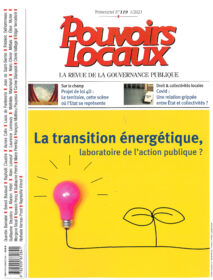
François-Mathieu Poupeau coordinated, with Benoit Boutaud (Eifer) and Carine Staropoli (Paris 1), the latest issue of the journal Pouvoirs locaux.
Entitled "Energy transition: a testing ground for public action?", it includes three articles by researchers from LATTS (Mathilde Marchand, Elise Muller, François-Mathieu Poupeau).
Issue reference:
François-Mathieu Poupeau, Benoit Boutaud. Energy transition, a new laboratory for local public action? Pouvoirs Locaux: les cahiers de la décentralisation / Institut de la décentralisation, Institut de la décentralisation, 2021, I (119), pp.28-36
More posts