As part of the DSA Architecture and Major Risks program at ENSA Paris Belleville, Sarra Kasri
is organizing a workshop in Lebanon in collaboration with the Lebanese University.
Title: INTERVENING IN A RISK TERRITORY: VULNERABILITIES, CHALLENGES, AND OPPORTUNITIES STUDY AREA: SAIDA, LEBANON The objective
: To develop an approach to heritage investigation that integrates the concept of risk and allows for an understanding of the changing territory, especially in areas that are vulnerable but have significant potential, such as Saida (Sidon) in Lebanon. The challenge will be to achieve a more authentic enhancement and a more sustainable improvement in risk management for its ancient centers and their monuments.
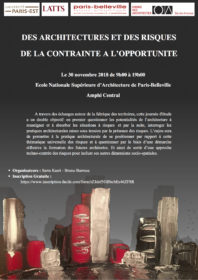 Sarra Kasri and Bruno Barroca are organizing this event on Friday, November 30, 2018 (9:00 a.m. to 7:00 p.m.) at the Ecole Nationale Supérieure d'Architecture de Paris-Belleville
Through discussions on the construction of territories, this study day has two objectives: first, to question the potential of architecture to inform and absorb risk situations, and second, to examine architectural practices that are put under pressure by the presence of risks. The challenge will be to enable architectural practice to position itself in relation to this universal theme of risk and to question the training of future architects through a reflective approach. And thus to move away from a techno-centric approach to risk to include its other socio-spatial dimensions.
Free registration: https://www.inscription-facile.com/form/rZJdef5OBbcMls46ZF8R
Aude Danieli will defend her doctoral thesis on Friday, November 30, 2018 (9:30 a.m., Bienvenüe Building, B021).
The "socialization" of the smart meter Innovations, controversies, and uses in the social worlds of the Linki electricity meter in France
Thesis supervisor
: Olivier Coutard, Byron Miller (University of Calgary) (http://geog.ucalgary.ca/profiles/byron-miller) (more…)
Aïda Nciri will defend her doctoral thesis on Wednesday, November 21, 2018, in Calgary, Canada.
Constance Berté participated in the IRSTEA conference on October 17 and 18, 2018.
For more information: https://ercterritoire.sciencesconf.org/
Tuesday, November 13 will mark the fourth edition of TRUC (Travaux de Recherche d’Utilité Collective, or Research Projects of Collective Utility). This bimonthly seminar is organized by doctoral students to present their work and discuss the challenges they face.
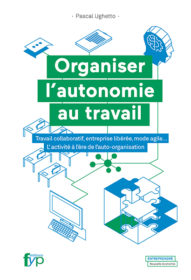 Pascal Ughetto
Organizing Autonomy at Work
Editions FYP, 2018, 192 p.
In all sectors of activity, work now requires granting more autonomy to employees, both internal and external. The traditional hierarchical system has been abolished, and everyone is free to organize their own working time and set their own goals. This book examines all the new management theories and provides concrete answers for all those who are implementing digital transformation and are faced with the urgent need to change working methods: HR departments, companies, small businesses, and self-employed workers. The book provides a theoretical and practical framework for understanding and implementing the best organizations for the future of work (what does autonomy mean? How can we combine well-being at work with productivity? Will middle management disappear? What is a liberated company? What is the agile mode? How should we organize the jobs of tomorrow? What should we do when employees do not want autonomy?
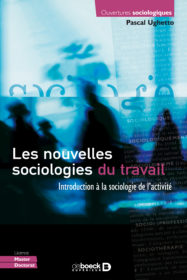 Pascal Ughetto
Les nouvelles sociologies du travail. Introduction à la sociologie de l'activité.
De Boeck Supérieur, 2018, 160 p.
The sociology of work has evolved considerably over the past quarter century. Since the 1990s, new theories and research practices have renewed analysis by focusing on work in progress. There is increasing talk of a sociology of activity or a pragmatic sociology of work. Based on concepts such as situated action, distributed cognition, practices, takes, and supports for action, these approaches enrich the issues and renew the sociological view of work. What are these theories? What are workplace studies? What is the role of the sociology of science in these new contributions? Is there a unity among these currents? The book asks these questions and also considers how this emerging sociology of activity is changing relationships with other disciplines. It also examines the relationship with a more traditional sociology of work. Far from being confined to detailed descriptions of micro-situations, these perspectives can be traced back to professional and organizational issues and consider the division of labor, subordination, and the prescription of work. The heated debate does not detract from the usefulness of these approaches in intervention or action research. Aimed at students and specialists in other branches of sociology who wish to understand the contributions of activity-based analysis, it can also be used by practitioners.
Sylvy Jaglin will participate in this workshop from November 10 to 16, 2018.