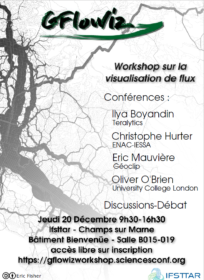
The gFlowiz – geographic flow visualization project team, of which Marion Maisonobe is a member, is organizing a European interdisciplinary workshop dedicated to flows and networks in the geoweb:
Thursday, December 20, 2018, from approximately 9:30 a.m. to 4:30 p.m. at IFSTTAR Marne-la-Vallée
The day is open to all upon registration: https://gflowizworkshop.sciencesconf.org/
The overall objective is to discuss web applications dedicated to the (carto)graphic representation of data describing spatio-temporal mobility. Beyond the thematic aspects, the aim is to take stock of existing geovisualization tools: to describe them, identify existing barriers, solutions provided, and technical and technological challenges that remain to be addressed.
To this end, we propose to examine, on the one hand, their current methods of storage, exploration, processing of statistical and geographical information, graphic visualization, and cartographic representation; and, on the other hand, to collectively list the requirements for future applications, in line with current thematic mapping practices and new uses of statistical maps, taking into account current technical and technological possibilities.
– What are the specific problems associated with flow visualization?
– Which of these have been resolved?
– What are the specific features of web applications for mapping flows?
– What types of interactions with data and their visualization should be prioritized?
– How can different representations of flows be combined within the same platform (co-visualization, data exploration), in different formats (static, animated, and dynamic)?
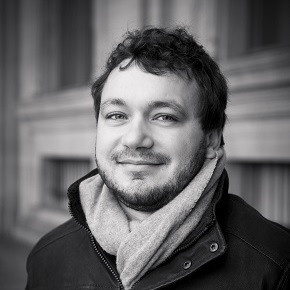
will defend his doctoral thesis on Wednesday, December 12, 2018.
Alexandre Mathieu-Fritz participated in the 11th European Congress of Telemedicine in Paris on December 6 and 7, 2018.
Nathalie Montel will participate in the seminar on intermunicipal cooperation in France: History, representation, dynamics, and identities at the IEP in Rennes on Wednesday, December 19, 2018.
COP24 is the name of the 24th Conference of the Parties to the United Nations Framework Convention on Climate Change (UNFCCC) held in December in Poland.
Agathe Euzen is representing the CNRS at this conference.
Geneviève Zembri was invited to Athens from December 5 to 7, 2018, for a field visit to the Olympic sites in Athens and interviews at Panteion University as part of research on risk assessment in development project planning.
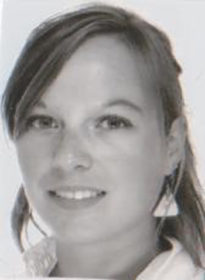
Fanny Delaunay will defend her doctoral thesis on Monday, December 10, 2018 (2:00 p.m., Bienvenüe Building, Room B019).
Emanuele Giordano took part in a radio program entitled "Thinking about the night to save it. What kind of nightlife for our cities of tomorrow?" during the Pop'science forum organized by the University of Lyon.
Podcast of the radio interview online: https://popsciences.universite-lyon.fr/agenda/popsciences-forum-lavenir-de-la-nuit-en-ville/
Thesis supervisor
: Jean-Pierre Lévy (more…)
Created in 2012, the "Inventing Greater Paris" collective was formed around the scientific organization of a series of four annual symposiums (from 2013 to 2016) dedicated to the history of Greater Paris development in the 20th century, illuminated by international perspectives. The collective brings together researchers who use history to understand the modalities and challenges of metropolitan construction. It brings together specialists in the history of development, urban planning, and architecture, as well as urban, social, and institutional history and urban metabolism. Launched in 2017, the collective's website is a place for publishing the work contributed to the Inventing Greater Paris program, a portal for hosting future research, and a guide to historical resources. It is intended for a wide audience, including stakeholders and specialists. In 2018, the Inventing Greater Paris collective was formed as a Transversal Group of the Labex Futurs Urbains (University of Paris Est) and, as such, receives state aid from the Program for Investments in the Future.
The research program of the "Inventing Greater Paris" transversal group now has three objectives:
- To develop an overview of research on the history of Greater Paris and comparisons with other metropolises.
- To encourage new scientific questions on urban and metropolitan history,
- To compile an inventory of sources and memories related to the history of this metropolis.
Method
With this in mind, the scientific project of the newly created cross-disciplinary group is structured around several areas of work:
- A bi-monthly research seminar dedicated to epistemological questions at the crossroads of disciplines that examine the history of urban planning. This seminar is supplemented by one or two more open study days.
- Research projects carried out by dedicated teams; the main project focuses on the creation of a bibliographic, archival, and iconographic corpus relating to major development plans (for the period 1928-1960), which is currently being used to develop an atlas of Greater Paris plans.
- An editorial project aimed at building a resource center on the history of Greater Paris by publishing conference proceedings, study days, and scientific articles; Publishing news about research projects.
- A corpus (including iconographic material) for research purposes, i.e., one that can be explored using innovative methods.
Keywords
: History, Greater Paris, Metropolis, Planning, Transnational
General coordination
: Frédéric Pousin, Nathalie Roseau
, Alessandro Panzeri
To find out more about Inventing Greater Paris: www.inventerlegrandparis.fr
The program and proceedings of the IGP seminar can be viewed at the following address:
http://www.inventerlegrandparis.fr/chantiers-de-recherche/seminaire-igp/
Aude Danieli
contributed to the book "Infrastructures in Practice. The Dynamics of Demand in Networked Societies
" edited by Elisabeth Shove and Franck Trentmann (Routledge, November 2018
).
The French Electricity Smart Meter: Reconfiguring Consumers and
Providers
This contribution is based on her thesis work: learn more
A contribution co-written by Olivier Coutard and Elisabeth Shove, as well as numerous other contributions on the interdependencies between infrastructure and daily life in contemporary societies, can be found in this book.
Book summary
Infrastructures in Practice
shows how infrastructures and daily life shape each other. Power grids, roads, and broadband make modern lifestyles possible—at the same time, their design and day-to-day operation depend on what people do at home and at work. This volume investigates the entanglement of supply and demand. It explains how standards and "normal" ways of living have changed over time and how infrastructures have changed with them. Studies of grid expansion and disruption, heating systems, the internet, urban planning and office standards, smart meters, and demand management reveal this dynamic interdependence.
This is the first book to examine the interdependence between infrastructures and the practices of daily life. It offers an analysis of how new technologies, lifestyles, and standards become normalized and fall out of use. It brings together diverse disciplines—history, sociology, science studies—to develop social theories and accounts of how infrastructures and practices constitute each other at different scales and over time. It shows how networks and demands are steered and shaped, and how social and political visions are woven into infrastructures, past, present and future.
Original, wide-ranging and theoretically informed, this book puts the many practices of daily life back into the study of infrastructures. The result is a fresh understanding of how resource-intensive forms of consumption and energy demand have come about and what is needed to move towards a more sustainable lower carbon future.
Bruno Barroca
will defend his Habilitation à diriger les recherches (HDR) on Tuesday, December 4, 2018,
at the University of Paris Est, Room B021/B023, Bienvenüe Building, Cité Descartes, 14-20, bd Newton, Champs-sur-Marne, on the topic:
"Urban Resilience: A Narrow Lane Between Dead End and Avenue"
Corinne Larrue, Professor at the Paris School of Urban Planning (Examiner)
Valérie November, Director of Research, CNRS LATTS (Supervisor)
Isabelle Thomas, Full Professor at the Faculty of Planning, University of Montreal (Examiner)
Luc Abbadie, Professor at the Faculty of Sciences, Pierre and Marie Curie University (Rapporteur)
Richard Laganier, Professor of Geography at Paris Diderot University (Rapporteur)
Jeffrey Raven, Assistant Professor at the New York Institute of Technology – NYIT-Manhattan (Examiner)