Jean-Pierre Levy is organizing a Mapuce symposium to present the results and prospects of the research project on Tuesday, January 22, 2019 (9:30 a.m. to 4:30 p.m., Institut d'Aménagement et d'Urbanisme de la région Ile de France).
This project aims to integrate quantitative data on urban microclimate, climate, and energy into urban policies and the most relevant legal documents, in an approach that can be applied to all cities in France.
This presentation will focus on three main areas:
- An urban database
- Modeling of energy behavior and urban climate
- Transfer tools for planning
To register: http://lib.aua-toulouse.org/inscription/inscription28/index.php
Martine Drozdz is part of the organizing committee for this international conference, which will take place on January 17-18, 2019, in Paris.
There has been a proliferation of discussions regarding the social and ecological implications of contemporary urbanization. Notions such as ‘urban futures’ and ‘urban age’ are evoked to highlight the urban nature of the ecological and societal challenges we face.
What is largely missing in these timely debates, however, is a systematic and in-depth engagement with the political significance of the ongoing "urban revolution"—a term coined by urban sociologist Henri Lefebvre in 1970. Building on his work, a few scholars, such as Neil Brenner and Christian Schmid, have elaborated on the territorial and socio-spatial aspects of planetary urbanization, namely the increasingly uneven, complex, and polycentric nature of the urban at the scale of the entire planet. But the question of politics is still treated tangentially. Is there a particular kind of urban politics corresponding to our urban age? Do we need to rethink the way in which we govern our cities, the common resources that cities offer? Is international investment in real estate beneficial for cities?
To answer these questions, we first need to develop an understanding of the increasingly dominant urban-based accumulation practices. There are indications that speculation on land and real estate is becoming increasingly global. Multinational real estate companies and investors that operate on a global scale have important consequences for cities.
URBAN-REV POLITICS approaches global urbanization and its contestations from the perspective of the production and consumption of the built environment. Using a political economy approach, it seeks to understand wealth generation strategies based on the production and consumption of urban space and specific urban transformations that they underpin, as well as how these are negotiated and challenged at the local and global scales.
The project is organized around three interrelated themes corresponding to three sub-projects (work packages):
The first is the uneven globalization of real estate markets. Here we trace the interactions between various influential public and private actors (investors, asset managers, brokers, real estate developers, politicians, decision-makers, etc.) to understand how their decisions and actions have impacts in specific sites.
The second is the exploitation of urban space through rent extraction. Here, in relation to the first subproject, we examine how a profit-driven approach informed by various risk-return calculations and negotiated with local authorities affects urban spaces.
The third is the ways in which these often highly speculative interventions in urban spaces are negotiated and contested at different scales. We examine both the formal sphere of politics as well as contestations by civil society groups.
Using a multi-sited ethnography approach, the work is based on Istanbul, London, Paris, and São Paulo. These cities feature comparable processes of property-led (re)developments, and a variety of activist and advocacy networks that challenge these.
URBAN-REV POLITICS seeks to contribute to debates in the fields of urban planning, urban political economy, and economic geography. Many of the themes we engage with, such as urban redevelopment, competition between cities, gentrification, and urban social movements, are the focus of significant scholarship today. Other themes discussed, such as speculative urbanism, urban land rent, the finance-real estate connection, and the urban commons, have recently begun to attract (in some cases renewed) attention. However, these discussions tend to occur in a rather compartmentalized fashion. For instance, property-led urban redevelopment and gentrification are rarely discussed in relation to the transnational sites and networks of negotiation between state, finance, and real estate actors. Similarly, work on real estate studies does not sufficiently engage with issues related to conflict and contestation. The overall objective of the project is to offer a transnational and comparative account that not only ties these threads together in a coherent manner, but also offers an empirically substantiated framework for understanding the political implications of global urbanization.
Key words
Urban land rent, globalization of real estate markets, urban commons, urban social movements
Methods
Comparative analysis, transnational ethnography, commodity chain analysis, participant observation, interviews, discourse analysis
Researchers (past and current):
Ozan Karaman (PI)
Eliza Benites-Gambirazio
Martine Drozdz
Sinan Erensü
Antoine Guironnet
İlknur Kurşunlugil
James Christopher Mizes
Mathilde Moaty
Zhumin Xu
This project has received funding from the European Research Council (ERC) under the European Union’s Horizon 2020 research and innovation program (Grant agreement No. 680313)
https://cordis.europa.eu/project/id/680313/fr
Agathe Euzen has been invited by France Culture to participate in a roundtable discussion on Wednesday, January 16, 2019, to discuss the topic:
The scientific method.
will defend his doctoral thesis on Tuesday, January 8, 2019 (2:00 p.m., École nationale supérieure des Arts décoratifs, Paris)
"Cloud Society"
 As part of the "Night of Ideas," Nathalie Roseau will speak at an event called "Conversation Aerocity, the city revisited" on Thursday, January 31, 2019 (7:00 p.m., Nanterre)
Candidates for CNRS research positions who wish to be supported by LATTS are invited to submit their preliminary project before November 16, 2018. The proposal should be sent to Valérie November, Director of LATTS (
valerie.november@enpc.fr), as well as to Martine Drozdz (martine.drozdz@enpc.fr) and Ludovic Halbert (ludovic.halbert@enpc.fr) for Section 39, and François-Mathieu Poupeau for Section 40 (fm.poupeau@enpc.fr), who are responsible for supporting candidates.

Guzin Yeliz Kahya is an urban designer and landscape architect, and currently works full-time as a research associate at the Department of City and Regional Planning, Faculty of Architecture at Erciyes University (Kayseri, Turkey). At the same time, she is a visiting researcher at the Istanbul Studies Center at Kadir Has University. She is currently one of the visiting researchers for the 2018-19 academic year at LATTS.
She completed her PhD in City and Regional Planning at Middle East Technical University with her Ph.D. dissertation entitled "Spatio-temporal Structuration of Art and Cultural Events Mediated Urban Experience in Beyoğlu, Istanbul." She affiliated with the Georgia Institute of Technology, Faculty of Architecture as a visiting researcher during her PhD and worked on spatial analysis methods, including Space Syntax and ArcGis-based methods in order to question the social role of urban space networks in the context of the Beyoğlu urban area. In her PhD dissertation, she examined the structural role of the contemporary art scene on the spatial and temporal organization of urban social life in Istanbul.
Her research interests are urban focused. It covers the interdisciplinary terrain of social and space oriented fields of urban research with a particular interest in the role of urban space in the mediation of urban sociability in cities. Her current research is on spatial aggregation of creative-industry businesses in Istanbul and examining the differences and the intersections between the creative industry clusters and the clusters of non-commercial art and cultural spaces. Through her research visit to LATTS, she aims to extend the scope of her research project with new questions on the mobilization of bottom-up urban practices in culturally based urban policies and actions. More specifically, she aims to ask whether the urban policies and actions currently being implemented contribute to the emergence and survival of bottom-up urban creativity in Istanbul and what trajectories bottom-up cultural agencies have encountered in their efforts to be present and survive in urban civil life.
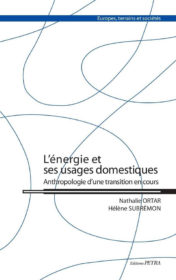 As part of the publication of the collective work "Energy and its domestic uses. Anthropology of an Ongoing Transition,"
coordinated by Nathalie Ortar and Hélène Subrémon, published by Éditions Pétra, a book that focuses on the energy transition (and its socio-technical challenges) in everyday life, with contributions in sociology, history, and anthropology, Aude Danieli contributed to the chapter:
"The Linky meter coming soon to your home. Local regulations put to the test by new local discontent." Summary
For eight years now (since 2010), energy professionals in the field have been experimenting with the installation of Linky smart meters, designed to offer the possibility of greater energy control and more reliable pricing. Amidst media controversy surrounding Linky smart meters, how are staff responding to consumer reactions? How are they managing to incorporate this new digital technology into their daily lives? These are the questions that guided the investigations conducted behind the scenes at energy organizations faced with a new service relationship marked by conflicts over digital and energy issues.
About the book…
The energy transition currently underway in many industrialized societies is characterized by a gradual shift from a system based on the unlimited use of fossil fuels to one based on the use of renewable energies and more energy-efficient behaviors. This transition is affecting all our lifestyles. The changes underway, as well as the socio-technical challenges they entail, highlight the intrinsic functioning of societies. They also reveal how societies think about themselves and project themselves into the future.
Energy and its domestic uses therefore focuses on the transformations taking place in the daily or habitual use of energy resources. This book examines the tension between prescriptions for change and routine practices. The analyses presented here are based on several European examples and draw on various theoretical and disciplinary approaches (anthropology, sociology, history). They provide a more detailed understanding of past and present developments and resistance in the ordinary ways in which energy resources are consumed.
The complexity of the relationship with energy is thus addressed from the perspective of both professional and civilian actors, with the aim of highlighting the impact of political and technical choices on everyday practices. Whether studying the rollout of Linky meters in France, the promotion of renewable energies in different geographical and economic contexts, or the consideration of energy poverty, the ambition of this collective is always to highlight the social and symbolic issues surrounding energy production and its most common uses.
With contributions from:
Françoise Bartiaux, Sophie Bouly de Lesdain, Cécile Caron, Aude Danieli, Isabelle Garabuau-Moussaoui, Christophe Granger, Daniel M. Knight, Willy Lahaye, Nathalie Ortar, Magali Pierre, Laurence Raineau, Amélie Sibeni, Hélène Subrémon, and Jean-Pierre Williot.
This first seminar of the Inventing Greater Paris
cross-disciplinary group proposes to reconsider the regional development of Greater Paris by focusing on the landscape. The question of landscape first requires us to look at the professions involved, in particular understanding how landscape architects contribute to regional-scale plans. From an epistemological point of view, it is then necessary to consider the notions of landscape, scale, public space, and nature as historical and social constructs that we wish to examine in relation to the disciplinary fields to which they belong. Finally, the landscape perspective allows us to revisit the instruments of development, particularly the question of the plan as a mode of representation and a process of realization.
With contributions from: Bertrand Follea, Laurent Hodebert, Sonia Kéravel, Julien Laborde, Sandra Parvu
Scientific coordination: Frédéric Pousin and Nathalie Roseau
Belghit Derouich will defend his doctoral thesis on Wednesday, December 19, 2018 (2:30 p.m., Bienvenüe Building, B019).