The session will take place in B235 (Bienvenüe Building) and will be broadcast via videoconferencing.
By: François-Mathieu Poupeau, researcher at LATTS
Discussant: Virginie Boutueil, researcher at LVMT
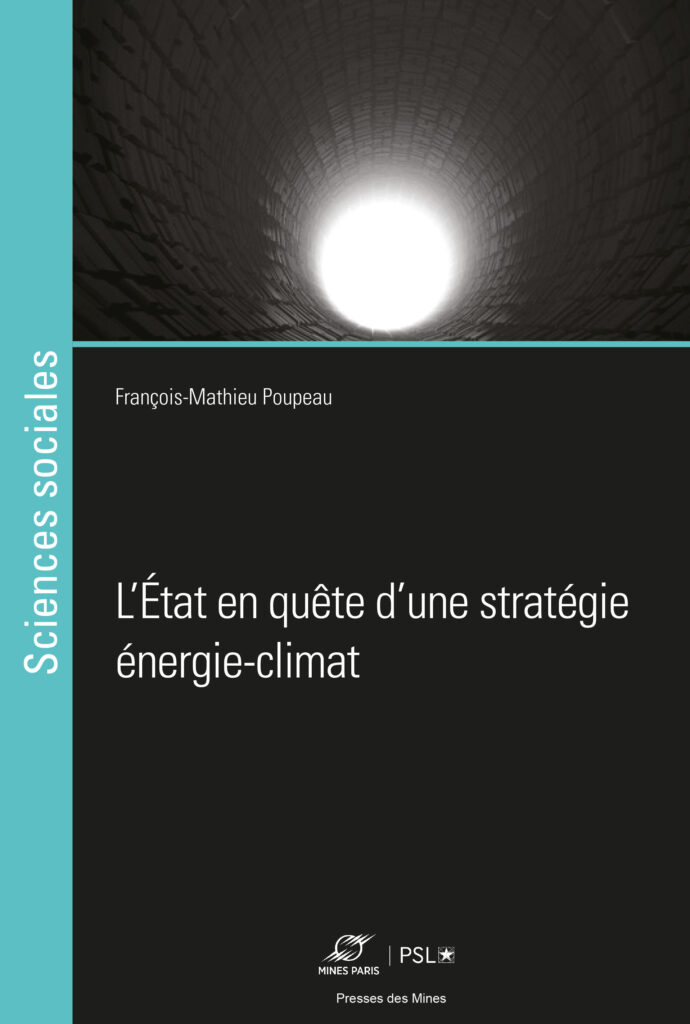
Session based on the book:
"The State in Search of an Energy-Climate Strategy"
Presses des Mines, 2023
Energy and climate have become major concerns in France, challenging the State in its role as strategist. How is the State approaching this new role? How is it building its vision for the future? How is it setting the broad guidelines intended to respond to the challenges of combating climate change and energy transition? These questions are at the heart of this book, which examines the drafting, from 2017 to 2020, of the National Low-Carbon Strategy (SNBC) and the Multi-Year Energy Program (PPE). Based on an in-depth survey of the actors who participated in their development, it offers a unique contribution to the sociology of public administration and decision-making in a field that has yet to be thoroughly studied. It also identifies a little-known facet of the state's inaction on climate change: the powerlessness of the administration in charge of this issue in France. Relegated to a peripheral position in the bureaucratic hierarchy, with limited staff and resources, lacking real leverage for action, and receiving little support from politicians, this administration is struggling to generate the momentum for change needed to achieve the goal of carbon neutrality by 2050.
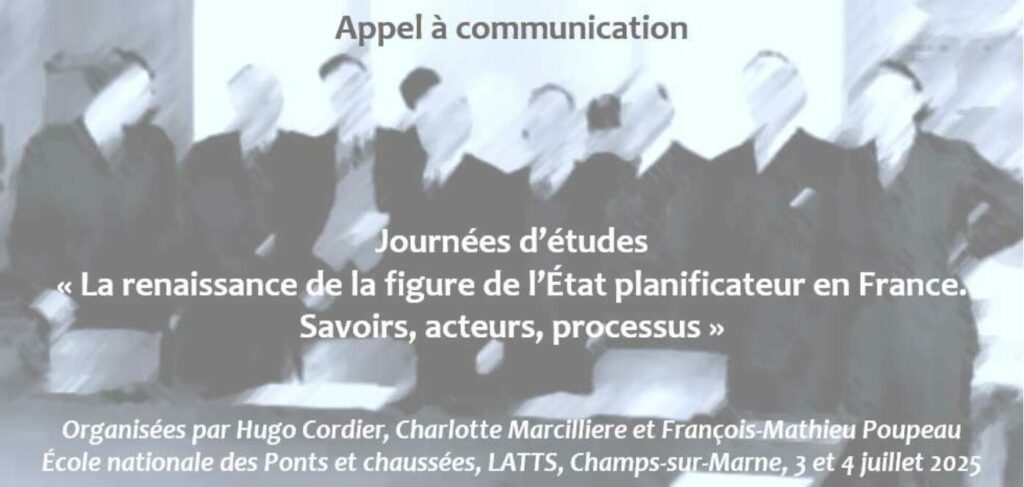
Hugo Cordier, Charlotte Marcilliere, and François-Mathieu Poupeau are organizing a study day entitled "The rebirth of the figure of the planning state in France: Knowledge, actors, processes" on July 3 and 4, 2025, at the École nationale des ponts et chaussées.
Please feel free to share this information with your networks!
For your information, proposals must be submitted by January 15, 2025, according to the terms specified in this document.
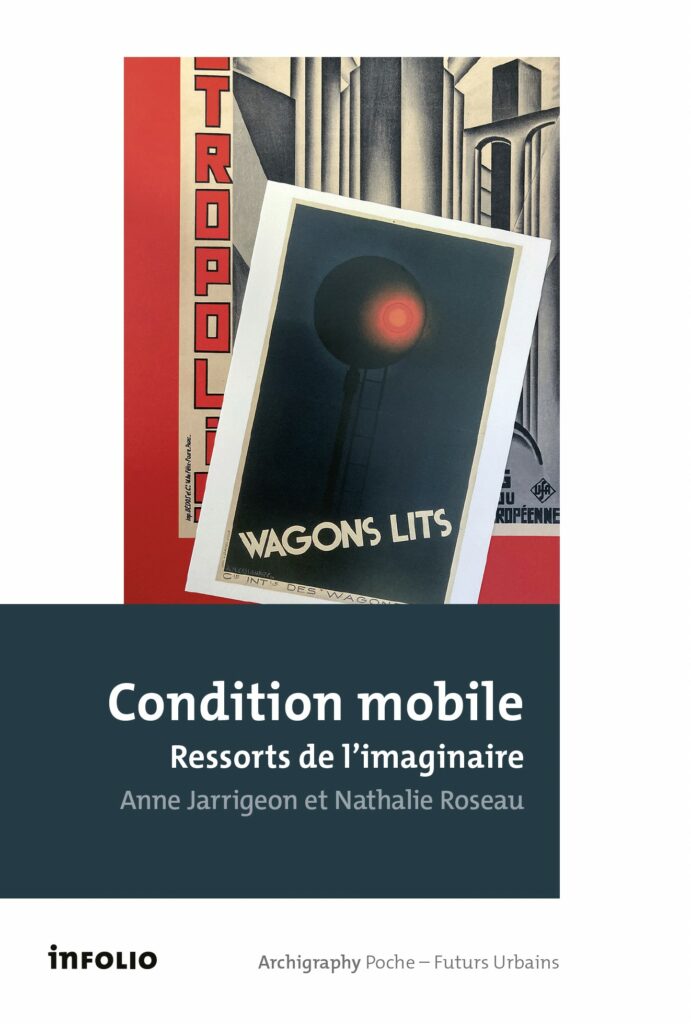
Publication of a book co-written by Anne Jarrigeon and Nathalie Roseau: "Condition mobile. Ressorts de l'imaginaire" (Mobile Condition: Springs of the Imagination), 2024, Editions InFolio.
"What does mobility do to urban worlds? Infrastructure, architecture, technology, images, practices: for those interested in the future of cities, their past and their present, the imagination is a fertile field of understanding. By scrutinizing objects, languages, devices, and their multiple appearances, Anne Jarrigeon and Nathalie Roseau explore, through the imagination, one of the most powerful driving forces of contemporary experience, one of its inseparable conditions: mobility. A book with two voices, Condition mobile crosses temporalities and disciplines: urban ethnology, visual anthropology, and semiotics for Anne Jarrigeon; architecture, urban planning, and history for Nathalie Roseau.
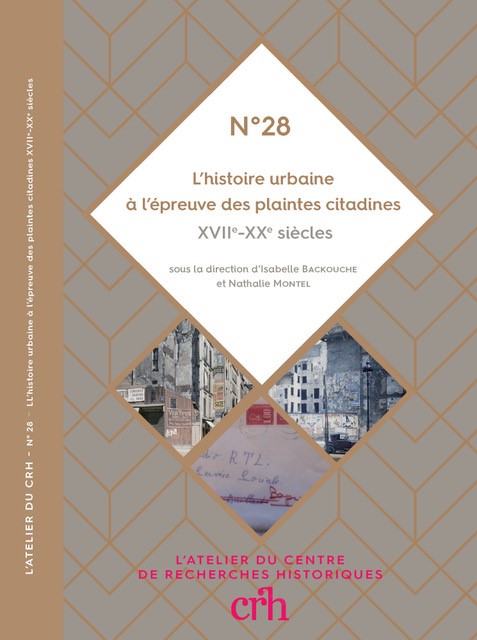
Publication of a book co-authored by Nathalie Montel: "Urban history put to the test by city plants"
Isabelle Backouche and Nathalie Montel – published in 2023 (in print in 2024).
"What if we listened seriously to what ordinary city dwellers have to say? This is the approach taken in this issue, which focuses on a collection of written complaints that have the city as their setting but also as their subject. What do these quiet protests tell us? To what extent do they inform us about the fabric of the city? These unusual sources, which are valuable material for historians, provide valuable and unique insights into the social and material transformations of urban environments. This is demonstrated by each of the studies brought together here."
The session will take place in B235 (Bienvenüe Building) and will be broadcast via videoconferencing.
By: Anne Clerval
Discussant: Martine Drozdz
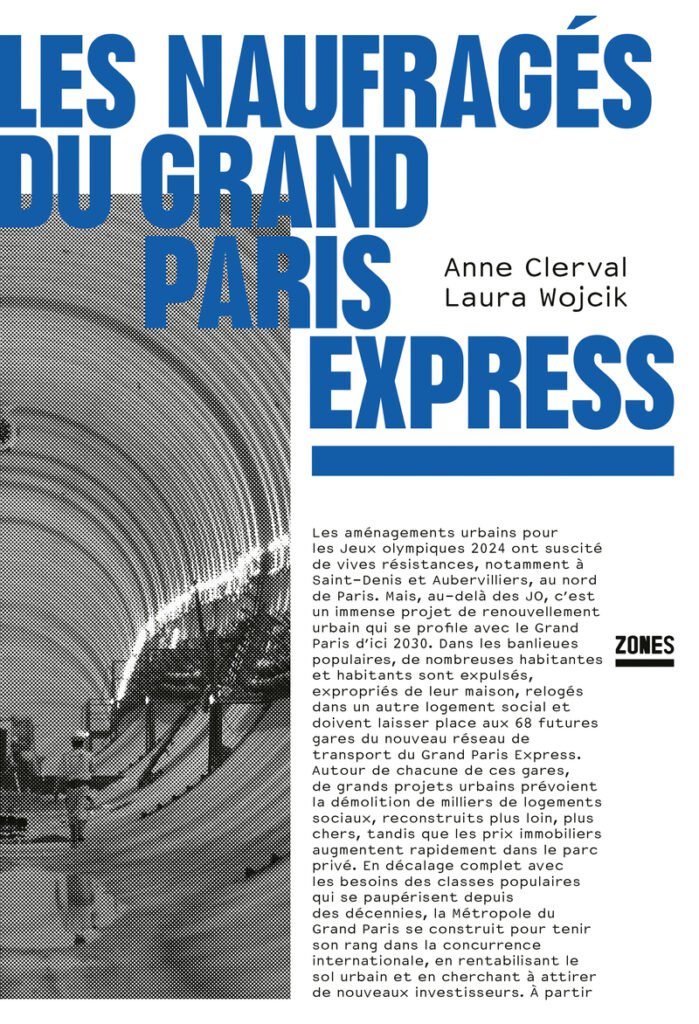
Urban development projects for the 2024 Olympic Games have met with fierce resistance, particularly in Saint-Denis and Aubervilliers, north of Paris. But beyond the Olympics, a huge urban renewal project is taking shape with the Grand Paris project, due to be completed by 2030. In working-class suburbs, many residents are being evicted, expropriated from their homes, rehoused in other social housing, and forced to make way for the 68 future stations of the new Grand Paris Express transport network. Around each of these stations, major urban projects plan to demolish thousands of social housing units, which will be rebuilt further away and at a higher cost, while real estate prices in the private sector are rising rapidly. Completely out of step with the needs of the working classes, who have been becoming poorer for decades, the Greater Paris Metropolis is being built to maintain its position in international competition, by making urban land profitable and seeking to attract new investors. Based on field research conducted around the future stations in eight municipalities in the inner suburbs, this book tells the story as seen by the losers of this operation.
Nathan Marom
Paris Institute for Advanced Study (2023-24) and Urban School, Science Po
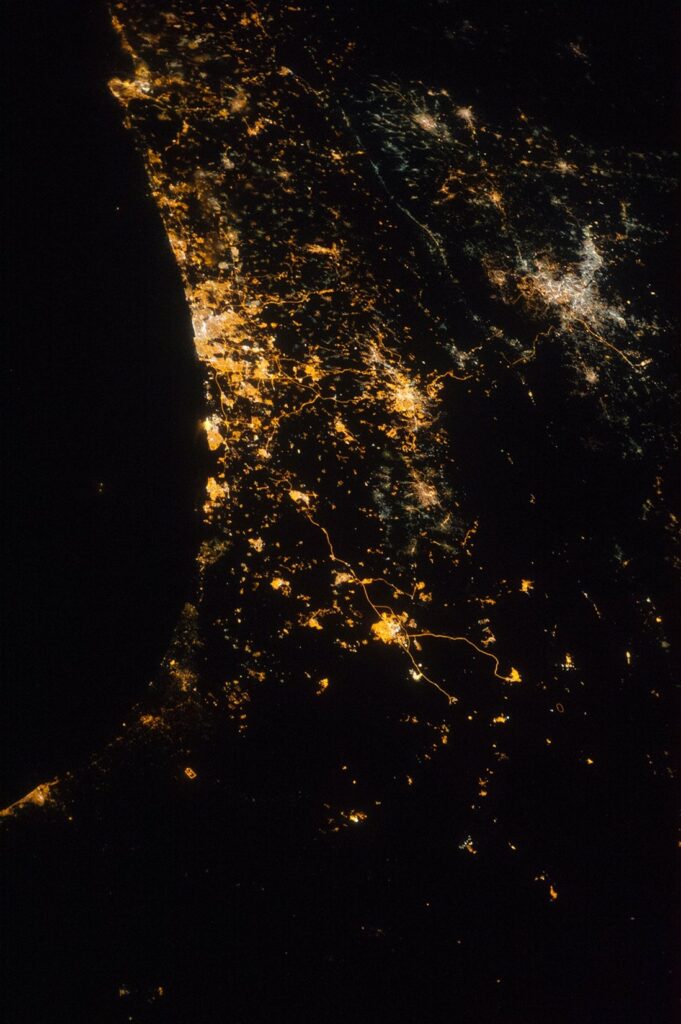
In this presentation, I develop a set of reflections on metropolitan regions as a node, or rather a knot of metabolic entanglements across infrastructure systems, economic sectors, geographic scales, and political settings. These reflections are based on a wide-ranging multidisciplinary literature alongside ideas and illustrations developed through my ongoing research on the metro-political ecologies of the Tel Aviv metropolitan region.
In particular, I draw on Ingold’s notions of “entanglements” (as distinct from networks) and “bindings” overcoming boundaries. Applying these ideas to a renewed study of urban metabolism, I propose a conceptual and methodological elaboration of metabolic entanglements as a distinct mode of inquiry to capture the multidimensional, multiscalar, multisectoral relations and exchanges between cities, regions, and planet in all their “messiness.” I position metabolic entanglements between, on the one hand, quantitative and technical approaches to sustainability that emphasize systems integration and efficiency (e.g., nexus, material flow analyses), and, on the other hand, more qualitative relational ideas stemming from STS (e.g., actor-networks and assemblages). This suggests an approach that is holistic (encompassing a wide range of metabolic domains and infrastructural systems); highly specific (embedded empirically in a particular urban context and polity); and explicitly political (invoking an expanded notion of politics that includes political ecology, political economy, geopolitics, national-ethnic conflict, climate justice, etc.).
I will illustrate these ideas—a work in progress—following several metabolic entanglements of the Tel Aviv metropolitan region, binding it far beyond its official boundaries to distant places and across scales, up to the planetary scale. These include mineral entanglements between regional stone quarries and global cement production; water-energy entanglements between desalination plants and offshore gas fields; and food entanglements related to port infrastructures and geostrategic trade corridors. Through these examples, I will also raise some methodological implications for thinking through entanglements, following specific flows and filaments (such as food or finance) in exploratory ways to wherever they may lead, and pursuing news stories into unexpected territories. In a world awash with boundless information and big data, this idiosyncratic approach may offer some methodological bindings.
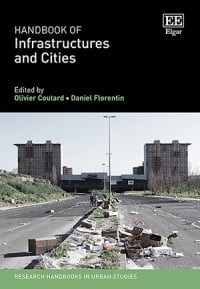
Hosted by Olivier Coutard and Daniel Florentin, based on their Handbook of Infrastructures and Cities.
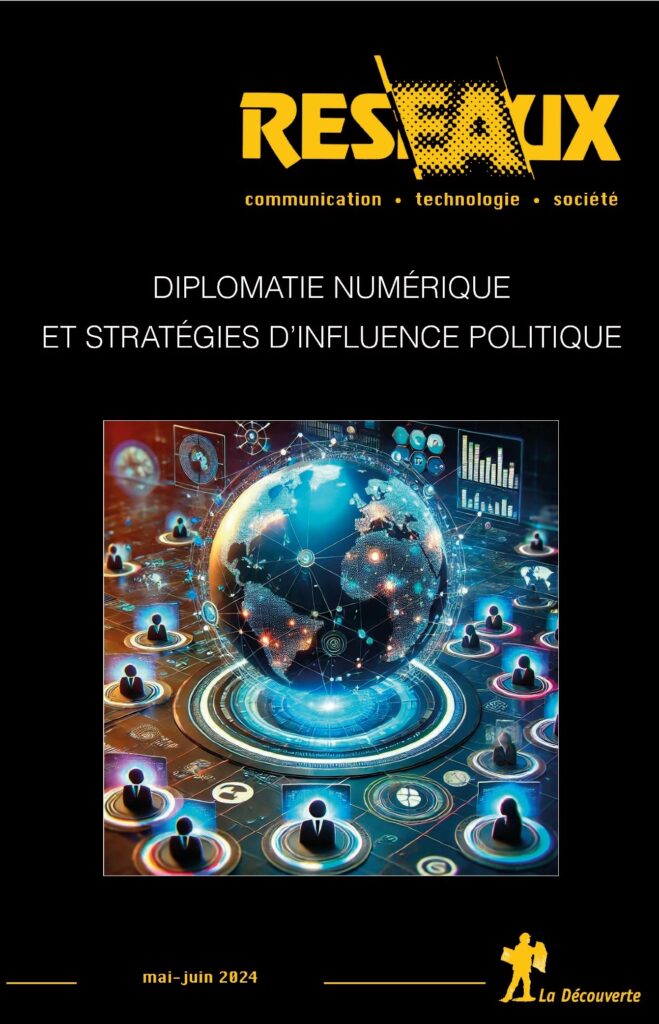
"Digital Diplomacy and Political Influence Strategies" – Issue coordinated by Inna Lyubareva and Julien Nocetti.
Summary of the dossier:
- Digital Diplomacy and Political Influence Strategy. The Evolution of Diplomatic and Influence Strategies in the Digital Age. By Inna Lyubareva and Julien Nocetti
- China Global Television Network French, (digital) television as an instrument of Chinese "political warfare." By Sébastien Palla
- Sino-Pakistani digital diplomacy. Study of a joint information maneuvering mechanism. By Nowmay Opalinski
- Under the radar. Crisis, restructuring, and clandestinization of Russia's information influence apparatus after the invasion of Ukraine. By Maxime Audinet and Colin Gérard
- The Ukrainian "information shield." Infrastructuring digital sovereignty practices. By Louis Pétiniaud
- The national roots of a multinational corporation. Google's recruitment and adaptation to the French sphere of influence (2002-2012). By Charles Thibout
- Facebook as a player in international relations. A study of Internet.org, its project to connect the world. By Tristan Mattelart
Miscellaneous:
- Digital data, the new sinews of war? The emergence of a military market for artificial intelligence in France. By Alina Surubaru
- Three theories of surveillance capitalism: control, exploitation, reproduction. By Marc-Antoine Pencolé
Reading notes:
- Geoffrey C. Bowker and Susan Leigh Star, Making Things Happen: The Consequences of Classification, Paris, Éditions de l'EHESS, 2023, 447 p. By Nicolas Dodier
- Lee McGuigan, Selling the American People: Advertising, Optimization, and the Origins of Adtec
The 35th edition of FIG will be held on October 4, 5, and 6, 2024, in Saint-Dié-des-Vosges

Claire Simonneau is a member of the scientific committee for this year's edition, which is dedicated to the theme of "Earth." She will lead a round table discussion entitled "Building the cities of the future with earth" on Sunday, October 6, at 9 a.m.
Martine Drozdz will also present her book "Nos lieux communs" (Our Common Places) on Saturday, October 5, at 5:30 p.m.
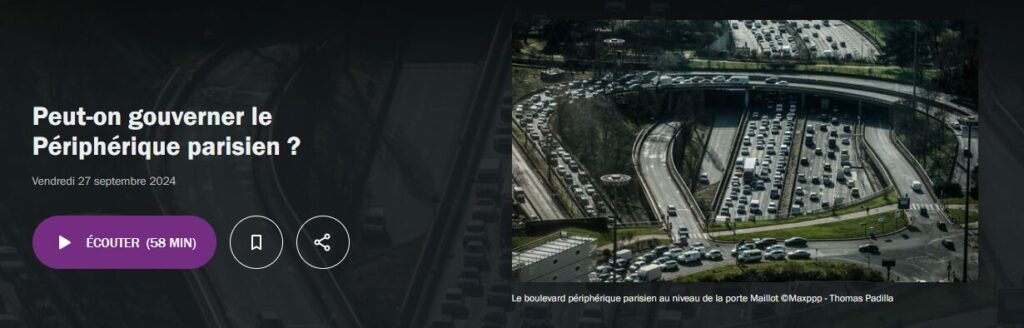
This France Culture program featuring Nathalie Roseau was broadcast on September 27, 2024.
This opinion piece, written by Nathalie Roseau, was published on September 30, 2024, in Le Monde.
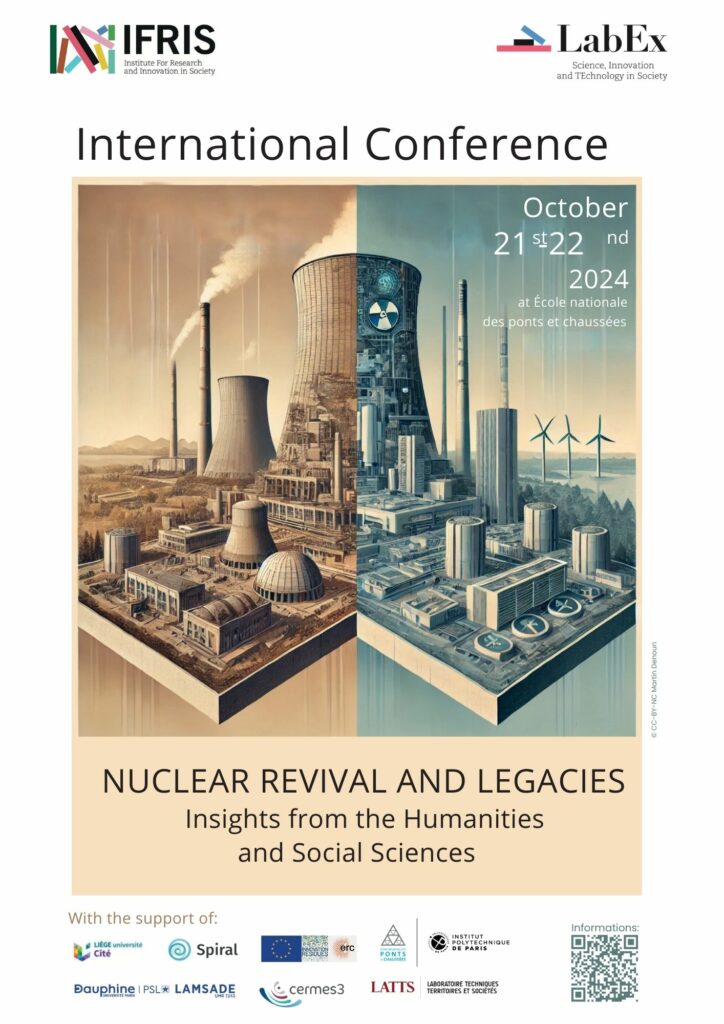
International conference: Nuclear revival and legacies, insights from the humanities and social sciences
Conference organized by Claire Le Renard (LATTS, Ecole nationale des ponts et chaussées), Martin Denoun (Spiral, University of Liège), Maël Goumri (Lamsade, Paris-Dauphine University), and Ange Pottin (ERC INNORES project, University of Vienna). With the support of IFRIS.
The international conference "Nuclear revival and legacies: insights from the humanities and social sciences" aims to bring together perspectives from the humanities and social sciences on nuclear issues in a unique context. Approaches from sociology, history, philosophy, anthropology, geography, political science, economics, and science and technology studies shed new light on developments in this sector.