Thesis supervisor: François-Mathieu Poupeau (more…)
Thesis supervisor:
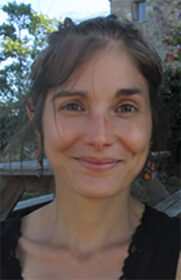 A geographer with a PhD in urban planning, she teaches at the Paris School of Urban Planning and conducts research on territorial inequalities and working-class neighborhoods in France, intertwining territorial public action and the practices of the residents who shape them. To do so, she uses qualitative methods.
Her thesis, defended last year, focuses on policies to support business creation in priority neighborhoods. She questions the principle of equal opportunity advocated in entrepreneurship support in urban policy by studying individuals' access to entrepreneurial resources offered by local institutional actors and their effects on their capacity for action. Interdisciplinary in nature, she brings critical management sciences into dialogue with urban planning and social geography.
She continues to focus on issues of territorial inequality, and wishes to link them to the notion of care and develop links between the worlds of research and civil society. In this context, last year she co-founded an association called La Cabane de la recherche (The Research Cabin) with fellow doctoral students and young doctors.
Before joining LATTS, she was a member of the Mosaïques team at LAVUE at Paris Nanterre University, where she participated in the "Justice and Inequalities" research area.
Thesis supervisor
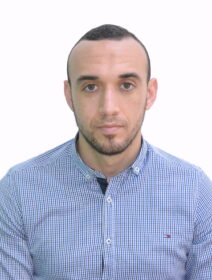 Fenchouch Alla-eddine, who holds a PhD in urban planning, is a lecturer and researcher at the École Polytechnique d'Architecture et d'Urbanisme d'Alger (Algeria) and a member of the "Strategic Urban Planning, Architecture, and Integrated Development" (USADI-EPAU) research team. He is currently undertaking a three-month postdoctoral fellowship at LATTS (office 220) from September 1 to November 30, 2023, as part of the Atlas FMSH-CASS 2023 program.
His current research project focuses on the ordinary fabric of the city, its modalities, actors, and effects: The case of Algiers. More specifically, he is looking at the practices of residents and the "micro-actions" of small entrepreneurs, both formal and informal, involved in real estate projects that have become increasingly visible in the northeast sector of the city of Algiers since 2015. These real estate operations often appear random and exceptional, frequently integrated into individual housing developments. His main objective is to understand the process of creating these projects by examining their materiality and the mechanisms of action at work. At the same time, he is also studying the role of public policy in response to the proliferation of these private initiatives. This project is a continuation of his doctoral thesis, which focused on recent developments in Algerian cities, particularly the dynamics of socio-spatial redistribution and the analysis of practices of appropriation and reappropriation of urban spaces.
Thesis supervisor:
Thesis supervisors:
(LATTS) and Sophie Bernard (IRISSO). (more…)
Thesis supervisor
: Jean-Michel Denis
Co-supervisor
: Cécile Guillaume
(more…)
Thesis supervisor:
Thesis supervisors:
and Mathias Thura (more…)
Thesis supervisors:
Jean-Michel Denis
and Cécile Guillaume (more…)
Health at work: Time for digitalization? Technological innovation and the challenge of representing activity
The defense will take place on Tuesday, September 26, 2023, at 2 p.m., in room B021-B023 of the Bienvenüe building, 14/20 bd Newton, Cité Descartes – 77420 Champs sur Marne, Plot B, RDC.
The jury will be composed of:
Marc-Éric BOBILLIER-CHAUMON
, professor at the Conservatoire National des Arts et Métiers (rapporteur)
Sophie BRETESCHÉ
, professor, Institut Mines Telecom Atlantique (rapporteur)
Pascale LEVET
, associate professor, University of Lyon 3 (examiner)
Manuel ZACKLAD
, professor at the Conservatoire National des Arts et Métiers (examiner)
Pascal UGHETTO
, university professor, Université Paris-Est Marne-la-Vallée (thesis supervisor)
Thesis summary
Digital technologies based on artificial intelligence, which have been gaining popularity in recent years, make it possible to collect large amounts of data containing valuable information, to the point that companies are now considering using them in the workplace. Their designers suggest using the data collected as a means of promoting the development of occupational health policies by gathering data on work activity. Is this a real tool for advancing the design of policies for the prevention and treatment of risks, accidents, and occupational diseases, or is it a technocratic illusion? Is it knowledge about work that benefits employees as much as employers and insurers, or is it a new surveillance tool? These technologies raise many questions (use, purpose, applications). The thesis argues that one of the most crucial questions is the conceptual model underlying the design of these objects: does the model represent work as a mechanical and controllable act or as an activity carried out by individuals? Its objective is to shed light on the issue of how work is taken into account through the analysis of a series of technical innovations that some, who still question their usefulness, want to see as solutions for the future. By analyzing how a digital market attempts to structure and legitimize itself, we show how a representation of "connected health at work" is constructed by actors who are sometimes very distant from this field and who are engaged in the dissemination of new models of innovation, finding echoes in the history of the construction of occupational health issues, particularly those based on quantification. When these new technological forms are confronted with the reality of practices, the thesis shows, by focusing both on the construction of the innovation system and on the issues raised by these experiments and the meanings attached to them by project leaders and their recipients, that the design of the service cannot ignore the link between technology and work. Furthermore, the thesis argues that this link is not self-evident and requires investment in the design process to support learning about both the technical and design methodologies and work-related issues.
Keywords
: digital, work activity, occupational health, digital, technologies, artificial intelligence