The next session of the GOT
seminar will take place on Friday, June 2, 2023, from 1:00 p.m. to 5:00 p.m., in room B235 (LATTS room, Bienvenüe building).
The topic will be: Smart city companies and their relationships with local authorities
The term "smart city" owes much to the project of major computer hardware manufacturers to invest in the economic domain of the city: IBM with the slogan "smarter city," but also Cisco. We now
know that this project is far from complete and that other economic players have positioned themselves in the market. The aim of the seminar session is to pool the information gathered in the laboratory's ongoing work on various companies operating in this market. Which companies? What are the relationships between these companies (consortia, subcontracting, market segmentation, competition, etc.), what type of contractual relationships do they have with cities (catalog sales, long-term partnerships, no relationships, etc.)? What type of services do they provide? What type of data is involved? Which sub-sectors (water, transport, security, etc.), which combinations of sub-sectors?
Program
1:00 p.m. Offers in a rural area, the Pays Haut Val d'Alzette community of municipalities: Ismail
Hamoumi
1:30 p.m. Turnkey products for automatic image recognition in small towns, Victor
Maghin
2:00 p.m. Smart city start-ups: Myrtille Picaud
2:30 p.m.: Initial discussion on fragmented offerings
3:00 p.m. Mobility as a service companies in Dijon: Guillaume
Fournier
3:30 p.m. The On Dijon project and other public/private configurations in Dijon: Sofia Laborde
4:00 p.m. Discussion on the integration of offerings in Dijon
4:30 p.m. General discussion
The coordination team for the workshop "Housing Market Actors
" (Julie Pollard and Yoan Miot) is organizing this workshop.
The speakers will be:
– Ivana Socoloff
(University of Buenos Aires, CONICET): Real Estate Funds in Argentina: tensions and volatility under financial subordination (1996-2021).
– Louis Gaudreau
(UQAM) – remotely: Investment and financialized residential production in Montreal.
– Eliza Benites-Gambirazio
(ENS Paris-Saclay, IDHE.S Laboratory): Promoting a tax incentive scheme for rental investment. When real estate professionals become intermediaries.
The discussant will be: Félix Adisson
(LATTS, Université Paris-Est).
The session will take place on Wednesday, May 31, from 2:00 p.m. to 5:00 p.m. at LATTS
, Room B235 (Bienvenüe Building – Plot B)
14-20, boulevard Newton, Champs-sur-Marne
RER A: Noisy – Champs, exit no. 3 Cité Descartes.
It will be possible to follow the session remotely. Please register via this link:
https://docs.google.com/forms/d/1wjSkefja3aj44WhNGe8ICMLB3OvGro8EjbvrAFMdgA8/prefill
The connection link will be sent to those who register.
The next session of the GOT seminar will take place on Tuesday, May 16, from 11:30 a.m. to 1:00 p.m., in room A014 (Bienvenüe building). We will hear Elodie Gibault present her doctoral work in a presentation entitled "Trajectories of experts on assignment in banks. Towards a sociology of careers and freelance experience."
LATTS is pleased to invite you to the next session of its seminar
which will take place on Monday, May 15, 2023, from 2:00 p.m. to 4:00 p.m. on the work of Carlotta DARÒ
, Doctor of Art History, lecturer at ENSA Paris-Malaquais (Laboratoire Infrastructure Architecture Territoire) and currently a visiting researcher at ETH Zurich.
Aesthetics and Telecommunications. Landscape of Lines
Métis Presses, 2022, 176 p.
Discussant: Antoine Picon, Director of Research at LATTS
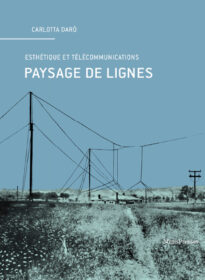
2023 – LATTS Seminar Poster_ session of May 15, 2023
Zoom link to join the seminar: https://sciencespo.zoom.us/j/9637802275
Information about the LATTS seminar: https://latts.fr/les-recherches/le-seminaire-du-latts-2/
The aim of the workshop is to discuss the difficulties faced by households on a tight budget in paying for domestic energy consumption.
In doing so, it seeks to shed light on energy poverty through the prism of (non-)payment (individual budgetary logic, spending prioritization practices, institutional debt management, etc.). Researchers will discuss their current and future work, revisit past research, discuss available methods and data, and share their bibliographies.
Program Session 1 – Budgets and trade-offs Caroline Henchoz
– Haute Ecole de Travail Social et de la Santé Lausanne (HETSL)
Thinking about "small" budgets in the social sciences. Management and allocation of financial resources and payment of energy consumption expenses.
Lise Desvallées
, University of Pau, TREE
The weight of energy bills in the residential costs of households in Nouvelle-Aquitaine.
Exploring the spatial dynamics of housing, transportation, and energy costs.
Nina Testut
, "L'Ethnographe" (practitioner)
Budget trade-offs for households weakened by the Covid crisis and energy debt management. Focus groups and interviews with households and solidarity actors.
Sylvain Bordiec
, University of Bordeaux, LACES
The energy of the Yellow Vests. Energy consumption and social mobilization.
Session 2 – Who deals with unpaid energy bills? Caroline Escoffier
, EDF lab Saclay, Energy Technology and Society Group
A survey on the decline in applications for FSL Energy.
Hélène Ducourant
, Gustave Eiffel University, LATTS
Unpaid bills from customers of new energy suppliers. Debt collection work in debt collection agencies.
Session 3 – Discussions on data, methods & bibliography Aminata Coly
, Gustave Eiffel University, LATTS, Orange Innovation
Banking and budgetary issues in large-scale surveys: an overview of surveys and possible uses.
Bibliographic discussions among participants.
Location: LATTS Bienvenüe building, room B235
4/20 Boulevard Newton – Plot C, 2nd floor – Champs sur Marne
(RER A – Noisy Champs station)
Date and times: May 12 – 10 a.m. to 4:30 p.m.
Organization, contact & registration: helene.ducourant@univ-eiffel.fr
Nathalie Roseau published this article on April 25, 2023, in The Conversation.
This contribution re-examines the place of the ring road in the history of the Paris Beltway and questions its future in the context of Greater Paris.
She was also invited to appear on France Inter's "Le téléphone sonne" program on April 26, 2023:
"50 years of the Paris ring road: what future for urban highways?"
 Nastaran Esmaeilpour Zanjani is in her first year of doctoral studies at LATTS and the UP laboratory as part of a joint supervision program between France and Italy. Her doctoral thesis is entitled "From decision-making to implementation: Effectiveness and efficiency in the implementation of local energy plans." ." The main objective of this research is to elucidate the reasons for the weak relationship between energy plan strategies and their implementation in reality, the reasons for the slow implementation of energy plans, and also, in some cases, the failure and delay of certain projects during implementation.
The research aims to identify the gap between plans/strategies and implementation and to explain these weaknesses by analyzing various sources and cases in France and Italy.
The next session of his seminar, which will take place on Monday, April 17, 2023, from 2:00 p.m. to 4:00 p.m., will focus on the theme:
Visual engagements with vertical urbanism
By Andrew Harris, Associate Professor in Geography and Urban Studies at University College London

Image credit: Tom Wolseley
The session will take place in room B019 of the Bienvenüe building and via videoconference.
Zoom link: https://sciencespo.zoom.us/j/9637802275
François-Mathieu Poupeau will participate in the "Energie en commun"
webinar organized by ADEME and PUCA on April 11, 2023.
Together with Blanche Lormeteau, he will present the results of the survey he conducted as head of a research collective (in which Mathilde Marchand and Roberta Pistoni, from LATTS, participated) on the emergence and development of collective electricity self-consumption in France.
This research will result in the forthcoming publication of a book by Presses des Mines.
Online registration required
The session will focus on Bernard Augey's doctoral thesis:
"How does 'agile transformation' transform an information systems department? The case of Pôle Emploi."
 Leonardo Ramondetti is a visiting postdoctoral researcher at LATTS, where he is conducting in-depth research on urbanization processes and new spatialities generated by infrastructure projects in Southern Europe.
He is a postdoctoral researcher in urban planning and landscape architecture at the Interuniversity Department of Territorial Studies and Planning (DIST) at the Polytechnic University of Turin. He teaches a course in urban and regional planning at the School of Architecture at the University of Bologna. His research and teaching interests revolve around urban design theory and urban planning culture, with a particular focus on infrastructural transformations.
During his PhD, his research focused on new urbanization and infrastructure processes in the Chinese context. He participated in the research project "CeNTO – Chinese New Cities" research project, in which he published his monograph The Enriched Field: Urbanizing the Central Plains of China (Birkhäuser, 2022). This study, along with other projects, was developed as part of the China Room research group at the Polytechnic University of Turin, where he has been coordinating research activities for the past year.
He is currently participating in the research project "Rescaling the Belt and Road Initiative: urbanization processes, innovation patterns and global investments." In this context, he is studying how European and Chinese investments are transforming logistics and infrastructure around the Adriatic Sea, particularly in the cities of Trieste, Piraeus, and Ravenna. He is particularly interested in how new infrastructure is changing production sites and how they interact with the environment.
For several years now, urban planning has incorporated environmental issues. In France, for example, Local Energy Plans, Energy Master Plans, and Climate Plans have been implemented by certain local authorities (Hinterberger, 2020).
These have become important in urban planning and the construction of the built environment for most cities in Europe.
However, their proponents find that they are not easily and quickly implemented in a practical and effective manner. This observation has been made and confirmed over several years. Feng et al. (2019) explain, using the example of 34 cities, that the number of net-zero energy buildings is lower than expected due to building codes and energy standards and the high initial cost, which is the main obstacle to implementation. Other studies conclude that most of these plans are highly dependent on the local context, with many pre-existing factors that are difficult to change (Ballesteros, 2013).
This leads us to look at what happens between planning and implementation: Why is there a lack of connection? Why are objectives, guidelines, and plans poorly translated into operational projects? How can these weaknesses be explained?
These frequently observed discrepancies have been the subject of scientific analysis but remain incompletely understood. Research has addressed this issue from various approaches: socio-technical (Geels, Kemp, 2007; McCauley, Stephens, 2012), organizational and institutional (Friedrichsen et al. 2014), and socio-political and legal (Bronin, 2010).
The main objective is to elucidate the reasons for the weak relationship between energy plan strategies and their implementation in reality, and the reasons for the slow pace of energy plan implementation and, in some cases, the failure and delay of certain projects during implementation.
The doctoral proposal is to carry out this analysis by observing the Segrtae project in Italy and other local situations in France.
Year of enrollment: 2022
Doctoral school: City, Transport, and Territories (VTT)