The next RUE seminar will take place on Monday, May 16, 2022.
Jochen Monstadt is a visiting professor at LATTS for three years as part of the UGE program "Future-Inventing the Cities of Tomorrow." His stay at LATTS will allow him to collaborate on and further develop his initial research on urban temporalities of infrastructure.
Professor of Urban Transition Governance, Jochen Monstadt is in charge of the spatial planning section in the Department of Human Geography and Spatial Planning at Utrecht University. Since the beginning of his academic career, his research and teaching interests have revolved around the contingent and local transformation of cities and how urban change is mediated by technical infrastructure (energy and water supply, wastewater and solid waste management, transportation, and ICT). He is particularly interested in how the socio-technical design (and governance) of these vital systems shapes the sustainability and resilience of cities in the North and South. At Utrecht University, he has been leading the university research cluster on "Infrastructure Transformation for Sustainable Cities" since 2017. Other ongoing projects involve research on the governance of critical infrastructure (doctoral program at TU Darmstadt), urban and infrastructural transitions in East and Southern Africa (principal investigator of two consortia with African partners), and the decarbonization of urban heating systems in European cities.
MaaS (Mobility-as-a-Service) refers to a mobility service centered around travelers' needs, combining multiple modes of transport and a single payment interface within a digital platform. For users, MaaS promises to offer a seamless multimodal mobility solution (integration of mobility services) and a fluid user experience (integration of features from route search to payment). From the perspective of transport operators, MaaS plays a key role in customer relationship management. Finally, for local authorities and organizing bodies, MaaS is one of the levers for the ecological transition of mobility, promoting a modal shift from private cars to other more environmentally friendly modes.
To encourage travelers to use the most eco-friendly mobility services, including MaaS, "gamification" involves introducing game mechanics into mobility platforms to improve the user experience and thus increase their use.
This seminar will highlight incentive and gamification strategies in mobility platforms and their impact on mobility practices.
Location: Le Hub, Maison de la RATP, 189 rue de Bercy, 75012 Paris

 Adam Piotrowski is enrolled in a PhD program in Sociology of Work, under the supervision of Pascal Ughetto. It is a Cifre thesis at EDF R&D, where he is supervised by Jérôme Cihuelo, following two research internships at the company.
As part of his thesis, he is interested in teleworking and, more broadly, in new workspaces (flex offices), from the perspective of the arrangements created (and to be created) by companies and individuals in their practice of remote working.
Thesis summary
In the wake of the Covid-19 crisis, work is set to evolve and frequently take the form of remote working for a significant proportion of employees. The consensus is such that we are seeing company stakeholders (HR managers, middle managers, employees concerned, etc.) reflecting on how to organize these new ways of working. The period ahead, according to the hypothesis that inspires this thesis, is one of individual and collective work necessary to arrange all these elements in order to combine them as effectively as possible, i.e., to enable both productive organizations and individual employees to reconcile distance and presence, the immediate and the mediated, the formal and the informal. This thesis therefore posits that what is at
stake are arrangements—between legal frameworks, materially organized spaces, technologies, forms of collectives, but also the locations of employees, the configuration of their housing and family life, etc. These arrangements should be studied in terms of their trajectories of invention or development, which could imply that, rather than a once-and-for-all establishment of new frameworks, we are dealing with learning processes.
Abstract in English
Thanks to the Covid-19 crisis, work is expected to evolve and frequently take the form of remote work for large proportions of employees. We see company stakeholders (HRD, middle managers, employees, etc.) reflecting on the organization of these working methods. According to the hypothesis that inspires this research work, the period that is now beginning shows us that individual and collective work is necessary to organize all these elements in order to associate them as best as possible with each other, with a view to allowing productive organizations and employees to reconcile in the least unstable way the distant and the present, the immediate and the mediated, the formal and the informal. This thesis formulates the hypothesis that arrangements—between legal frameworks, materially organized spaces, technologies, forms of collectives, but also the locations of employees, a configuration of their home and family life, etc.—are being created. These arrangements must be studied in their trajectories of invention or elaboration, which could imply that we are dealing with learning processes.
The journal Flux is launching a call for expressions of interest on the theme:
The limits of major transport infrastructure. African mobility and circulation through the lens of modernity.
Coordinators:
Jérôme Lombard, Director of Research, IRD, UMR PRODIG, jerome.lombard@ird.fr
Nora Mareï, Research Fellow, CNRS, UMR PRODIG,
nora.marei@cnrs.fr
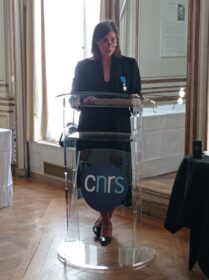 On Thursday, April 21, Agathe Euzen, Director of Research at the CNRS, was awarded the insignia of Knight of the National Order of Merit by Ms. Stéphanie Thiébault, Director of Research at the CNRS and Director of the CNRS Institute of Ecology and Environment (INEE).
The ceremony took place at the CNRS headquarters.
The laboratory would like to congratulate Agathe on this distinction!
As it does every year, LATTS brought together its supervisory bodies as part of the Annual Research Program (PAR) on Monday, April 11, 2022. Present at this meeting were Sophie Mougard (director), Jérôme Lesueur (director of research), and Emmanuel Girard (deputy director of research) for École des Ponts ParisTech, Stéphanie Vermeersch (deputy scientific director, Institut National des Sciences Humaines et Sociales), Marie-Hélène Papillon (regional delegate, DR Ile-de-France Villejuif), and Frédéric Valès (deputy delegate, DR Ile-de-France-Villejuif) for the CNRS, and Serge Piperno (Vice President of Research) and Claude Rospars (Vice President of Research) for Gustave Eiffel University.
After a presentation of the laboratory's activities, discussions focused on a cross-disciplinary research theme entitled "Money, debt, financing, austerity/budgetary constraints: financial issues addressed by LATTS," through three presentations of recent or ongoing work (Hélène Ducourant, Ludovic Halbert, and Yoan Miot).
As part of the seminar series "Activity and Professionalism" organized by Pascal Ughetto, Claire-Tonel (LISST, Toulouse Jean-Jaurès University and Director of Aract Occitanie) will discuss the concept of patient work.
RevueFrancaiseDesAffairesSociales-2021-MarchandTonel-PatientWorkInOutpatientSurgery
Caroline Gallez (LVMT) and Nathalie Roseau (LATTS) are organizing this four-day workshop within the framework of the TOD-IS-RUR network (Program MCA-ITN-H2020). It will discuss the scientific positioning and operational objectives of the network, focusing on the Greater Paris Situation as both a case study and a learning experience for the whole research-training program (approaches, subjects, contexts, methods). Central themes addressed in this studio are:
. What is RUR (Rural Urban region)? Insights from history, transport geography, modeling.
. How to analyze the relationships between transport networks and places/territories?
. How to characterize the diversity of places and equity issues in relation to mass transit access? Beyond transport aspects, how to assess the socio-spatial impacts of other public policies, such as housing or local development?
Studio Paris is co-organized by the Laboratory of Techniques, Territories, and Societies and the Laboratory of City, Mobility, and Transport. Practice-research seminars will bring together the partner organizations of Atelier Parisien d'Urbanisme, AREP, and Institut Paris Région. Field visits and walks in northern Greater Paris will engage unconventional methods of photography and fictional writing with the contribution of Raphaële Bertho and Adèle Gascuel.
LABEX FUTURS URBAINS presents the fourteenth Young Researcher Lunch proposed by the Transversal Group "Inventing Greater Paris" on Friday, April 8, 2022, on the theme:
"Public parks" in Japan (1868-1930): circulation and appropriation of a concept
Presented by Yoko Mizuma
, Research Engineer at Labex Futurs Urbains for the "Inventing Greater Paris" project, LATTS, Transversal Group "Inventing Greater Paris"
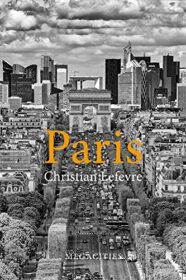
Paris
Christian Lefèvre Agenda Publishing, 2022, 188 p. (Coll. Megacities)
With its reputation for cultural preservation, Paris holds the title of the most visited city in the world. In addition to its tourist economy, it also boasts growing technology, media, finance, and research-centered industries, which have contributed to its global economic influence.
Christian Lefevre analyzes the social and economic forces that have shaped Paris and differentiated it from other long-standing megacities such as London and New York. He considers how the loss of jobs in industry in the 1970s and 1980s has inspired a post-Fordist shift to service and information sectors, yet concerns over social issues such as equality, environmental impact, and adequate services have given rise to a French ambivalence towards promoting the city as a global economic competitor. The book examines the central role France's national government has played in shaping policies affecting the city and explores how the shift towards political decentralization and localism have contributed to a system increasingly incapable of taking collective action, giving rise to tensions concerning social issues, such as housing.
The book is an authoritative analysis of Paris's position, both globally and nationally, and the challenges that face its governance.