 Yoko Mizuma is a research engineer working under Frédéric Pousin and Nathalie Roseau on the "Inventing Greater Paris" project.
A graduate in forestry from Ryûkyû University in Okinawa, Yoko Mizuma spent four years working to combat desertification in Burkina Faso. Convinced that landscape was the key to understanding the way of life of all societies, she began studying landscape architecture at the École Nationale Supérieure du Paysage in Versailles in 2009. She then naturally turned to research and completed her thesis in 2017, entitled "Public parks in Japan: a hybrid landscape form—Contributions from the French School of Landscape Architecture." Since 2018, she has been involved in various scientific and experimental projects, both in the field of gardening and urban planning.
"Living with": emergence and challenges of integrated practices for dealing with risks and crises locally. A survey of local risk scenarios in the urban areas of Nantes and Le Havre.
Thesis supervisor: Valérie November (more…)
Thesis supervisors
: Jean-Pierre Levy (CNRS-Latts) and Yankel Fijalkow (CRH-Lavue) (more…)
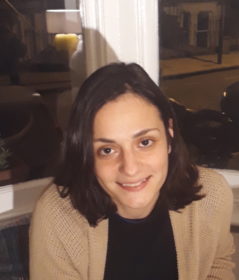 Susana Neves Alves has joined LATTS for two years as a Marie Sklodowska-Curie Fellowship research fellow and will be working with Sylvy Jaglin. Her project will explore the intersections between digital technologies and water infrastructure in Nampula and Nacala, Mozambique, and will seek to contribute to a broader understanding of urban infrastructure and secondary cities in Africa.
Her research interests focus on small and medium-sized cities as critical sites for understanding the manufacture and use of infrastructure in these urban spaces with very high demographic and spatial growth.
Before joining LATTS, she was an ESRC postdoctoral fellow in the Department of Geography at the University of Cambridge, where she worked on similar topics. Previously, as a postdoctoral research associate at University College London, she studied how land markets influence urban transitions in four cities in East Africa—Hargeisa and Berbera in Somaliland and Kampala and Arua in Uganda. At the Urban Institute at the University of Sheffield, she also participated as a research associate in various projects exploring energy infrastructure in cities in the Global South.
Her doctoral thesis, defended in 2017 at University College London, is entitled " Creole Water Supply: states, neoliberalism and everyday practices in a secondary African city ." It examined the roles of the everyday practices of state and non-state actors in shaping water infrastructure in a small secondary city in Africa (Bafatá, Guinea-Bissau).
Speaker: Manon Lassaigne, Research and Development Department, UGE.
Moderator: François-Mathieu Poupeau (LATTS)
Pascal Ughetto is organizing the Grets seminar session on Tuesday, January 19, 2021 (9:30 a.m. to 12:30 p.m., Maison Suger/FMSH, Paris).
The session will be introduced by Jérôme CIHUELO (EDF R&D).
Drawing on a variety of sources of inspiration, large corporations have shown renewed interest over the past decade in rethinking work organizations and the place they give to autonomy. Management has rediscovered that these companies operate in silos, with procedures and processes. They therefore felt it was urgent to review their operating methods and their highly vertical structure. The 2010s began with an urgent call for stakeholders to bring about a "cultural transformation." The second half of the decade saw greater efforts to operationalize this transformation through experimentation with new mechanisms aimed at promoting collaboration, creativity, and collective idea generation, as well as trust in teams to self-organize. This resulted in workspaces that allowed employees to feel empowered to propose and test prototypes without any obligation to succeed, the use of agile methods, and even references to the liberated company.
In principle, the question raised by this call to promote autonomy through new forms of work organization relates to the practical possibilities of reconciling it with a fact that is unlikely to change within large groups: managing on an industrial scale requires coordination, forms of consistency, if not homogeneity. Since standards are unlikely to give way completely to autonomous achievements, what formulas are large corporations likely to invent to integrate such operations with their industrial constraints?
Pascal Ughetto, who raised this question in his book Organiser l'autonomie au travail (Organizing Autonomy at Work), will discuss the case of agile working in this session. Based on the initial results of his work on this subject, he will defend the value, for the sociology of organizations and work, of examining agility, even if it means questioning whether the management of large corporations has truly grasped the implications of agile principles. Potentially, project governance and even the organization of power are at stake. He will use the case of a corporate IT department to study an agile transformation that is supposed to take place.
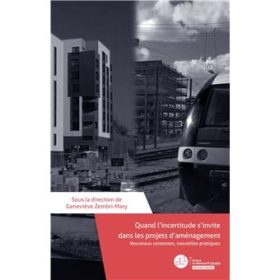 When uncertainty creeps into development projects. New contexts, new practices
Edited by Geneviève Zembri-Mary
Le Manuscrit Publishing, 2020, 288p., Coll. Devenirs urbains
How are risk and uncertainty taken into account in the assessment, consultation, production, and management of development projects? The context for decision-making and project implementation is uncertain due to financial, health, social, environmental, and other crises. It is difficult to reliably predict a delivery date, level of attendance, or marketing pace for the distant future.
Opposition to projects and appeals are also more numerous, while environmental impact is widely criticized. In this context, this book looks at how the practices of public and private actors are evolving and the limitations they encounter, using examples of transport and energy infrastructure, development and urban planning projects (neighborhoods in flood zones, industrial port areas, ZACs, shopping centers, etc.) in Europe, Asia, and America.
Three themes are addressed:
– "Dealing with" project risk;
– Negotiating uncertainty and risk in projects;
– Socio-economic and environmental assessment and risk management in development contracts.
 Paul Minier
is a doctoral student with a background in hydrobiology (Master Quest from Besançon). During his professional experience, he has specialized in the field of on-site sanitation.
Thesis title
: Biological and environmental health impacts of fecal matter management methods: analysis of the contribution of sewerage systems to hygiene and the potential of separation at source
Co-supervisors
: Konstantinos Chatzis (LATTS), Bruno Tassin and Fabien Esculier (LEESU)
Abstract
: Separating urine and fecal matter at source can help limit pollution of different environmental compartments (air, soil, water) and recover the resources they contain (food security, energy). Urine recovery methods have already been studied, notably in the OCAPI research program, but the agronomic and energy benefits of feces have been the subject of little research. Unlike urine, feces can be used to improve soil quality by recycling nutrients in organic form.
However, in the Western world, the recovery of fecal matter is subject to even stronger socio-technical and cultural barriers than urine. In addition to the historical dependence on sewerage systems, one of the obstacles to the use of fecal matter is the risk of pathogen transmission.
The aim of this thesis is to study the biological and environmental health impacts of different methods of fecal matter management, examining the emergence and spread of sewerage systems in comparison with other methods of management.
The transmission of fecal-oral diseases will be studied in large European cities, before and after the implementation of sewerage systems, in order to determine the specific contribution—positive or negative—of flush toilets, sewerage transport, and the discharge of pathogens into rivers to the spread of these diseases. This contribution will be compared in particular with transmission vectors linked to drinking water and hand hygiene.
A survey of alternative fecal management systems will be conducted and these will be analyzed in terms of their microbiological risk and the spread of micropollutants. This analysis should enable a comparative biological and environmental health assessment of sewerage systems to be carried out in relation to past and emerging source separation systems.
Summary: The source separation of urine and feces can limit pollution of various compartments of the environment (air, soil, water) and enhance the resources they contain (food security, energy). Urine recovery channels have already been studied, particularly in the OCAPI research program, but the agronomic and energy interests of faeces have been the subject of little research. Faeces, unlike urine, can provide soil amendment, recycling nutrients in organic form. However, the valuation of faeces is subject in the Western world to a socio-technical and cultural lock even stronger than urine. In addition to the historical dependence on the sewer path, one of the obstacles to the use of faeces is the risk of pathogen transmission. The aim of this thesis is to study the biological and environmental health impacts of the different modes of faeces management, by questioning the emergence and then the diffusion of the sewerage network with regard to other modes of management. The transmission of fecal-oral diseases will be studied in the case of large European cities, before and after the installation of the sewage system, in order to determine the specific contribution—positive or negative—of the flush toilet, from transport by sewer and discharge of pathogens into rivers, to the spread of these diseases. This contribution will in particular be compared with the vectors of transmission linked to drinking water and hand hygiene. An inventory of alternative fecal matter management channels will be carried out and these will be analyzed with regard to their microbiological risk and the spread of micropollutants. This analysis should make it possible to carry out a comparative health, biological, and environmental assessment of the sewerage system with regard to past and emerging source separation channels.
Between January and June 2021, Labex Futurs Urbains will organize monthly virtual lunches for young researchers. These one-hour sessions will provide an opportunity to present ongoing or completed research in the field of urban studies. Each lunch will be led by two cross-disciplinary groups from Labex Futurs Urbains. The sessions will take place via videoconference and will be recorded.
The first session will be held on Thursday, January 14, at 1 p.m. via videoconference. We will hear a presentation by Myrtille Picaud (postdoctoral researcher recruited by Labex as of January 1, 2021, for the City and Digital Technologies group). The presentation will focus on "Major cultural and sporting events and Safe City: the challenges of digital technology in managing risks associated with major urban events."
The session will be presented by Loïc Vadelorge (scientific director of Labex Futurs urbains) and moderated by Gilles Jeannot (director of research at Ecole des Ponts Paris Tech, Latts, GT Ville et numérique) and Valérie November (director of research at CNRS, GT Risques et Urba Risk Lab at ISITE FUTURE).
Thesis supervisors
: Jean-Pierre Levy and Mathilde Gralepois (more…)
Postdoctoral project by Rina Kojima funded by the National Center for Resources and Resilience (CN2R) and supervised by Valérie November.
For this research on resilience, both individual and collective, I plan to examine the socio-cultural and psycho-traumatic consequences of this pandemic on younger generations, particularly students aged 18 to 25, by analyzing their "spatio-temporal trajectories" in three aspects:
1) mobility/immobility in the face of the risks associated with this crisis – leaving one's primary residence, staying there, or returning there in the short and/or long term,
2) the measures and representations of these risks, and
3) the relational problems associated with these risks.
In order to better understand the consequences of this global and systemic crisis, I therefore plan to conduct a comparative study in two countries with different cultures, namely France and Japan. This study will be based on a longitudinal field survey, through interviews with students residing in the most affected areas—Paris and Strasbourg for France, Tokyo and Sapporo for Japan—and will include follow-up to better understand the evolution of psychological trauma over time.