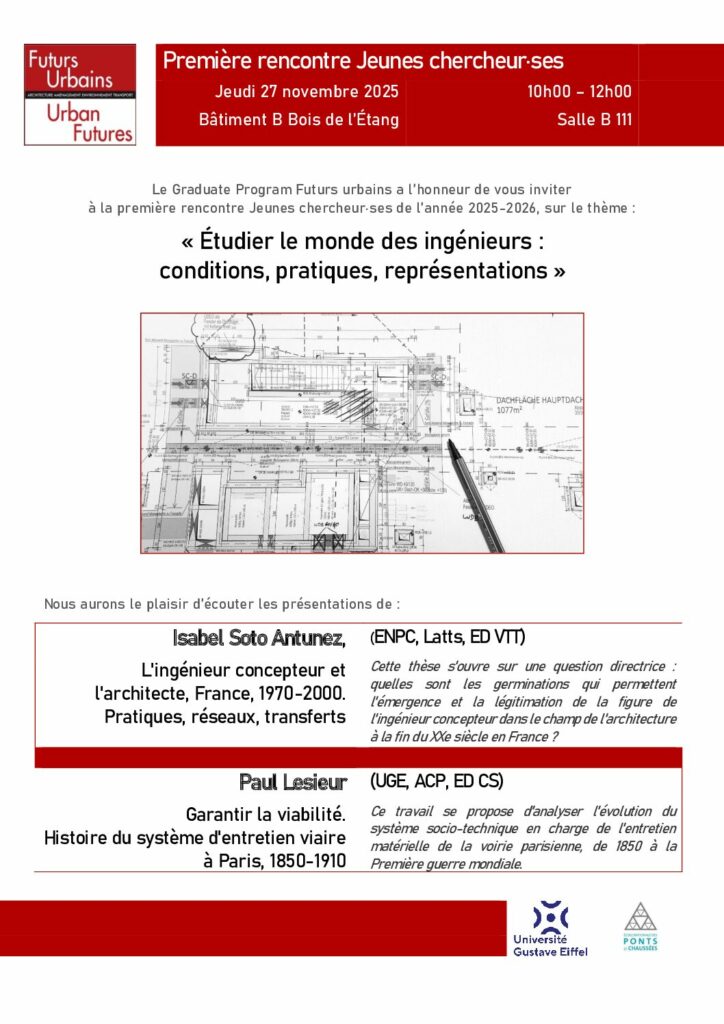
The "Graduate Program Futurs urbains" invites you to the first Young Researchers of the Year meeting on the theme "Studying the world of engineers: conditions, practices, representations." On this occasion, Isabel Soto will present her career path, which led her to begin a doctoral thesis and join the LATTS research laboratory.
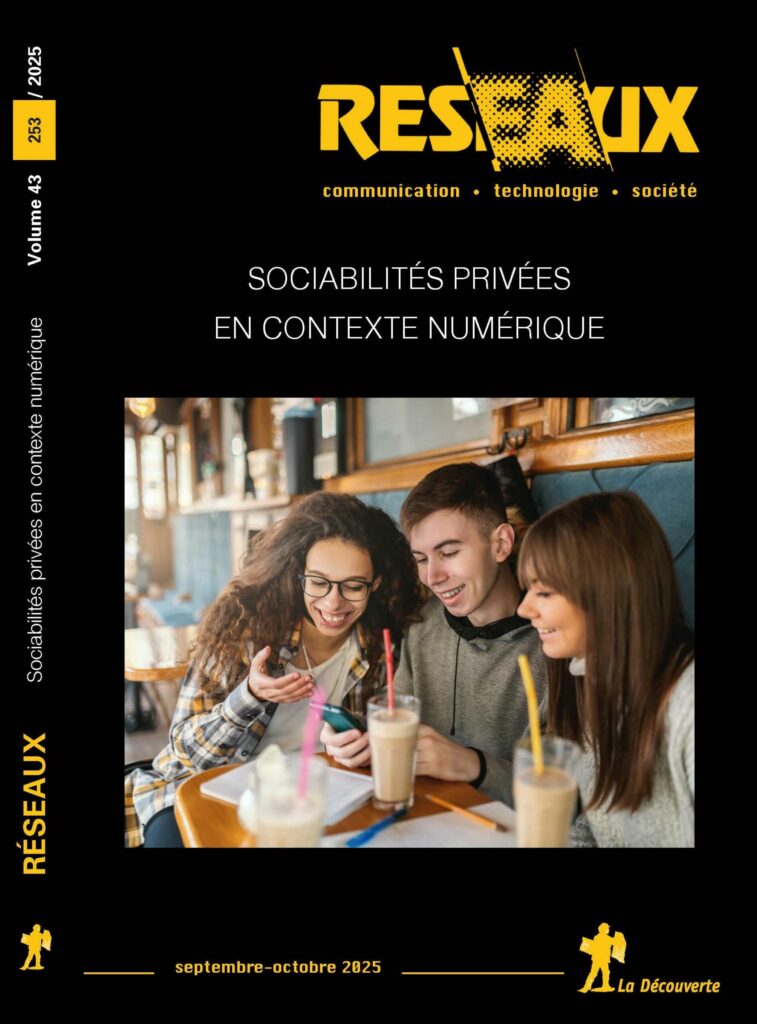
Réseaux No. 253 – "Private Social Interactions in the Digital Context" – Issue coordinated by Éric Dagiral and Olivier Beraud Martin.
[su_spacer size="40"]
For the past decade, research on sociability practices has largely focused on their public visibility via social media, often relegating so-called "private" communications to the background. However, these discreet exchanges have neither disappeared nor diminished: supported by traditional tools (telephone, text messages, emails, etc.) and the rise of contemporary messaging services, they are reconfiguring and multiplying intimate circles and groups that are hidden from view. This issue of Réseaux refocuses attention on the private side of social interaction to shed light on its continuities and digital reconfigurations. The dossier opens with an overview of the uses and challenges of the concept of sociability, which the six articles explore in a variety of contexts: the development of sexual and emotional relationships at work; the online expression of grief and the resulting interactions; the work of maintaining family ties through WhatsApp groups; the place of smartphones in agricultural social interactions; the role of personal comments in video calls between friends; and the "diplomatic" interventions of teenage girls when faced with friendship issues.
[su_spacer size="40"]
SUMMARY OF THE DOSSIER "PRIVATE SOCIAL LIFE IN A DIGITAL CONTEXT"
Private social interactions and digital practices. An overview of social science research By Éric Dagiral and Olivier Beraud Martin
Digital mediation of sexual and emotional relationships at work. Privatization of flirting, hierarchical regulation of harassment, and reconfigurations of private life in the workplace By Farah Deruelle
Defining oneself in mourning on digital platforms. Normative recompositions and relational strategies through the prism of sociability By Delphine Moreau-Plachy
Bringing the family together on WhatsApp? Digital reconfigurations of maintaining relationships through instant messaging By Laurianne Trably
On the phone all the time. Telephone and digital technology in agricultural social interactions By Victor Potier, Guillaume Favre, Edgar Perrin, Julien Brailly
Small video chat remarks between friends By Christian Licoppe
Friendships, intimacy, and digital intermediation in adolescence. An outline of relational diplomacy from middle school to high school By Rosa Maria Bortolotti, Sigolène Couchot-Schiex
[su_spacer size="40"]
VARIA
"Rappers are becoming influencers. You're surprised by the opposite." By Caroline Creton
Can we play at designing weapons? The 24 Hours of Innovation "Special Forces" edition as heterotopia By Jean Frances
[su_spacer size="40"]
READING NOTE
Pascal ROBERT, Le numérique-monde. Histoire et géopolitique de la logistique informationnelle. Du télégraphe à l’IA (The Digital World: History and Geopolitics of Information Logistics. From the Telegraph to AI), Limoges, FYP Éditions, 2025, 255 p. By Victor-Manuel Afonso Marques
Émilie POTIN, Family Separations in the Digital Age, Toulouse, Érès, 2024, 189 p. By Laurianne Trably
Florian JATON, The Constitution of Algorithms. Ground-Truthing, Programming, Formulating, Cambridge, MS, The MIT Press, 2020, coll. "Inside Technology," 400 p. By Valentin Goujon
Minxin PEI, The Sentinel State: Surveillance and the Survival of Dictatorship in China, Cambridge, Harvard University Press, 336 p. By Pierre Sel
[su_spacer size="40"]

The journal Réseaux is calling for submissions for a special issue on the topic of "Continuous news production: The new professional standard in journalism?" This issue is being coordinated by Pauline Amiel and Jérémie Nollet.
The text of the call for papers is available below and can also be found on the journal's website: https://www.revue-reseaux.fr/wp-content/uploads/sites/34/2019/10/Reseaux-Appel-a-intentions-Info-en-continu-VF-BAP.pdf
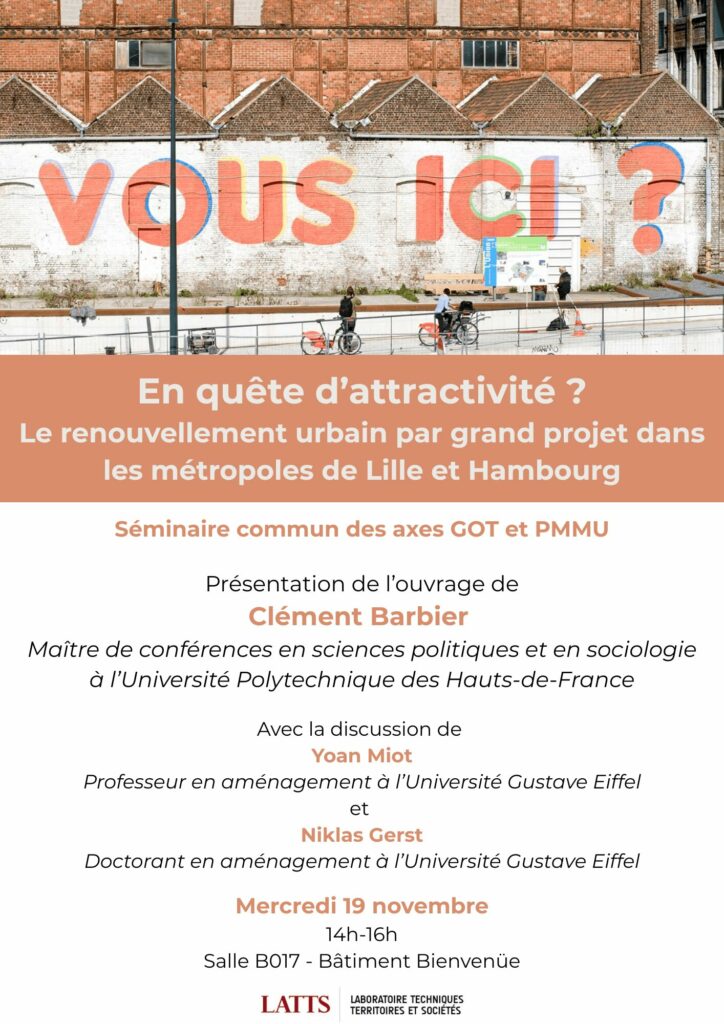
The PMMU and GOT departments are jointly organizing a seminar on Wednesday, November 19, 2025, from 2:00 p.m. to 4:00 p.m. in room B017 (Bienvenüe Building) and via videoconference on Zoom.
The guest speaker will be Clément Barbier, Associate Professor of Sociology and Political Science at the Université Polytechnique des Hauts-de-France. He will present his book En quête d'attractivité. Le renouvellement par grand projet dans les métropoles de Lille et Hambourg (In Search of Attractiveness: Renewal through Major Projects in the Cities of Lille and Hamburg). The book will be discussed by Yoan Miot and Niklas Gerst.
For those who are unable to attend in person, here is the link to the Zoom meeting: https://univ-eiffel.zoom.us/j/81912037214
Meeting ID: 819 1203 7214
Password: cASj1hJ5
We look forward to seeing you at this scientific exchange.
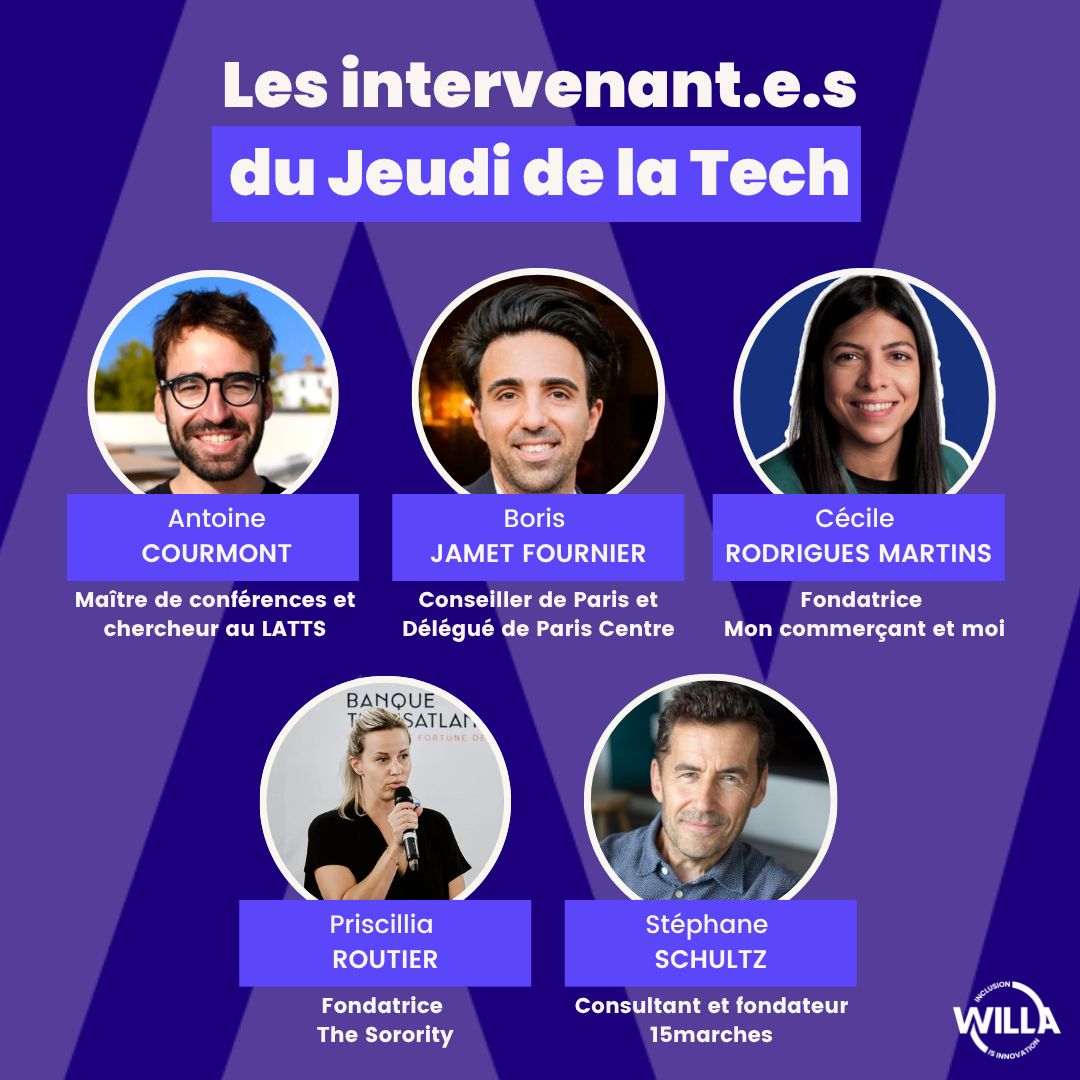
Antoine Courmont will participate in the round table discussion "When technology reshapes the city: innovation serving citizens and neighborhoods" organized by the WILLA association and the Paris City Hall on the occasion of Tech Thursday.
This round table will take place on Thursday, November 20, 2025, at 8 p.m. at the Paris City Hall.
Registration for Paris City Hall Tech Thursday 11/20/25
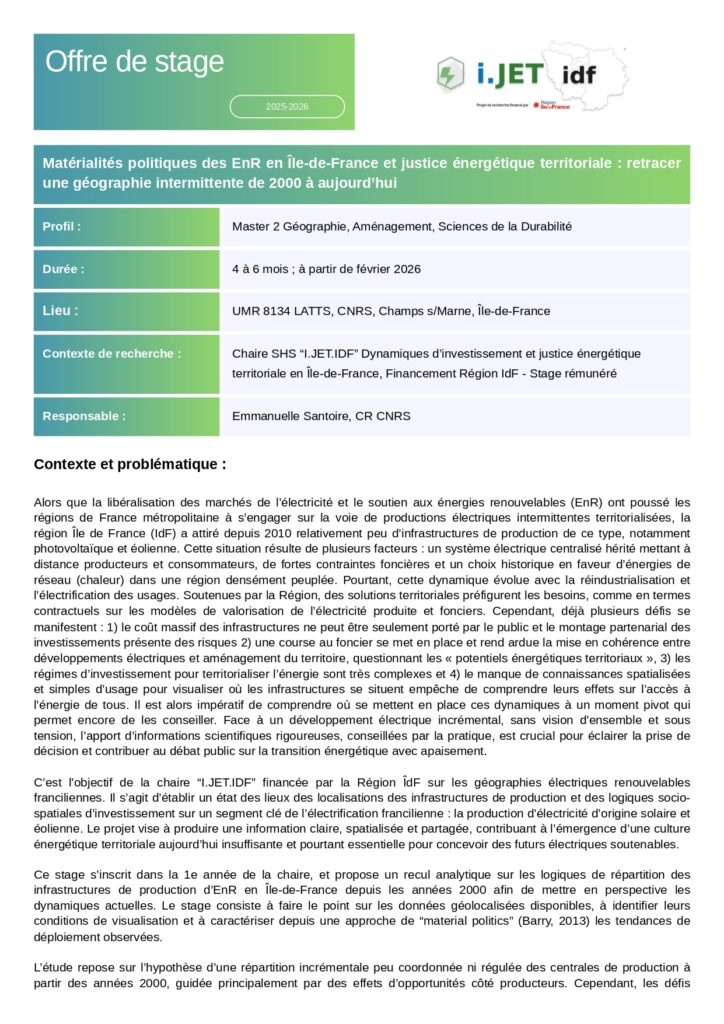
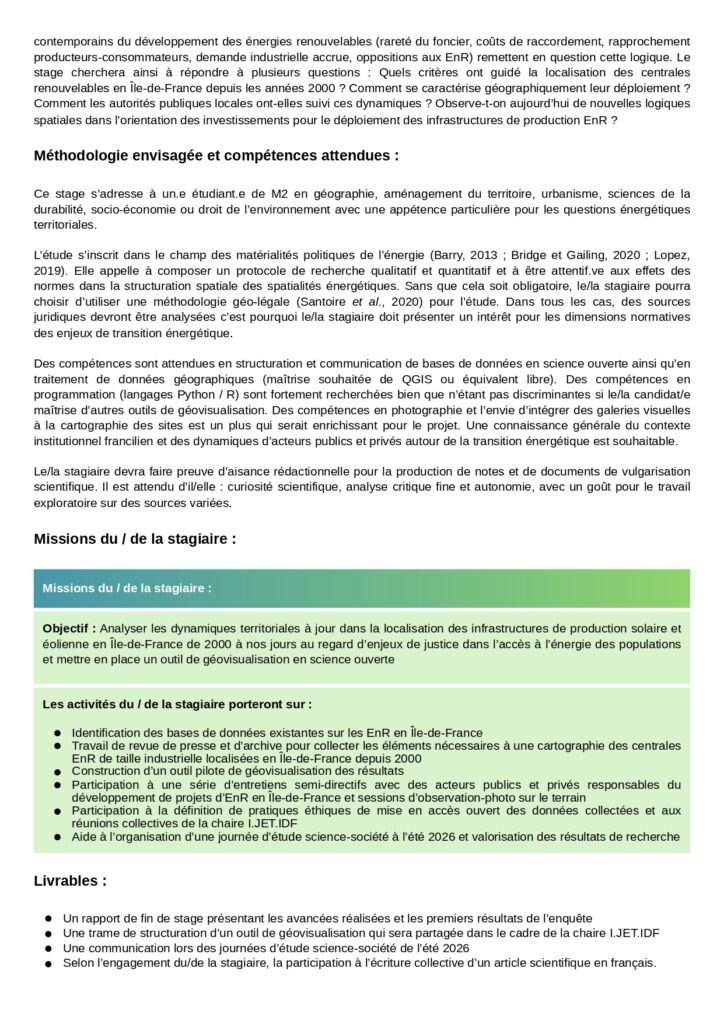
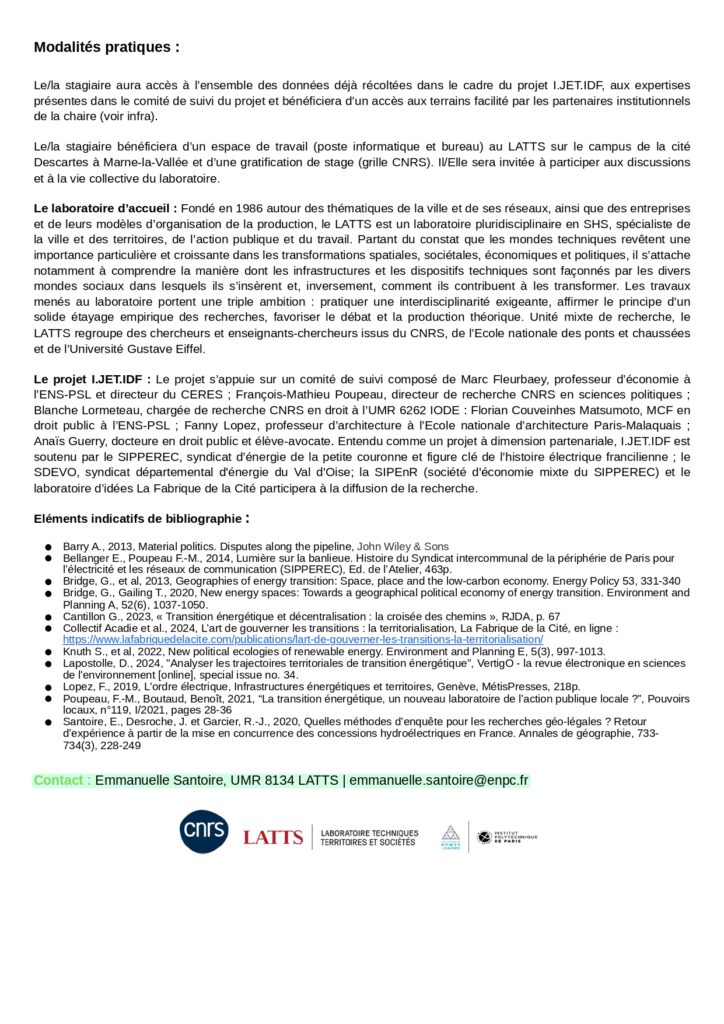
Emmanuelle Santoire is offering an internship entitled "The political materiality of renewable energy in Île-de-France and territorial energy justice: tracing an intermittent geography from 2000 to the present day."
As part of the SHS I.JET.IDF research chair, this internship will enable you to analyze the current territorial dynamics in the location of solar and wind power infrastructure in Île-de-France from 2000 to the present day in terms of issues of justice in access to energy for populations, and to set up an open science geovisualization tool.
This internship is open to M2 students in geography, land use planning, urban planning, sustainability sciences, socio-economics, or environmental law with a particular interest in territorial energy issues.
If you wish to apply, please send your CV and cover letter to Emmanuelle Santoire at emmanuelle.santoire@enpc.fr.
You can also find the internship offer on the Île-de-France Region website.
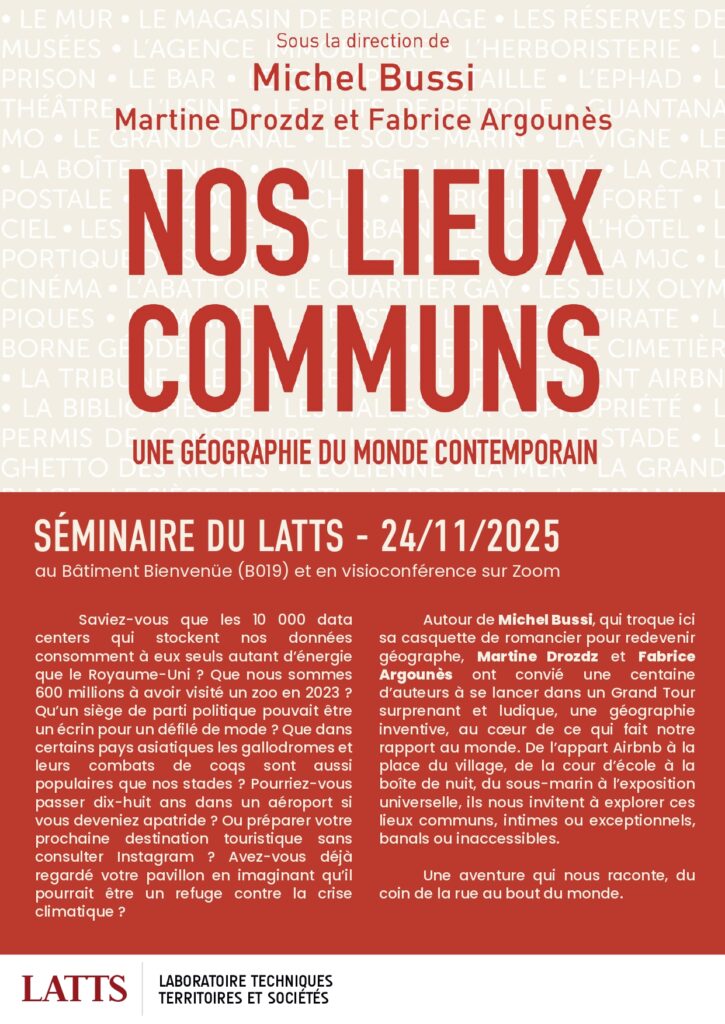
LATTS is pleased to invite you to the next session of its general seminar, which will take place on Monday, November 24, 2025, at 2 p.m. in B019 in the Bienvenüe Building and via videoconference. The session will focus on the book Nos lieux communs. Une géographie du monde contemporain (Our Common Ground: A Geography of the Contemporary World), edited by Michel Bussi, Martine Drozdz, and Fabrice Argounès.
To join the Zoom meeting: https://univ-eiffel.zoom.us/j/86896484023
Meeting ID: 868 9648 4023
Password: LATTS2025
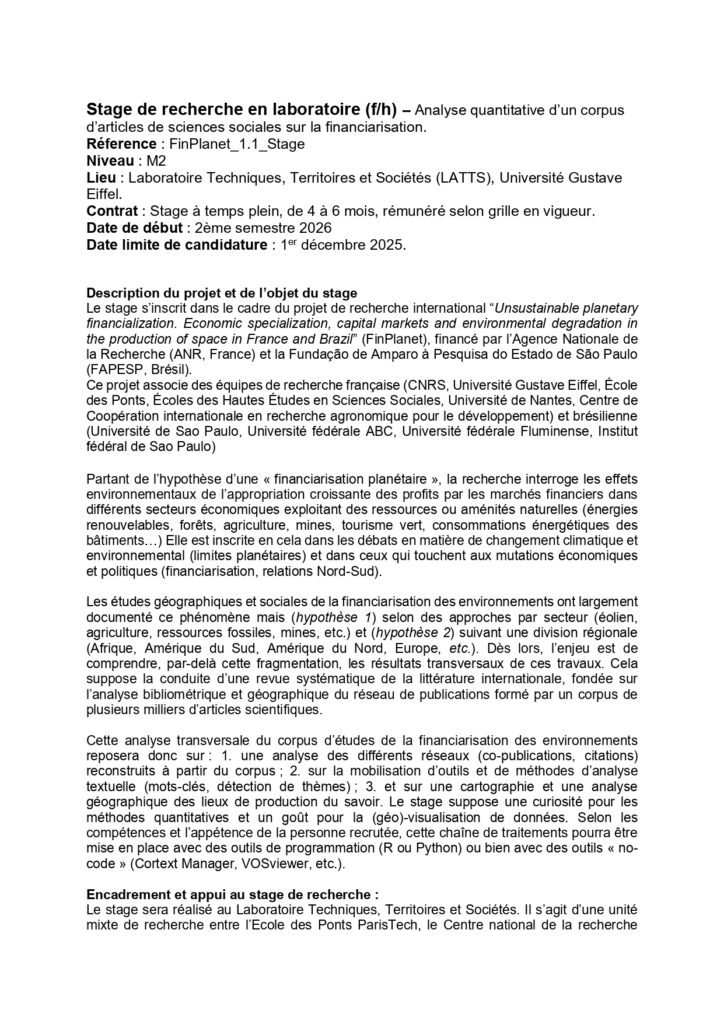
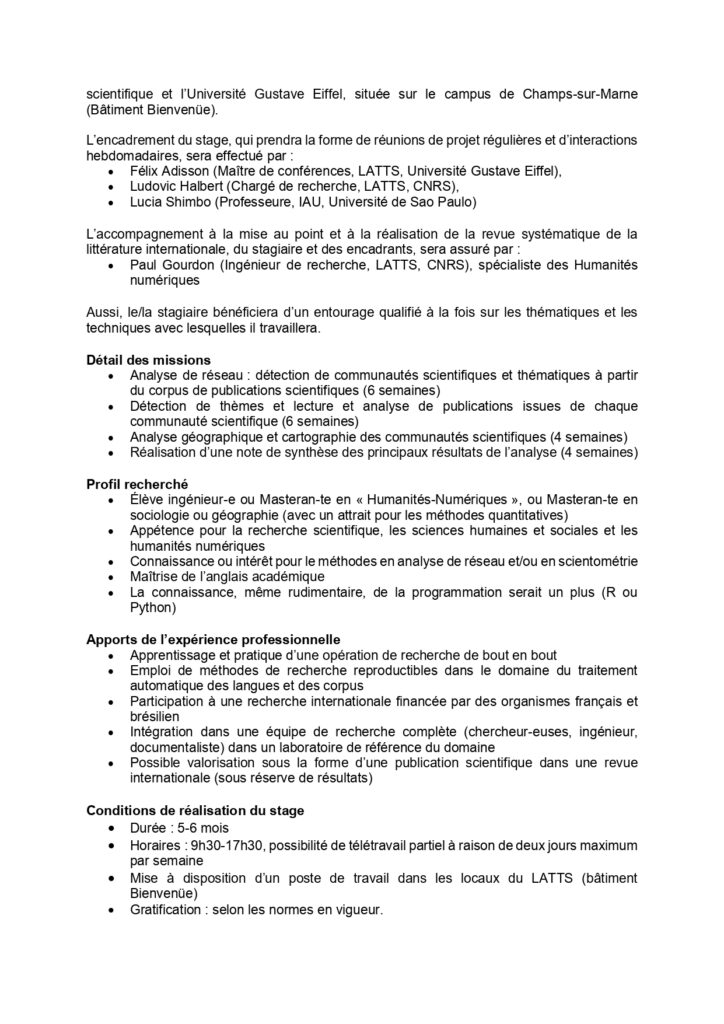
Please find attached a proposal for a paid internship, M2 level, as part of the FinPlanet international research project.
The aim is to contribute to a research project involving the quantitative analysis of a corpus of scientific articles in the social sciences and humanities dealing with financialization processes. In particular, you will use text analysis and network analysis methods to describe in detail the themes, research communities, and places of knowledge production on this topic.
Reference: FinPlanet_1.1_Internship
Location: Techniques, Territories and Societies Laboratory (LATTS), Gustave Eiffel University, France
Contract: Full-time internship, 4 to 6 months, paid according to the current pay
scale Start date: Second semester of 2026 Application
deadline: December 1, 2025
Applications must be sent by December 1, 2025, at the latest to Félix Adisson (felix.adisson@univ-eiffel.fr) and Ludovic Halbert (ludovic.halbert@enpc.fr).
As part of the 5th edition of the Close Up festival "City, Architecture & Landscape in Cinema," ENSA Paris-Est is partnering with Sciences Po's Urban School to organize two screenings on Wednesday, November 19, and Thursday, November 20, followed by discussions between directors Jasper Meurer and Rocio Calzado and four teachers: Ido Avissar, Odile Dubois-Joye, Paul Landauer, and Patricia Pelloux.
Practical information:
Wednesday, November 19, from 5:00 p.m. to 7:00 p.m., The Great Together (20 minutes) at the Sciences Po Urban School with the participation of docar, Paul Landauer, and Odile Dubois Joye. Click here to register for the screening on 11/19/2025.
Thursday, November 20, from 1 p.m. to 2 p.m., The Great Together (20 min) at ENSA Paris-Est, followed by a discussion between Jasper Meurer, Rocio Calzado, Ido Avissar, and Patricia Pelloux, professor at Sciences Po's École Urbaine. Click here to learn more about the screening on 11/20/25.

Flux magazine invites you to read a call for expressions of interest for its special issue on the topic:
"Territoires et infrastructures de la chaleur et du froid" or "Territories and infrastructures of heat and cooling" in English. This issue is coordinated by Antoine Fontaine, Laurence Rocher, and Eric Verdeil.
The texts of the calls for papers can be found on the journal's website:
Flux-Call-for-papers-Urban-territories-heat-and-cooling-BAP.pdf
Flux-Call-Issue-Heat-and-cold-spaces-and-infrastructures-BAP-2.pdf
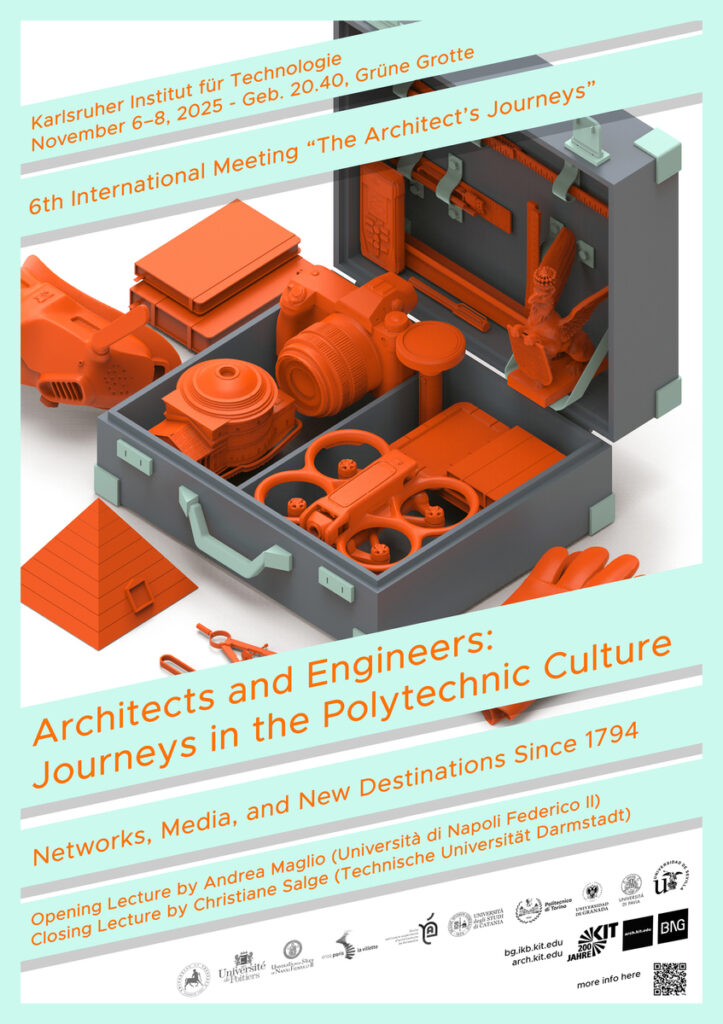
Isabel Soto is participating in the 6th edition of the international symposium "The Architect's Journeys." She will present part of her thesis "Hybrid Figures and the Celebration of Technical Artifacts in Late 20th-Century French Architecture." Her presentation will take place on Friday, November 7, 2025, at the Karlsruhe Institute of Technology.
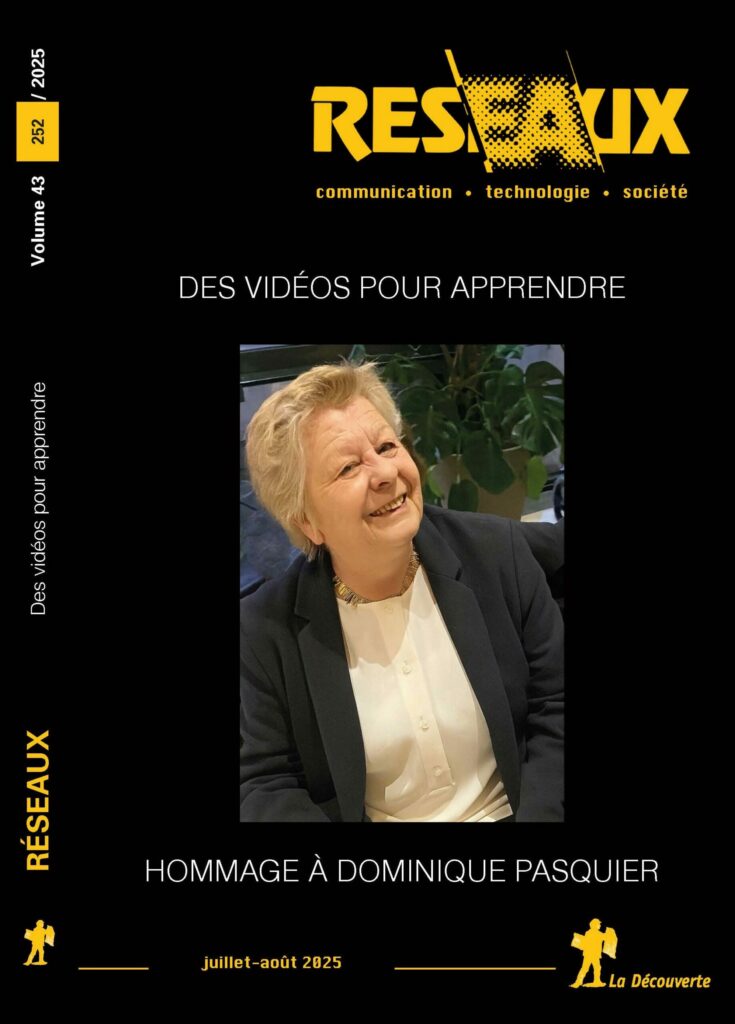
Networks No. 252 – "Videos for learning – Tribute to Dominique Pasquier" – Issue coordinated by Dominique Pasquier
[su_spacer size="50"]
Over the past fifteen years or so, video tutorials have experienced spectacular growth, both in terms of content creators, who are producing more and more of them, and users, who are consuming them intensively. These videos, most often produced by "amateurs" and now available on several platforms (YouTube, Instagram, TikTok, etc.), provide access to a wide variety of knowledge and skills, ranging from cooking to science and personal care. This issue, "Videos for Learning," seeks to 1) understand the diversity of these forms of learning through a survey that shows the widespread use of videos for learning (80% of the population consumes them), with significant differences according to gender and age and a wide range of learning areas; 2) to show how these online videos fit into a learning environment that mobilizes other resources such as courses, peer exchanges, and paper guides, and which increasingly favors images over the written word; 3) Finally, to show how these videos shape a particular type of interaction between designers and their audiences, with a specific framing of the encounter thus organized and formats ranging from traditional knowledge transfer to learning by imitation in the manner of frayage (learning by imitation). These questions are explored in articles that focus on different learning contexts: music in adulthood, board game rules, leisure activities among young people, DIY, and professional training for doctors.
[su_spacer size="40"]
SUMMARY OF THE DOSSIER "VIDEOS FOR LEARNING"
- Learning, entertaining, and solving problems with videos on knowledge and skills By Valérie Beaudouin, Olivier Beraud Martin, Éric Dagiral, Quentin Gilliotte, and Christophe Prieur
- And let everyone start playing? By Emmanuelle Guittet
- Connected exploration of leisure activities in childhood and adolescence – Noémie Roques
- Video in the service of leisure – Vincent Berry and Vinciane Zabban
- Video tutorials as an encounter with a "commentating machine" – Christian Licoppe and Oskar Lindwall
- Online self-training – Patrice Flichy
[su_spacer size="40"]
TRIBUTE TO DOMINIQUE PASQUIER
- Rereading Dominique – Patrice Flichy
- Which side are we looking at? – Claire Balleys
- "We give him 5/5" – Irène Bastard, Florence Eloy, Sébastien François, Marine Jouan, Quentin Gilliotte, Emmanuelle Guittet, Tomas Legon, Muriel Mille, and Laurianne Trably
- A look back at the funny stars survey. Television presenters – Sabine Chalvon-Demersay
- A sociology of popular media culture that is neither miserabilist nor populist – Éric Macé
- Dominique, Hélène, and the boys – Dominique Cardon
- A European sociologist – Josiane Jouët
- In the "culture and media" family, the smiling, passionate, and quirky big sister… – Thomas Paris and Pierre-Jean Benghozi
- Traveling the world in good company – Jean Cattan for the National Digital Council
- Dominique Pasquier, or how I stopped despising popular culture – Hélène Bourdeloie
- Dominique Pasquier: social science at the heart of life – Anne Cordier
[su_spacer size="40"]