Sylvy Jaglin, Emmanuelle Guillou, Mélanie Rateau, and Bérénice Girard participated in this conference from August 27 to 30, 2019, in London.
Robin Foot
will participate in the 10th Ergonomic Psychology Conference
in Lyon from July
9 to 12, 2019, as part of a symposium on "Mental Load in Risky Situations."
His presentation is entitled: The safety paradox of a safety system on trams. The cognitive hypothesis and ways of resolving this paradox: the Clermont-Ferrand experience.
The monitoring devices are designed to stop the tram in the event of driver failure. The driver must not hold the monitoring device for more than ten seconds or release it for more than two seconds, otherwise an audible alarm will sound and, if there is no change in the status of the device after two seconds, emergency braking will be activated.
The logic of this device is decoupled from the logic of driving. The driver is therefore in a classic situation of dual task, of attentional competition.
An INRS study showed that drivers adjusted their monitoring action to the release delay as a cognitive economy strategy.
In addition to the problem of occupational illnesses caused by the frequency of monitoring actions, this demonstrated that monitoring had a distracting effect on driving. Two fatal passenger accidents confirmed that monitoring compromises driving safety.
In Clermont-Ferrand, the transformation of vigilance both in terms of functionality (elimination of the delay in maintaining vigilance) and the form of the actuators made it possible to resolve this paradox of a safety system that compromised safety.
This transformation was monitored with a group of six drivers during three observation campaigns between June 2015 and November 2017 in three different standby configurations. These observations show a radical decrease in the average frequency of actions on the standby system, from 40 actions/minute in 2015 to less than one action per minute in 2017.
This decrease in frequency shows that actions on the dashboard are becoming neutral in relation to driving. This result was achieved by modifying both the functional logic and the shapes of the dashboard actuators.
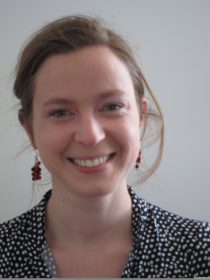 Lise Desvallée will
defend her doctoral thesis under the supervision of Olivier Coutard and co-supervisor Jonathan Rutherford on Wednesday, July 3, 2019 (room A017, Bienvenüe Building).
Problematization, politicization, and reduction of energy vulnerabilities: between the right to energy and control of the practices of the poor in Porto and Barcelona
50 million Europeans face financial difficulties in heating, cooking, or lighting their homes. Households that go without these services due to insufficient income, or that devote a significant portion of their budget to this expense, are in a situation of energy vulnerability. European legislation requires member states to establish policies to measure and reduce this problem. This is a complex objective because energy vulnerability is at the intersection of a set of factors addressed by distinct sectoral policies: energy prices, energy efficiency in housing, and social assistance.
This thesis examines the conditions under which the issue of energy vulnerability emerges on national and local public agendas, using an urban political ecology approach. The comparative study is conducted in two cities (Porto and Barcelona) where the issue is significant and addressed in different ways. Our analysis proposes to study the factors that combine to create situations of vulnerability and bring them to the fore as a public issue. It focuses on legislation, local innovations, and media coverage of the issue. We compare these forms of collective action with a study of the concrete conditions of energy vulnerability experienced by precarious households receiving social assistance and support from charitable organizations.
The main finding of the thesis is that situations of energy vulnerability are politicized, involving both new and traditional actors in energy governance and resulting in two types of responses. We also show how the activism of community groups is giving rise to a right to energy, which is not enshrined in national legislation and which, under pressure from new social movements, is becoming an imperative for local authorities. Finally, we show how a model of interventions targeting households is being rolled out with the aim of reducing consumption in order to lower bills and limit the number of unpaid energy bills. This experimental and inexpensive model is in the interests of civil society organizations, local authorities, and energy suppliers, even though it requires vulnerable households to make further efforts to reduce their energy bills. Keywords:
energy vulnerabilities, energy poverty, urban political ecology, urban energy transition, Spain, Portugal
Composition of the jury:
- Stefan Bouzarovski, Professor, University of Manchester (Rapporteur)
- Olivier Coutard, Director of Research, CNRS (LATTS) (Thesis supervisor)
- Sylvy Jaglin, University Professor, University of Paris Est Marne la Vallée (Chair of the jury)
- Hélène Reigner, University Professor, Aix-Marseille University (Rapporteur)
- Jonathan Rutherford, Research Fellow, École des Ponts Paris Tech (Co-supervisor of the thesis)
- David Saurí, University Professor, Autonomous University of Barcelona
will participate in the "Transport and Travel Days of the Scientific and Technical Network" organized by STRMTG, CEREMA, and IFSTTAR, which will take place in Marne-la-Vallée on July 3 and 4.
His presentation will take place during the session on autonomous vehicles and is entitled: Autonomous vehicles examined from the perspective of the processes of automation/autonomization of urban public transport.
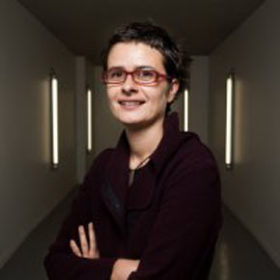 Elsa Vivant will defend her Habilitation à diriger des recherches (HDR) on Wednesday, July 3, 2019, at 2:00 p.m. (room A202, Bienvenüe building, Cité Descartes) under the supervision of Marie-Hélène Bacqué.
The jury is composed of:
- Anne-Laure Amilhat Szary, University Professor – University of Grenoble-Alpes
- Marie-Hélène Bacqué, University Professor – Paris Nanterre University
- Eric Charmes, Director of Research – Ecole Nationale des Travaux Publics de l’Etat
- Laurent Devisme, University Professor – Nantes School of Architecture
- Boris Grésillon, University Professor – Aix Marseille University
- Christine Lelévrier, University Professor – University of Paris Est Créteil
- Pascale Philifert, University Professor – Paris Nanterre University
The dossier consists of four volumes. The first recounts her research and teaching activities; the fourth brings together a collection of significant publications. In the second volume, Elsa Vivant outlines the evolution of her research perspectives, from the creative city to research-creation in urban planning, through the exploration of four metaphorical places (the art gallery, the studio, the library, and the laboratory), conceived as invitations to move between the worlds of art and urban planning in order to enrich our understanding of urban transformations and urban planning and research practices. The art gallery is the metaphorical place for the instrumentalization of culture and its venues in urban policies and allows us to identify certain contradictions. The studio is a place of work, transformation, and new collaborations between creative professionals and urban planners. The library is a space where questions of representation (including writing) and the relationship between urban planning, project-based activity, and fiction are explored. Entering the laboratory is an invitation to new experiences, articulating the renewal of forms of research writing and contemporary practices in art research. It is the metaphorical place where the third volume of this habilitation, a research-creation essay, La Division du travail (The Division of Labor), was developed.
La Division du travail refers to the complexity of what is now called the urban fabric. The metaphor of assembly line work expresses the dilution of meaning and responsibilities in projects with complex structures and governance, as well as the weight of contradictions and ethical conflicts faced by middle managers whose position in the field and in the chain gives them little control over the decisions they implement. The text takes the form of a narrative that draws on the documentation from the investigation and embraces the subjectivity of the respondents and the investigator through the use of fiction. It is composed of a montage of fragments and forms whose diversity reflects the fragmentation of urban planning activity and the plurality of viewpoints. Their multiplication and composition open up possibilities for interpretation. A parallel narrative, the investigation diary, mirrors the situations observed in the world of urban planning with those of the world of research, where similar constraints weigh on the work and generate the same feeling of powerlessness in the face of institutional changes. It connects the fragments and produces meaning for the reader who follows the narrative of a research process, its doubts, its questions, and its discoveries. We meet a researcher, whose work is funded by a private foundation, investigating the challenges of creating a recreational facility in connection with the construction of a metro station in a neighborhood undergoing urban renewal. We follow her to meetings, site visits, observations, and demolitions. We read the archival materials she has collected. We meet the professionals involved at different levels, each representing a different issue and category of actor. We drift towards other issues relating to the complexity of urban renewal operations and questions that are not being asked. We observe certain professionals being overwhelmed by the contradictory demands they face. We share their feeling of powerlessness. We wonder how to get out of this situation. We find ways out in distancing ourselves, experimentation, artistic expression, and solidarity.
Several members of LATTS will participate in the 15th Congress of the French Political Science Association (AFSP), to be held in Bordeaux from July 2 to 4, 2019.
François-Mathieu Poupeau has been invited to participate in a round table discussion on Thursday, July 4, 2019, entitled: "Epistemological divisions or 'concordant eclecticism'? The intellectual projects of French sociology of public action through the prism of its publication spaces." It is organized by the thematic section "Institutions, Public Action, and Government."
For more information: https://www.afsp.info/congres/congres-2019/
The LATTS (Laboratoire Techniques Territoires et Sociétés, UMR 8134) laboratory council has joined the numerous motions from academic institutions and research laboratories opposing the increase in university tuition fees for foreign students (outside the European Union, European Economic Area, and Swiss Confederation) contained in a draft decree presented on March 11, 2019, to the CNESER.
This discriminatory and uncoordinated increase in tuition fees reinforces the exclusion of many students from French higher education by adding a significant financial obstacle to the already considerable administrative barriers. By hindering access to higher education, this decision runs counter to the universal values upheld by French public universities.
Furthermore, this decision paints a worrying picture for the future of higher education. Rather than financial barriers against foreign students, public universities need a fundamental overhaul that repositions them in an open world and provides them with the financial resources to meet the challenges they face. This project must be negotiated with all stakeholders in the academic world. For these reasons, we call for the withdrawal of the government's decision and the opening of discussions on the conditions for rebuilding an open public university, without conditions of nationality or income.
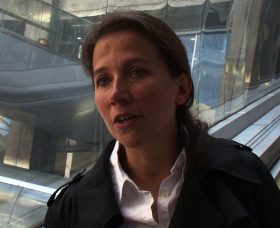 Nathalie Roseau
will defend her Habilitation à diriger les recherches (HDR) on Monday, June 24, 2019,
at 2:00 p.m. (Amphitheater Navier, Ecole des Ponts ParisTech) (more…)
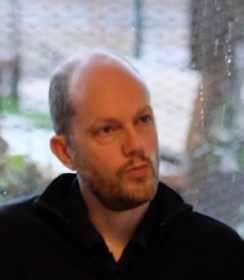 Jonathan Rutherford will defend his habilitation to conduct research on Monday, June 24, 2019, at 2:00 p.m. (room A202, Bienvenüe building).
The jury is composed of:
- Sabine Barles, professor, Paris 1 Panthéon Sorbonne University
- Olivier Coutard, Director of Research, CNRS, LATTS (supervisor)
- Cyria Emelianoff, professor, Le Mans University
- Andrew Karvonen, Associate Professor, Urban & Regional Studies, KTH Royal Institute of Technology, Stockholm (Sweden)
- Roger Keil, Professor and Chair in Global Sub/Urban Studies, York University (Canada)
- Timothy Moss, Senior Researcher, Humboldt University of Berlin (Germany)
Unpublished manuscript
Redeploying Urban Infrastructure: The Politics of Urban Socio-Technical Futures
The manuscript explores urban futures in the making, as seen through the lens of urban infrastructure. It describes how socio-technical arrangements of energy and water provision are being recast in continuing efforts towards realizing "sustainable" transformation of cities. It critically investigates how infrastructure comes to matter by analyzing the shifting capacities and entanglements of diverse actors with these systems, the various means they use to envision, enact and contest changes, and the wide-ranging social and political implications of emerging infrastructure transitions. Drawing on original research into urban infrastructure debates and projects in Stockholm and Paris, it develops a novel conceptual framework for studying and acknowledging the active, vital role of infrastructure in constituting a material politics of urban transformation.
The manuscript explores emerging urban futures through the lens of urban infrastructure. It analyzes how sociotechnical arrangements for energy and water provision are being reshaped as part of ongoing efforts to achieve a "sustainable" transformation of cities. It critically examines the importance of infrastructure by analyzing the capacities and dynamic entanglements of various actors with these systems, the various means they use to envision, implement, and contest change, and the social and political implications of emerging infrastructural transitions. Drawing on original research on debates and projects around urban infrastructure in Stockholm and Paris, it develops a conceptual framework for studying and recognizing the active and vital role of infrastructure in shaping the material politics of urban transformation.
will speak on Friday, June 21, 2019, at the third symposium, "Health in All Its Forms: Different Perspectives."
The theme of his presentation will be:
Diabetes self-monitoring devices: changes in "patient work" and the experience of chronic illness